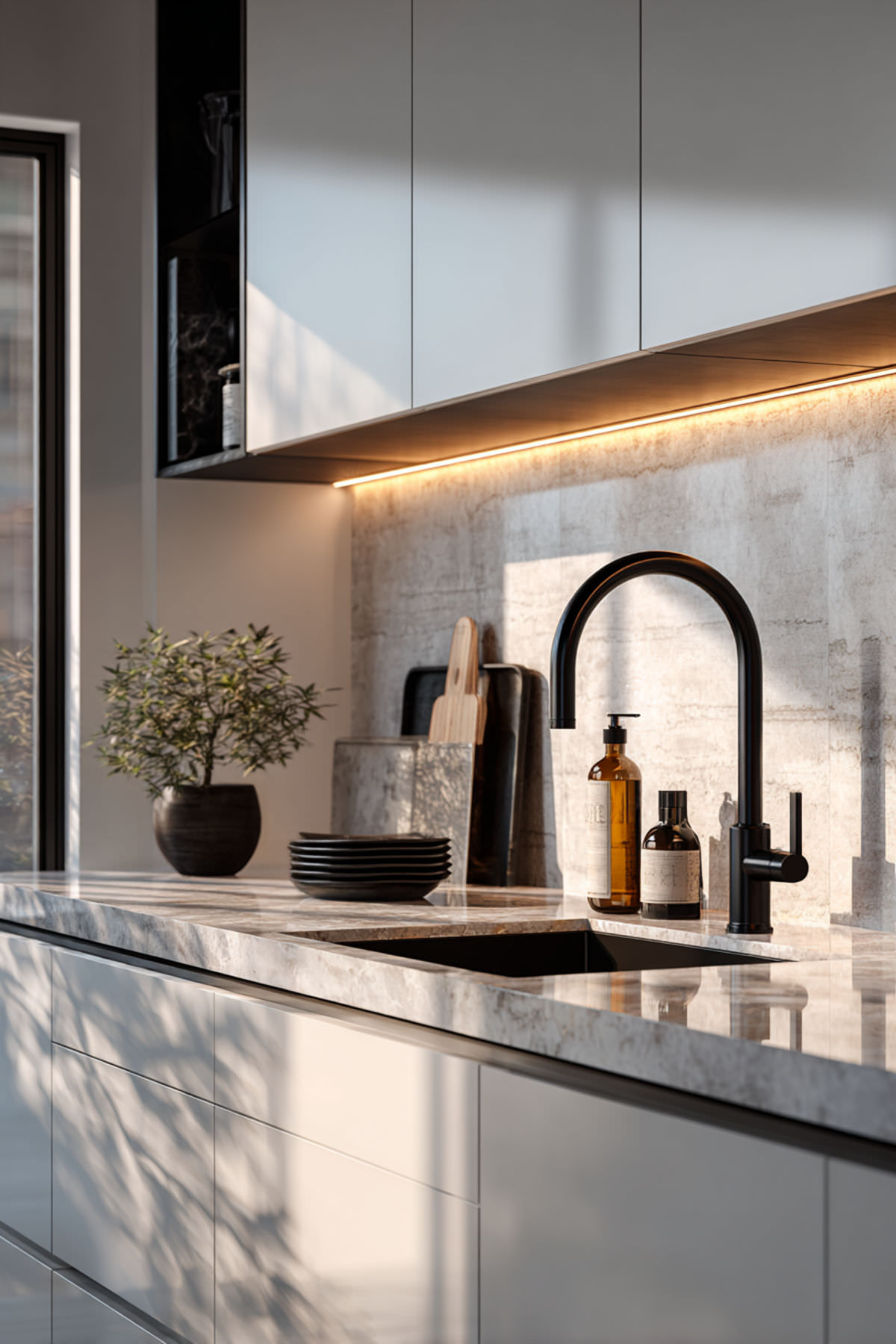
There’s a moment in every kitchen where you look at the upper cabinets and think: what if I just… took those down? What if the walls could breathe a little? What if my favorite mugs, my cookbooks, my olive oil collection could actually be part of the room instead of hidden behind closed doors? That’s the floating shelf instinct — and once you feel it, there’s no going back.
Floating shelves have gone from a trend to a staple in kitchen design, and for good reason. They make a kitchen feel lighter, more open, and more personal. They turn everyday items into decor and give you a reason to keep things beautiful and organized. I’ve gathered 16 of my favorite floating kitchen shelf ideas — from minimal to industrial to full-on no-upper-cabinets bold — with product recommendations woven throughout.
Save the pins that catch your eye; you’ll want these in your back pocket when you’re ready to make the switch. And there’s plenty more kitchen styling and decor inspiration across the rest of the site, so keep going. This content highlights kitchen inspiration and does not offer scientific advice; some examples may be fictional.
Natural Wood Floating Shelves for Warm, Organic Character
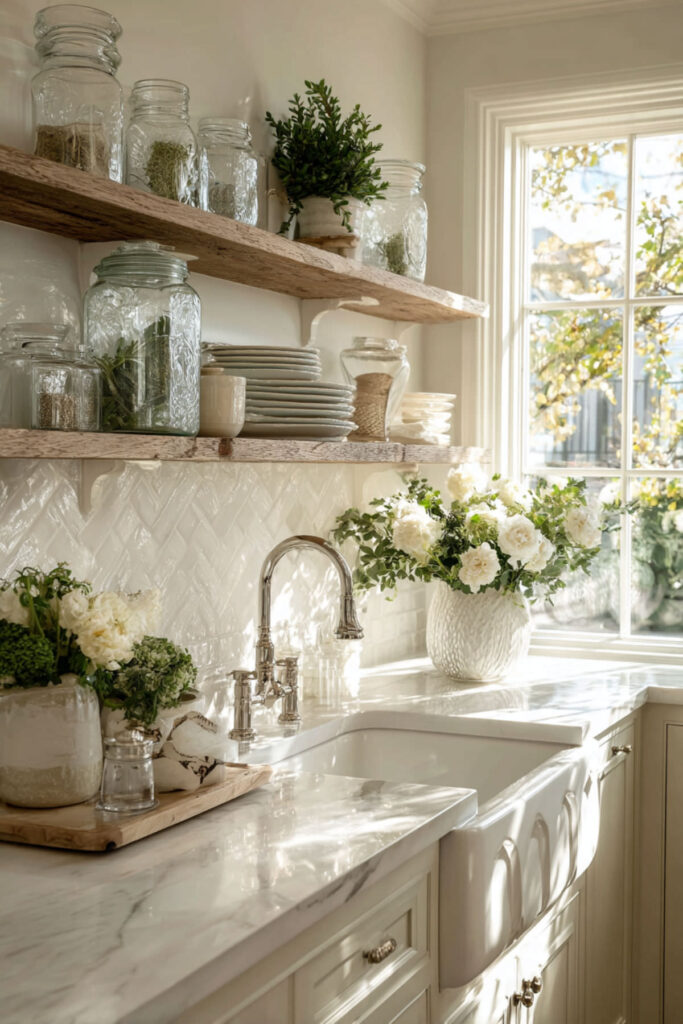
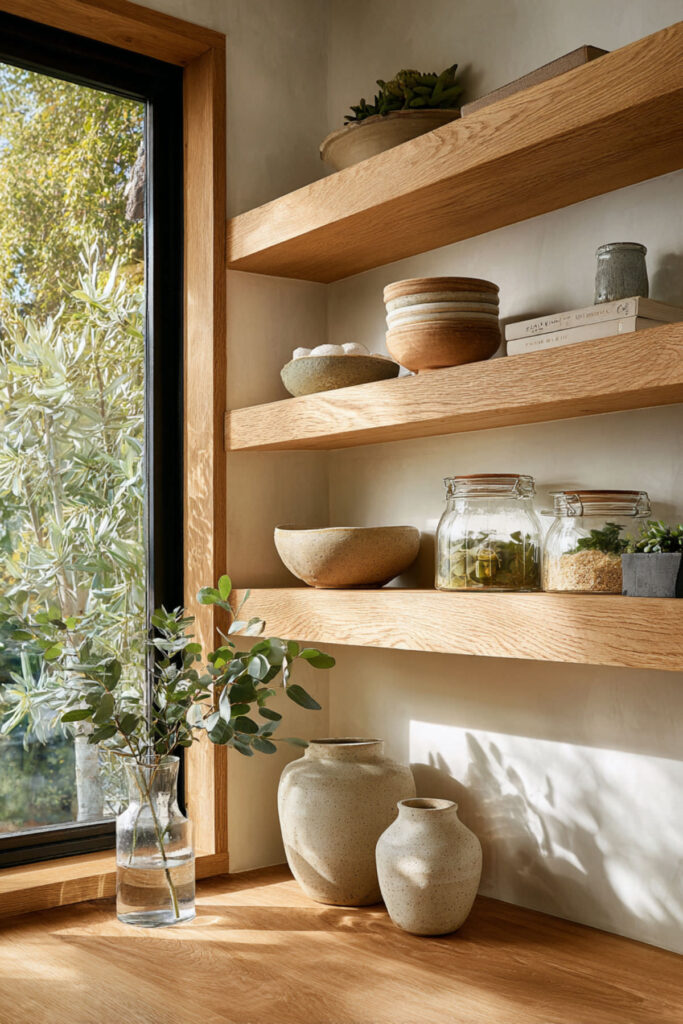
If there’s one floating shelf material that works in every kitchen style, it’s natural wood. A set of solid wood floating shelves — think white oak, walnut, or reclaimed pine — adds instant warmth, texture, and that grounded, organic quality that no painted or laminate shelf can replicate. The grain, the color variation, the way it catches light differently throughout the day — it all makes the kitchen feel alive.
I really recommend thick, solid wood floating shelves in a warm finish for your kitchen wall. Something around two inches thick gives them enough visual weight to look intentional, not flimsy. Natural wood floating shelves in a kitchen pair beautifully with white or cream cabinetry, stone countertops, and brass hardware. They bring that touch of nature into the room — like bringing the outdoors inside in the most subtle way. Style them with stacked white plates, a few ceramic pieces, and a small plant, and they instantly look like they belong in a design magazine.
Live Edge Floating Shelves for a One-of-a-Kind Statement
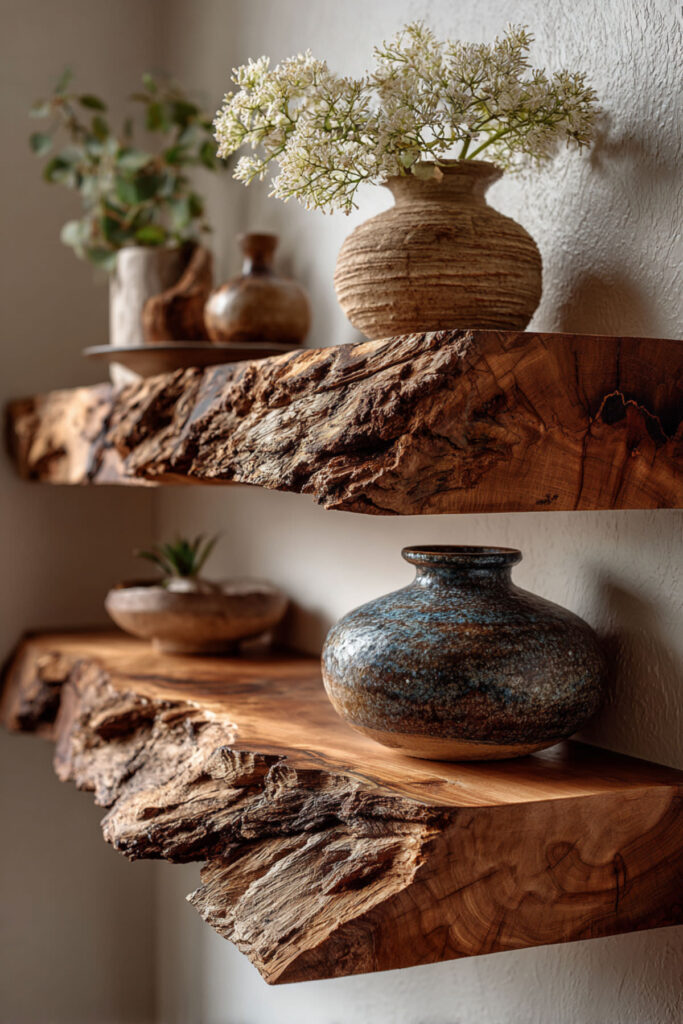
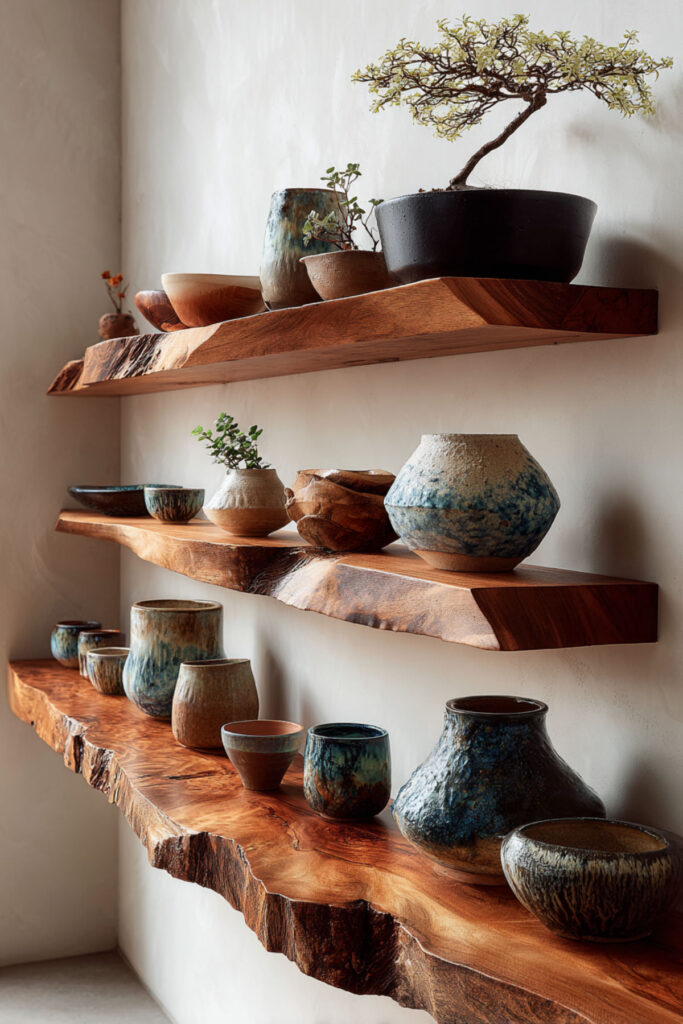
I came across this trending idea while looking at some beautifully styled kitchens, and I think it’s one of the most striking ways to add personality to a kitchen — live edge floating shelves. The natural, unfinished edge of the wood gives each shelf a completely original shape, and no two pieces look the same. It’s rustic and refined at the same time, and it brings this artisan quality that regular shelves just can’t match.
I highly recommend a live edge wood shelf in walnut or maple, mounted above your counter or flanking your range hood. The raw edge adds visual interest without competing with the rest of the kitchen. Live edge floating shelves in a kitchen work especially well in spaces that lean modern-organic or contemporary — they’re that perfect bridge between polished and imperfect. Keep the styling minimal here; let the wood be the star. A few simple objects — a ceramic vase, a wooden cutting board, a glass jar of spices — are all you need.
White Floating Shelves for a Clean, Streamlined Look
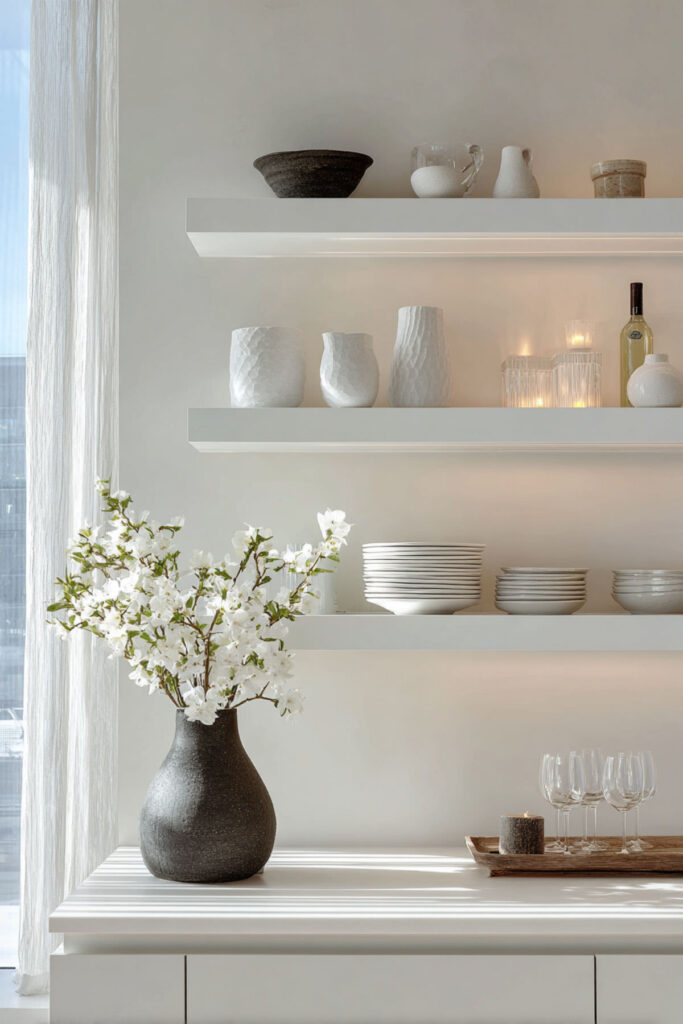
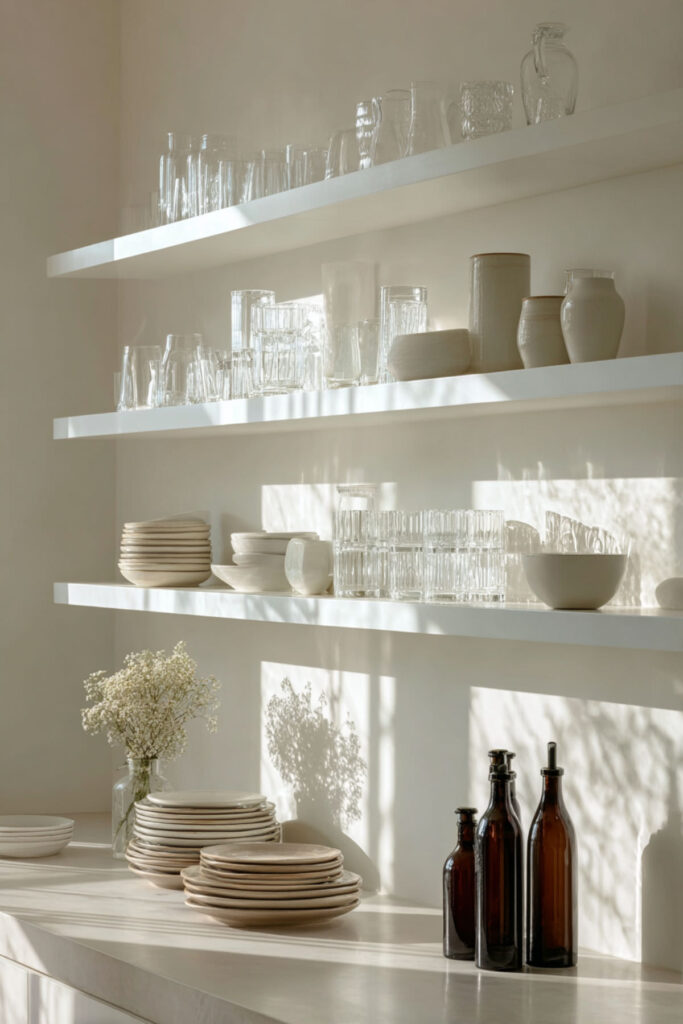
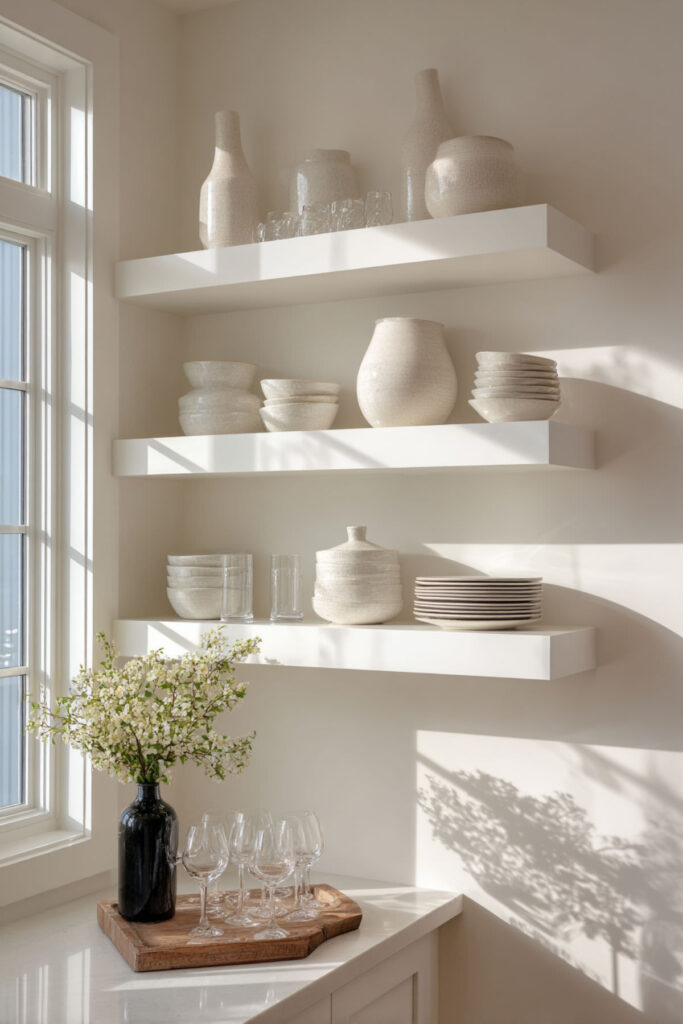
When you want the shelves to blend rather than stand out, white floating shelves are the answer. Mounted on a white wall, they almost disappear — and that makes whatever you place on them really pop. It’s the minimalist approach to open shelving, and it works beautifully in kitchens where you want the decor and the items themselves to be the focus, not the shelf.
I recommend white floating shelves in a matte finish with clean, squared edges. They’re perfect in a minimal kitchen, a Scandinavian-inspired space, or really any light-toned kitchen where you want things to feel airy and uncluttered. White kitchen floating shelves also pair gorgeously with a white subway tile or zellige backsplash — the monochromatic effect is incredibly calming. Style them with a mix of everyday items and a few decorative pieces, and the whole wall becomes a curated display that looks effortless.
Floating Shelves Above the Kitchen Sink for Smart Use of Dead Space
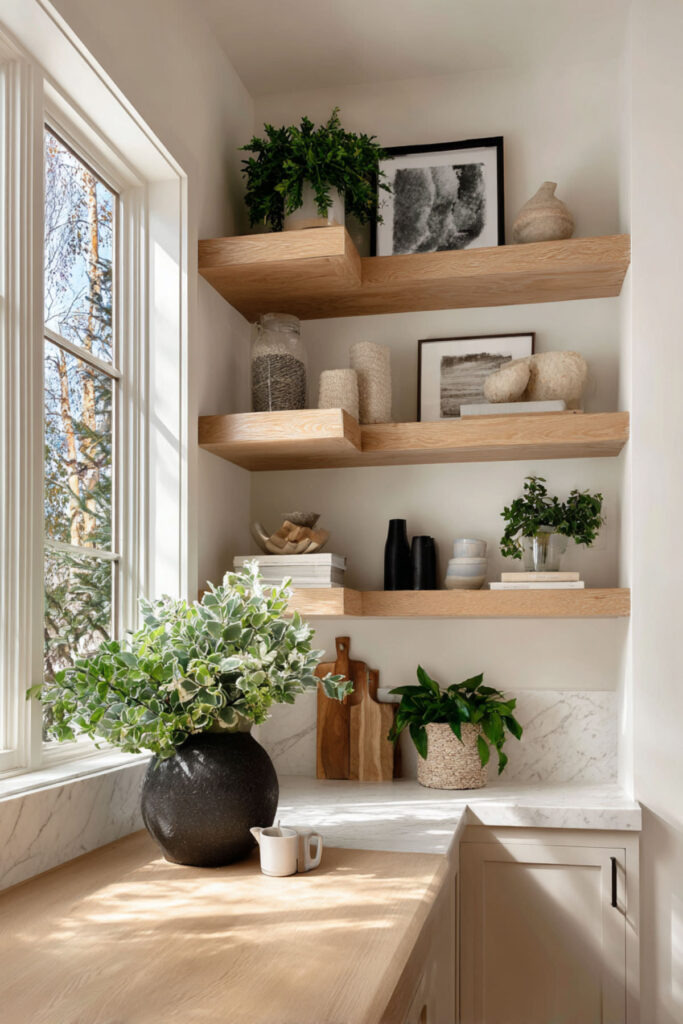
The wall above your kitchen sink is often wasted real estate. No one puts cabinets there (they’d block the window or the view), so it just… sits there. A floating shelf above the kitchen sink turns that empty spot into something useful and beautiful — a place for a small plant, a pretty soap dispenser, or a few daily essentials you want within arm’s reach.
I recommend a single wood or white floating shelf mounted just above the window line or to one side of the sink. Keep it narrow and practical — this isn’t the shelf for heavy dishes, it’s the shelf for your favorite mug, a small herb pot, or a vase of clipped stems from the yard. Floating shelves above the kitchen sink add personality to a spot that usually gets overlooked, and they’re one of the easiest DIY additions you can make in an afternoon. It’s the kind of detail that makes you wonder why every kitchen doesn’t do this.
Floating Shelves Flanking the Range Hood for Symmetry
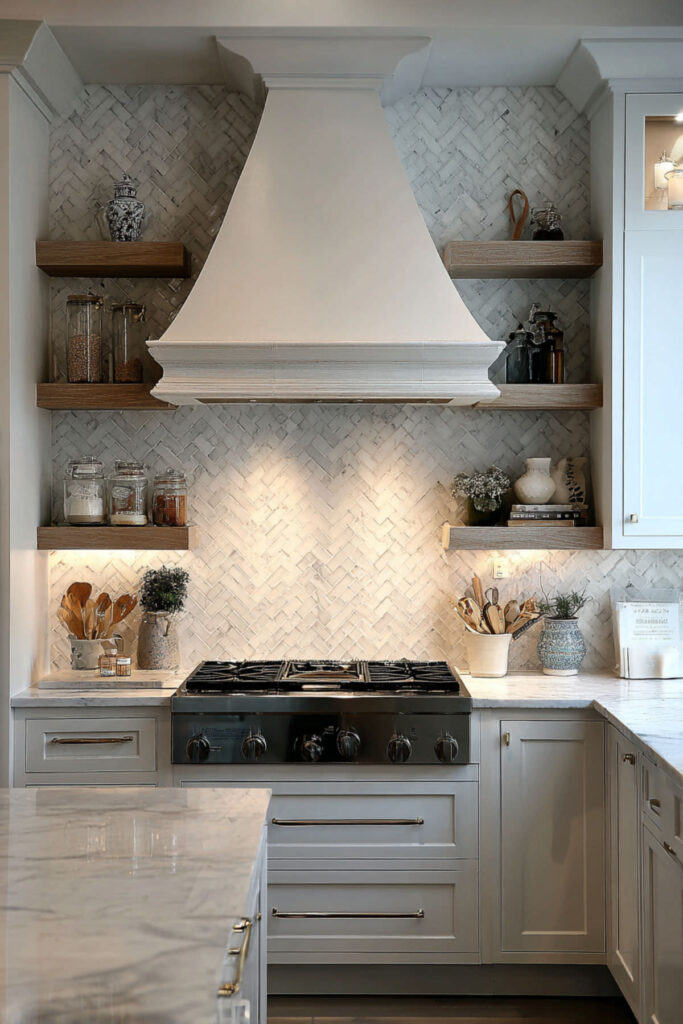
Here’s a layout that designers love: floating shelves on either side of the range hood. The hood becomes the centerpiece, and the shelves frame it symmetrically, creating this balanced, intentional look that turns the stove wall into a real focal point. It’s one of those moves that makes a kitchen feel designed, not just assembled.
I recommend matching wood floating shelves — two on each side of the hood, evenly spaced — in a tone that complements your hood material and backsplash. Floating shelves next to the stove look especially stunning when styled with a mix of cookbooks, stacked bowls, and a small piece of art or a framed print leaned against the wall. The symmetry does most of the styling work for you. This kitchen floating shelves and range hood pairing is one of the most-saved looks on Pinterest, and it’s easy to see why — it’s gorgeous from every angle.
Floating Shelves in a Small Kitchen to Open Things Up
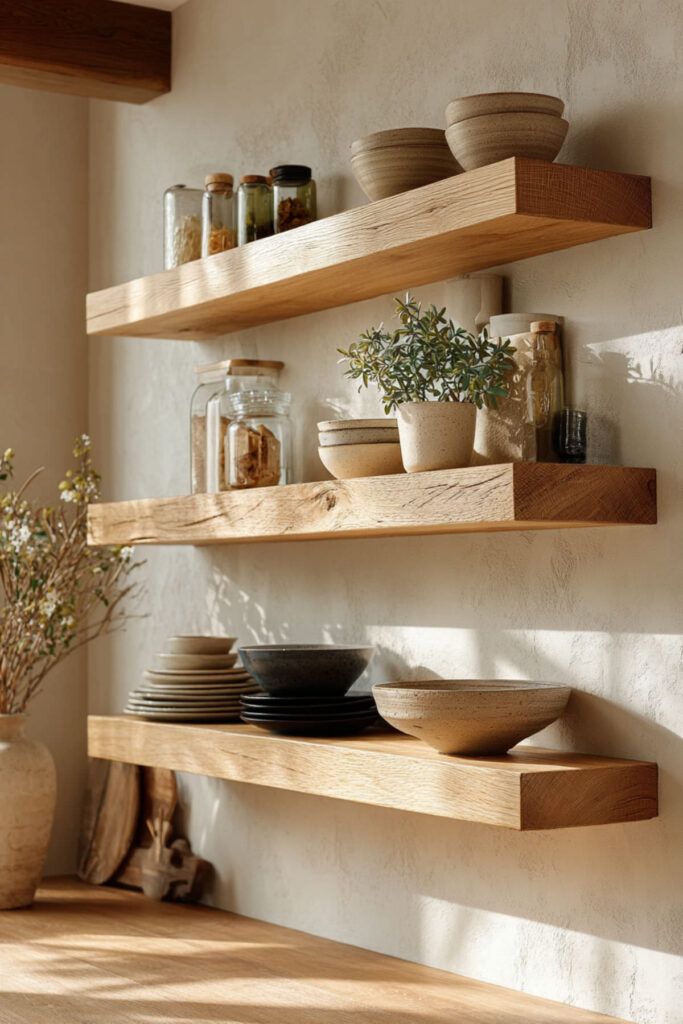
In a small kitchen, upper cabinets can make the room feel closed-in and heavy — like the walls are pressing forward. Swapping even a few upper cabinets for floating shelves opens up the sightlines, lets more light into the room, and makes the space feel significantly bigger than it actually is. It’s one of the smartest moves you can make in a compact kitchen.
I recommend floating shelves in a small kitchen on one wall — ideally the wall with the most natural light. Use them for your most-used dishes, glasses, and a few pretty objects. Shelving for small spaces works best when you keep it edited — no overcrowding, no stacking too high. Floating shelves in a small kitchen feel like a breath of fresh air. They remind me of those beautiful tiny galley kitchens you see in renovated Brooklyn apartments — limited on square footage, huge on charm. Less wall coverage, more visual breathing room.
Floating Shelves Mixed with Cabinets for the Best of Both
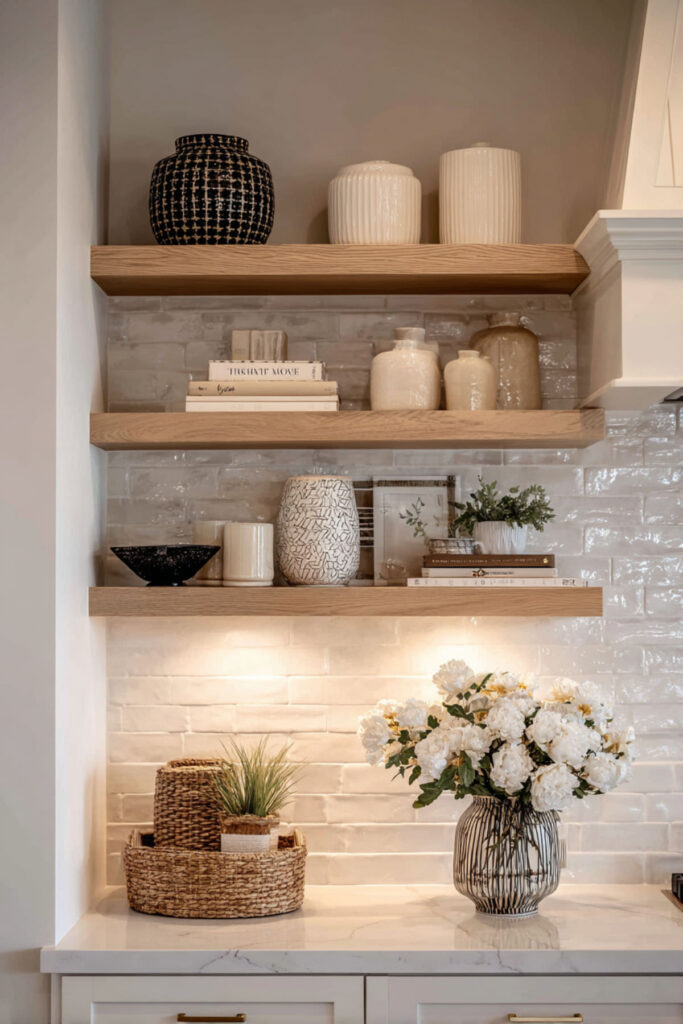
Some people think it’s all-or-nothing — either all cabinets or all open shelving. I think the mix is where the magic happens. Combining floating shelves with closed cabinets on the same wall gives you the visual lightness of open shelving with the practical storage of cabinets. You get to show off the beautiful things and hide the not-so-beautiful things. Best of both worlds.
I recommend placing floating shelves between or beside your upper cabinets — maybe two shelves replacing one cabinet section. This cabinets and floating shelves kitchen approach breaks up the visual wall of cabinetry and adds interest without sacrificing storage. Kitchen with open shelving and cabinets in a modern layout looks layered and intentional, like someone really thought about what goes where. And practically, it works brilliantly — store the blender and canned goods behind doors, display the ceramics and cookbooks on the shelves.
Floating Shelves with Under Lighting for Warm Ambiance
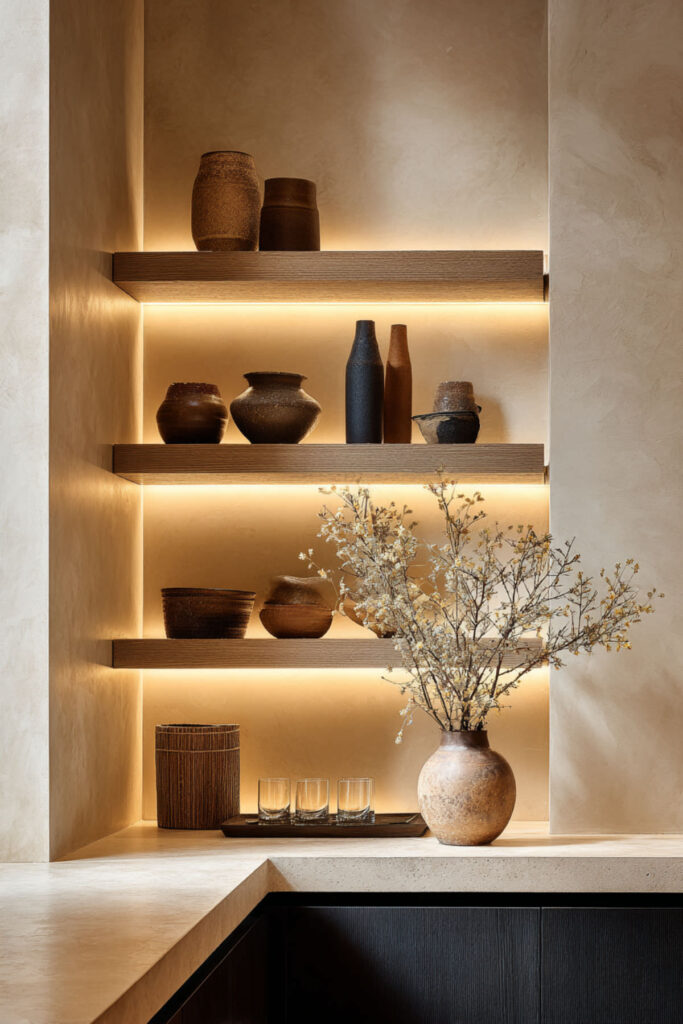
Want to know a secret that makes floating shelves look ten times better? Under-shelf lighting. A strip of warm LED light mounted beneath each shelf casts a soft glow downward that illuminates your backsplash, your countertop, and everything sitting on the shelf below. It adds warmth, depth, and a cozy atmosphere that overhead lights alone can’t create.
I recommend warm-toned LED strip lights (around 2700K) adhered to the underside of each shelf. Kitchen floating shelves with lighting underneath look incredible at night — the warm glow turns your shelves into a design feature, not just storage. Under cabinet lighting is one of the most impactful (and affordable) upgrades you can make in a kitchen. The difference between a kitchen with and without it is dramatic. It makes the whole room feel more inviting, especially in the evenings when overhead lights are too harsh. Just try it once — you’ll never go back.
No Upper Cabinets Kitchen with All Floating Shelves
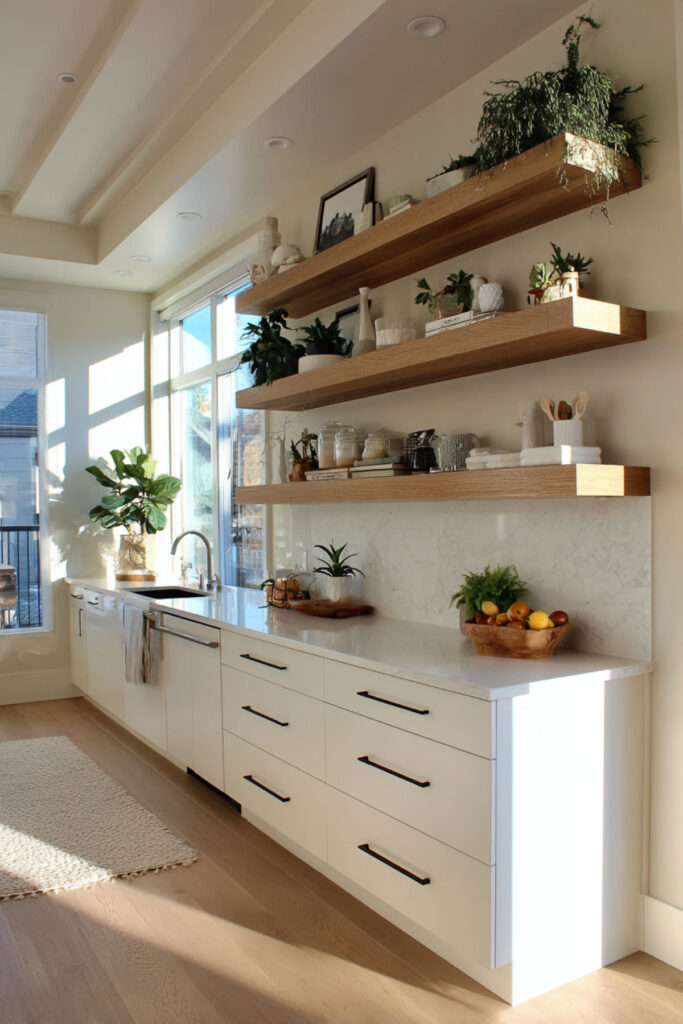
Okay, this one’s the full commitment — removing all upper cabinets and going entirely with floating shelves. It’s bold, it’s airy, and it completely changes the personality of a kitchen. Without those heavy boxes on the wall, the room opens up in a way that feels almost dramatic. The ceiling looks higher. The backsplash gets to shine. Everything feels lighter and more intentional.
I recommend this kitchen cabinets no uppers approach only if you have enough storage elsewhere — a pantry, lower cabinets, or a utility closet — to compensate for the lost enclosed space. Kitchen ideas with no upper cabinets work beautifully in open-concept layouts where the kitchen is visible from the living area. Fill the shelves with a curated mix of things you use daily and things that look beautiful, and rotate seasonally. It’s the kind of kitchen that looks like it belongs in a lifestyle brand’s headquarters — and the best part is, it works just as well in real life.
Long Floating Shelves for a Gallery-Wall Effect
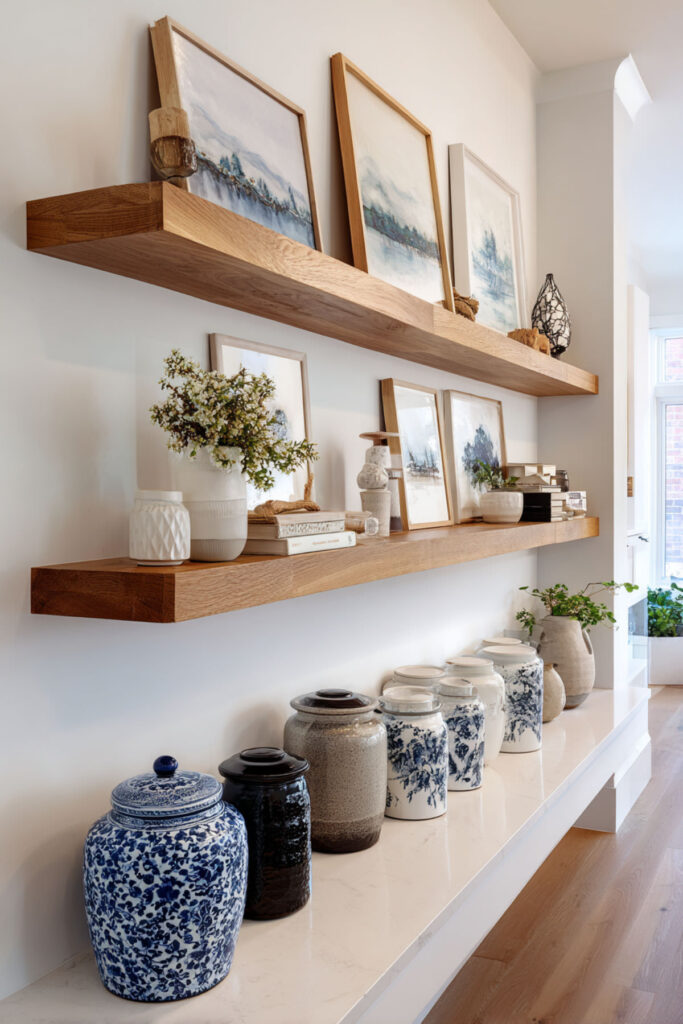
A single long floating shelf that stretches across a full wall creates this horizontal line that draws the eye and makes the kitchen feel wider and more expansive. It’s a simple architectural move, but it has a big impact — especially in kitchens where the wall space is underused.
I recommend a long floating shelf — four to six feet — in solid wood, mounted at a height that’s easy to reach (about five feet from the floor). Long floating shelves in the kitchen are perfect for displaying a lineup of cookbooks, a series of framed prints leaned against the wall, or a graduated collection of ceramics. The single, continuous line gives the wall a gallery-like quality that feels curated and calm. Narrow kitchen shelving like this also works beautifully in eat-in kitchens or breakfast nook areas, where it adds character to an otherwise plain wall.
Corner Floating Shelves for Awkward Kitchen Angles
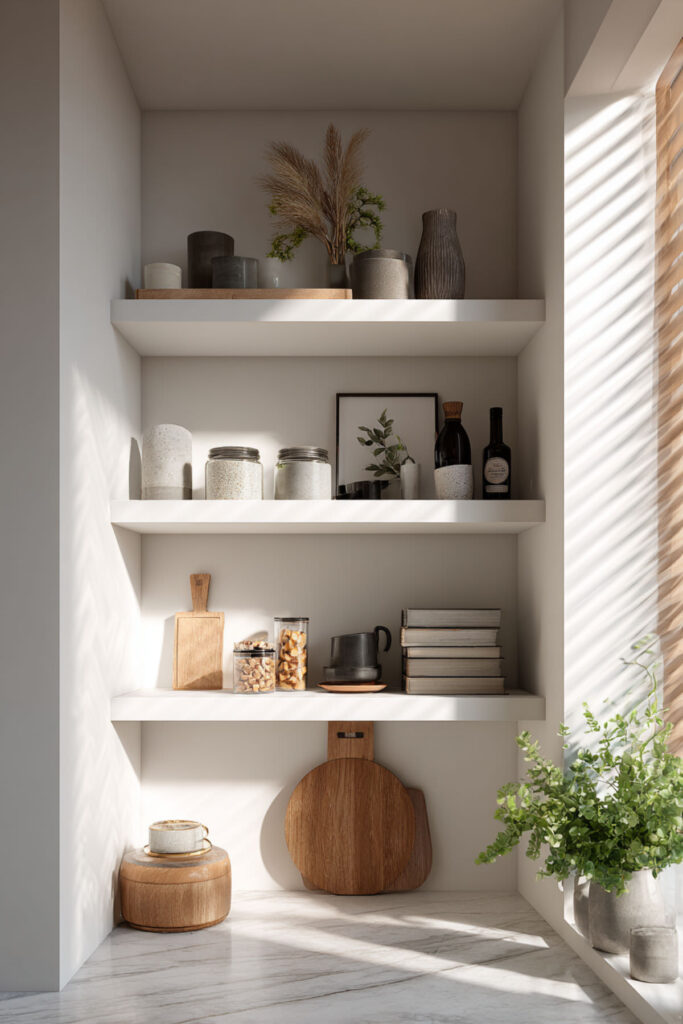
Every kitchen has at least one weird corner — the one where a cabinet doesn’t quite fit, or where two walls meet at an angle that nothing seems designed for. Corner floating shelves solve that problem beautifully. They wrap around the corner, turning dead space into functional, stylish storage that actually enhances the room.
I recommend L-shaped or mitered corner floating shelves in matching wood tone to the rest of your kitchen shelving. Corner floating shelves in a kitchen are ideal for small collections — spice jars, coffee mugs, a few cookbooks. They also work really well next to a window, where they frame the view without blocking light. It’s one of those shelf design for kitchen solutions that most people don’t think of but wish they had once they see it done well.
Industrial Floating Shelves with Metal Brackets
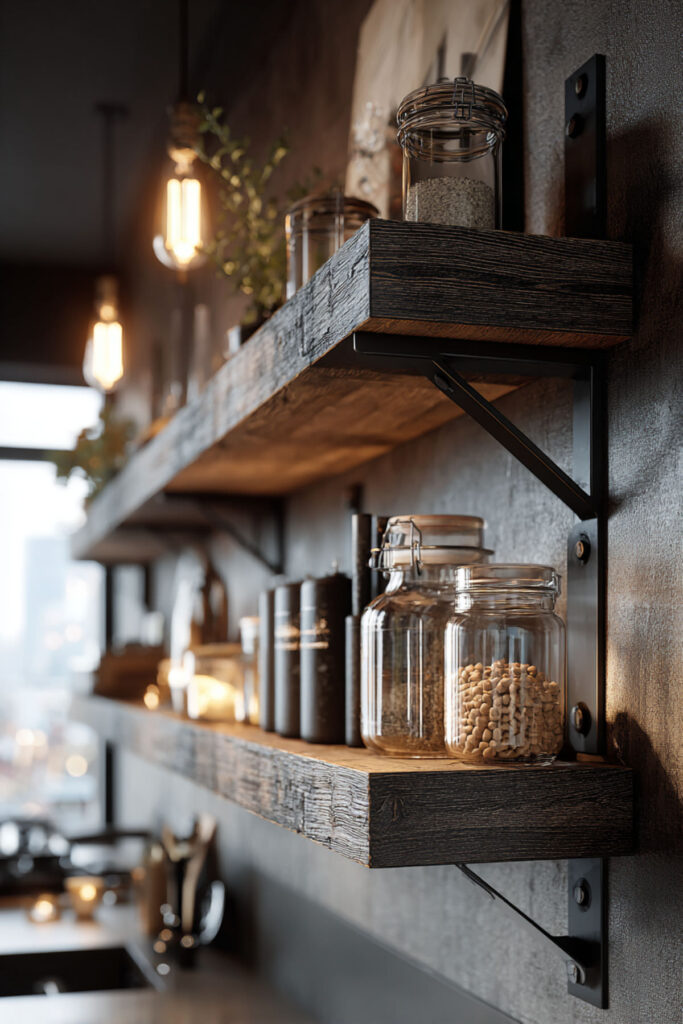
For kitchens with an industrial or modern edge — think stainless appliances, exposed brick, concrete counters — floating shelves with visible metal brackets add the right dose of raw character. The combination of dark wood with matte black iron brackets is a classic industrial look that never feels overdone.
I recommend thick reclaimed wood shelves paired with L-shaped matte black metal brackets for an industrial kitchen floating shelves setup. The brackets become a design element in themselves — they add structure and visual weight to the shelves. Industrial style kitchen decor like this pairs beautifully with Edison-bulb pendant lights, iron pot racks, and dark hardware. It reminds me of those beautiful converted warehouse kitchens you see in neighborhoods like Fisherman’s Wharf lofts or old meatpacking district spaces — honest materials, warm textures, zero pretense.
Floating Shelves for Cookbooks — Because Good Ones Deserve to Be Seen
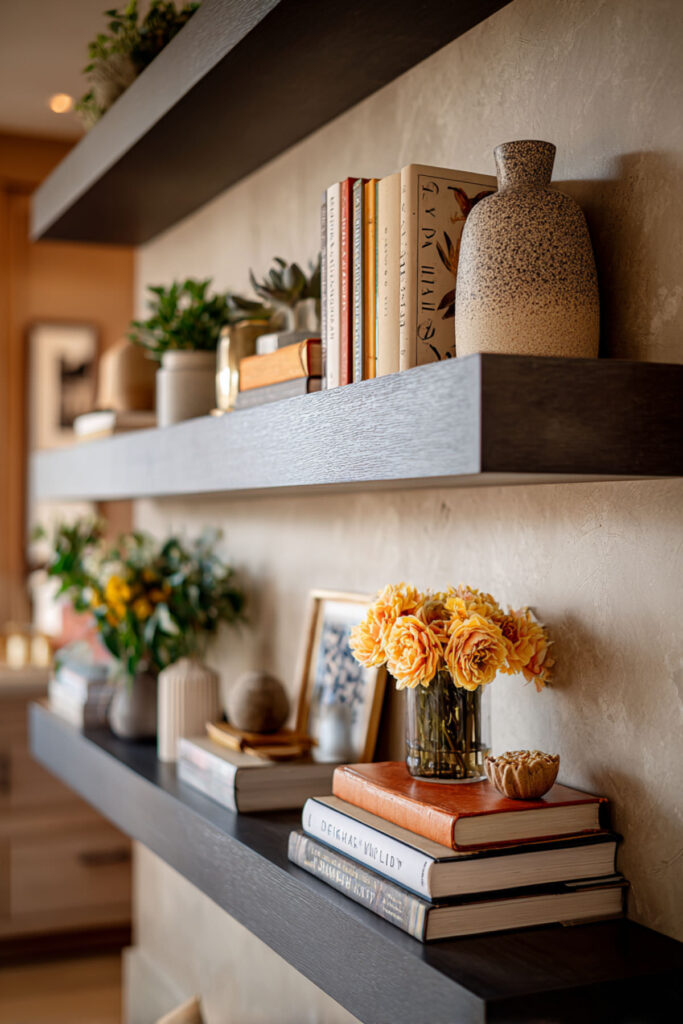
Cookbooks are too beautiful to live in a drawer. A dedicated floating shelf for cookbooks — or even a stack of two or three shelves — turns your collection into a display that adds color, personality, and a real sense of who lives in this kitchen. It’s functional decor at its best.
I recommend a thick wood shelf about 10 inches deep (enough to hold larger format cookbooks upright) mounted at a comfortable browsing height. Floating shelves for cookbooks look great near the stove or beside the fridge, where you’re most likely to grab one mid-recipe. Lean a few favorites face-out like a bookstore display, stack others horizontally, and tuck a small plant or a candle beside them. This is the kind of kitchen shelf styling that makes people linger and flip through recipes they haven’t tried in years. It brings life to the wall and life to your cooking.
Floating Shelves Around the Kitchen Window for Framing Light
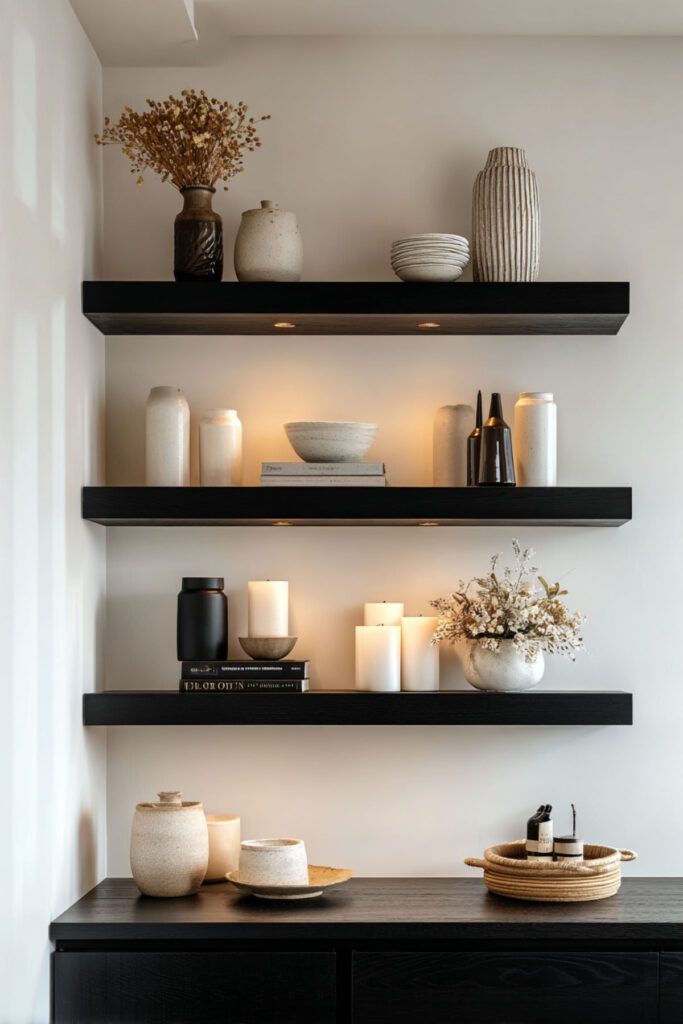
Instead of blocking the window with a cabinet or leaving the area bare, try mounting floating shelves on either side of — or directly above — the kitchen window. The shelves frame the natural light, and everything you place on them gets this gorgeous backlit quality that makes even a basic glass jar look special.
I recommend slim floating shelves flanking the window, mounted close to the frame, with small items that don’t block the light — clear glass bottles, tiny potted herbs, a few simple ceramics. Floating shelves around the kitchen window create this little vignette that’s part storage, part art. Plants especially love this spot, and floating shelves with plants in the kitchen bring color and freshness to the room in the most natural way possible. It’s a detail that makes the whole kitchen feel brighter and more alive.
Black Floating Shelves for Graphic, Modern Contrast
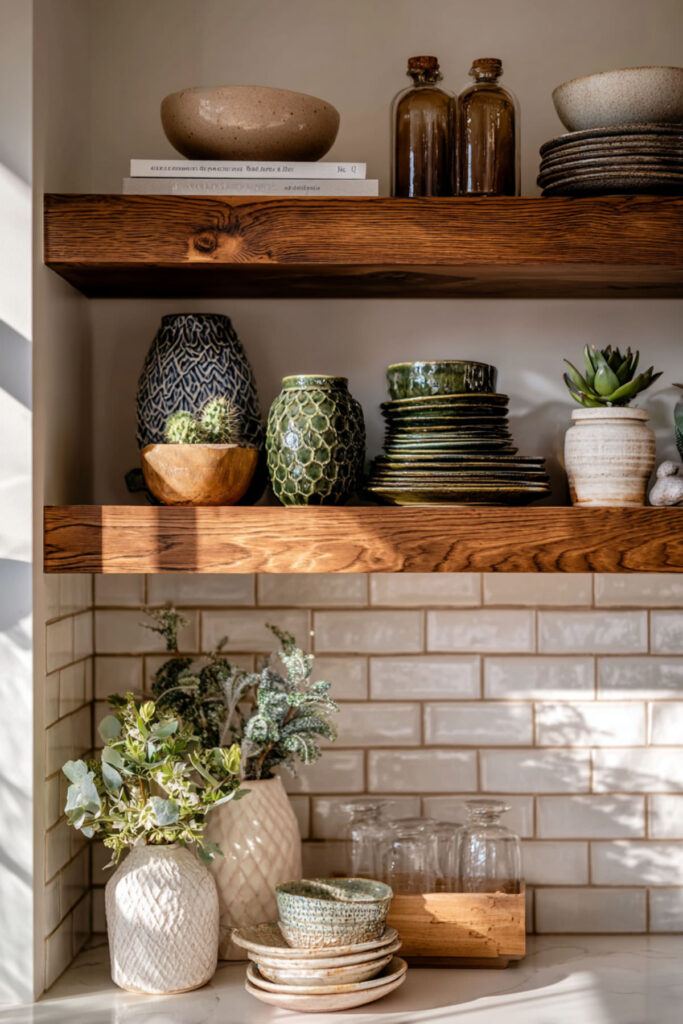
Black shelves in a light kitchen create this gorgeous, graphic contrast that feels intentional and bold. Against a white backsplash or pale walls, black floating shelves draw a clean, dark line across the wall that anchors the room and gives everything on them a gallery-like presentation.
I recommend matte black floating shelves with a slim profile for a contemporary kitchen aesthetic. Black floating shelves kitchen setups look especially sharp when paired with black hardware, a matte black faucet, or black-framed windows elsewhere in the space. The monochromatic coordination creates cohesion without monotony. Style them with light-colored ceramics, wooden accents, and green plants for contrast — the dark shelf makes every object stand out like it’s on display. Some people think black shelves feel heavy. I think they feel grounded and intentional — and in the right kitchen, they’re absolutely perfect.
How to Style Open Kitchen Shelves Like They Actually Live There
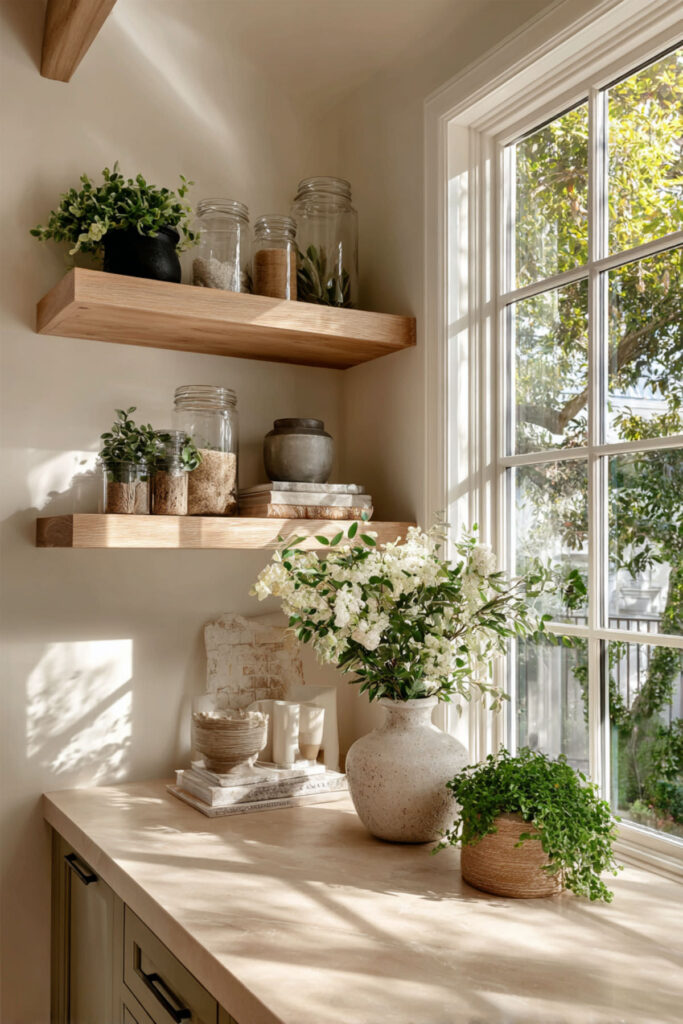
And here’s the last one — not a shelf type, but the secret to making any floating shelf look good: style them like they’re used, not staged. The prettiest kitchen shelves aren’t perfectly symmetrical museum displays. They’re a little uneven. A stack of plates here, a gap there, a cookbook leaned against the wall, a jar of wooden spoons you actually grab every day. That lived-in quality is what makes open shelves feel warm instead of performative.
I recommend the rule of threes — group items in sets of three at varying heights. Mix materials: ceramic next to wood next to glass. Leave some empty space between groupings so things don’t look crowded. Things to put on kitchen shelves that always look good: white dishware, wooden cutting boards, glass jars with visible contents (pasta, grains, spices), a small plant, and one or two objects that are purely decorative. Ever since the “styled but not try-hard” approach became the gold standard for kitchen shelf decor, open shelving has gone from polarizing to practically required.
Keep the Inspiration Going — There’s So Much More to See
Floating shelves are one of those kitchen additions that give you so much more than storage. They give you a reason to be intentional about what you keep, what you display, and how your kitchen makes you feel every time you walk in. Save this collection for your next kitchen refresh moment.
Whether you go full open shelving or mix shelves with cabinets, wood or white, minimal or layered — there’s a version here that fits your kitchen and your life. Take a look at these table runner ideas that add softness, texture, and an elegant finishing touch to your kitchen table.
Save the ideas that resonated and come back when you’re ready to install. And definitely check out the rest of the site for more kitchen design, styling tips, and product recommendations. Your walls are waiting — and the right floating shelves will make them worth looking at.
Keep building your dream kitchen with even more ideas to explore.