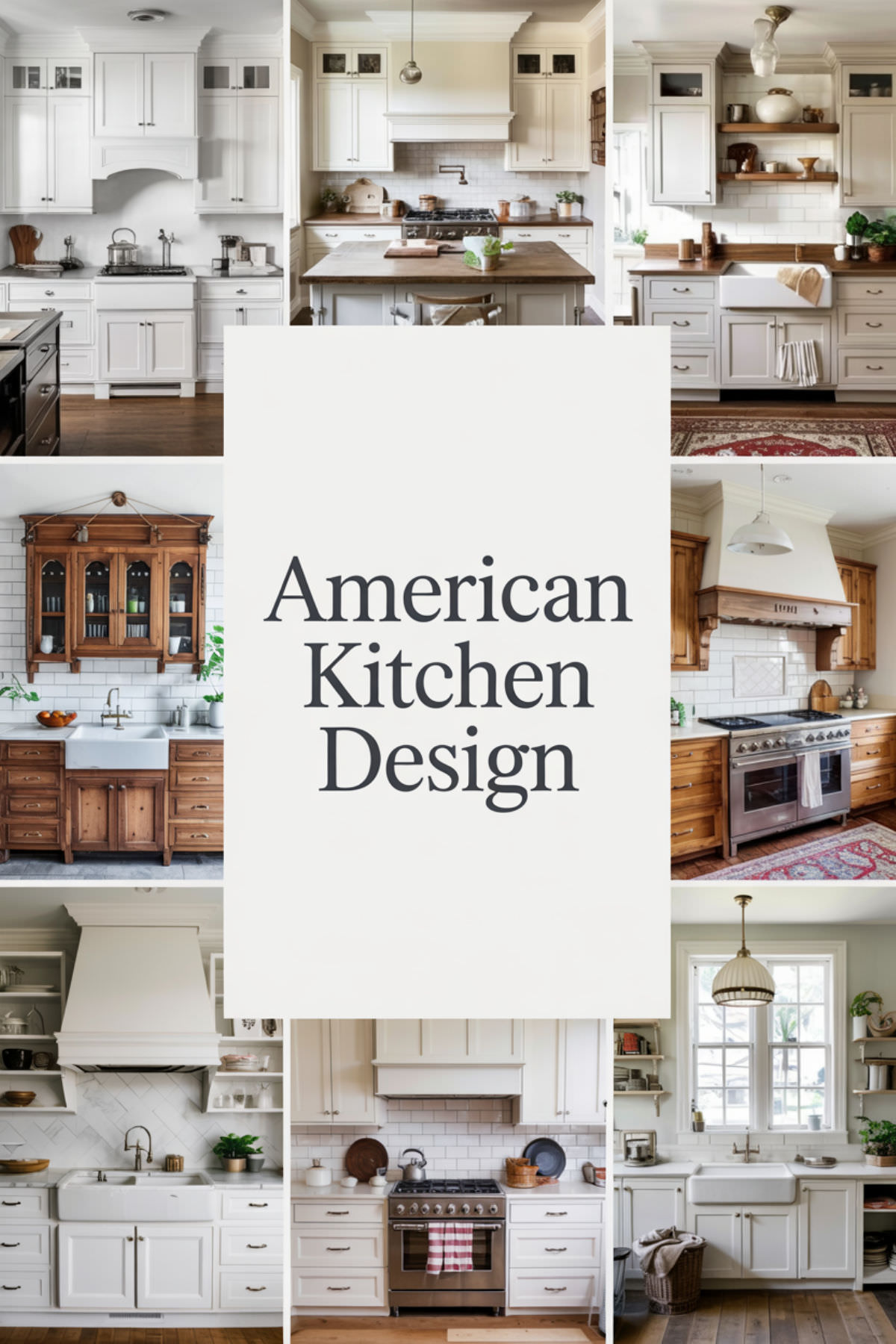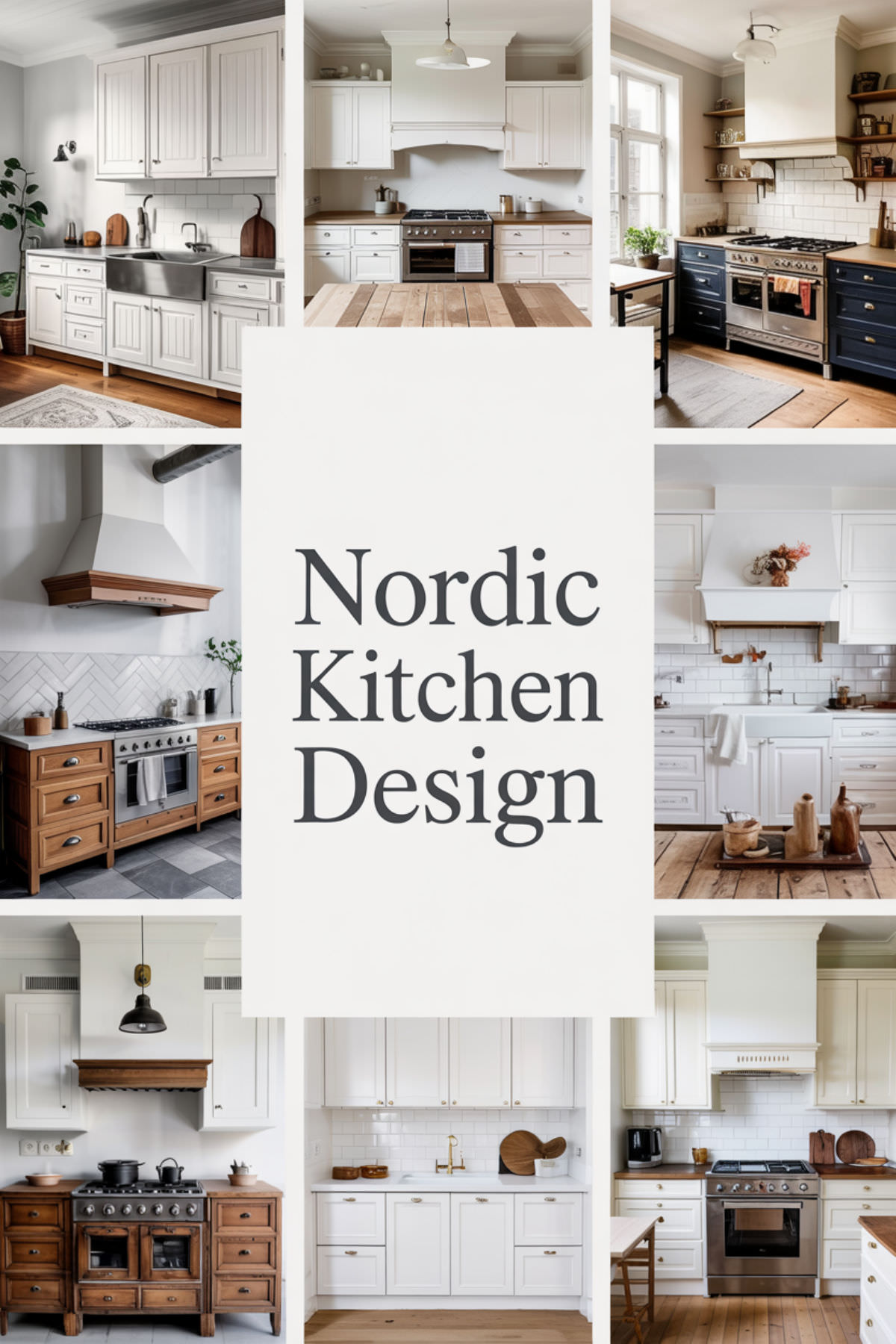
When Rachel’s kitchen designer suggested moving her refrigerator away from the corner and into a built-in wall unit, she thought he’d lost his mind. Three months into living with her redesigned space, she realized that a single change had transformed her entire cooking experience. No more traffic jams when someone needed ice while she was cooking, no more stretching across the kitchen with hot pans. That’s the thing about appliance layout – get it right, and you’ll never think about it again. Get it wrong, and you’ll curse every meal prep.
The truth about kitchen appliance placement is that it’s both science and art. There’s the classic work triangle to consider, sure, but modern kitchens demand more nuanced thinking. Where does the air fryer live? Should the microwave be at eye level or tucked below? How do you hide that instant pot collection without making it impossible to use? We’ve gathered layout strategies that solve real problems while keeping your kitchen looking like something from those impossibly perfect Pinterest boards.
Save these ideas – you’ll need them whether you’re doing a full remodel or just trying to make your current setup work better. Check out our other kitchen organization guides too, because sometimes the smallest changes make the biggest difference. I’m not providing science — these are décor ideas, fictional in places.
Kitchen Appliance Placement and Work Triangle Evolution
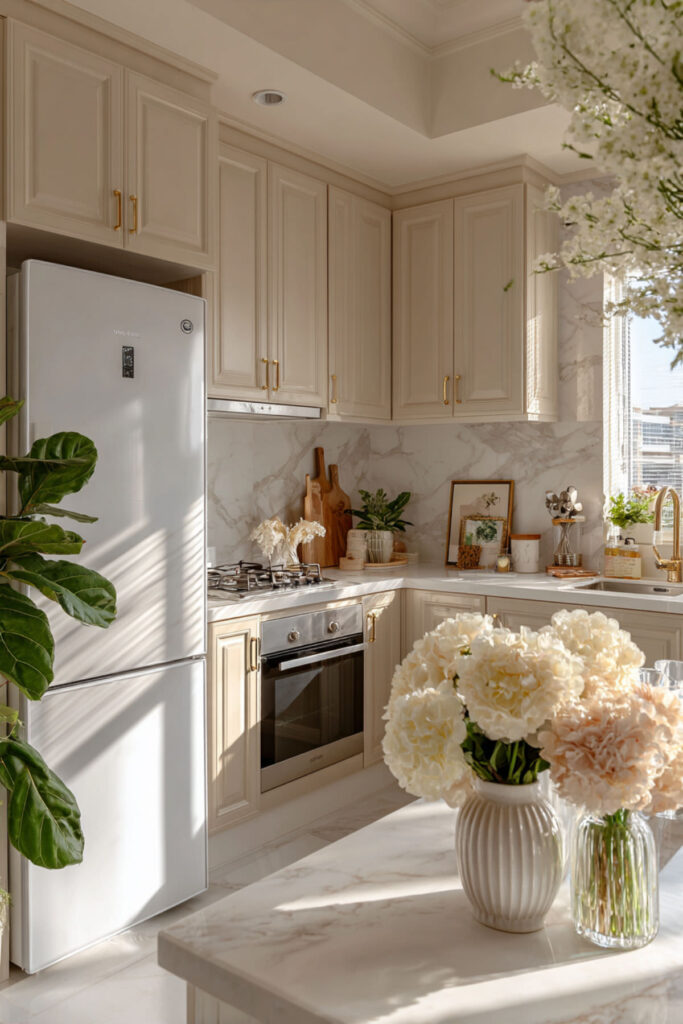
The work triangle isn’t dead, but it’s definitely evolved. Modern kitchens often have multiple cooks, more appliances, and islands that change everything. Think zones instead: prep zone with sink and dishwasher, cooking zone with range and microwave, storage zone with fridge and pantry. Each zone should have its own landing space – at least 15 inches of counter.
This approach works whether you’re dealing with a galley or a massive open concept. Those new builds in Austin are all about zone planning, and for good reason. I really recommend this magnetic planning kit that lets you map appliance placement before committing – it’s saved countless renovation regrets.
Appliance Wall in Kitchen Creating a Streamlined Look
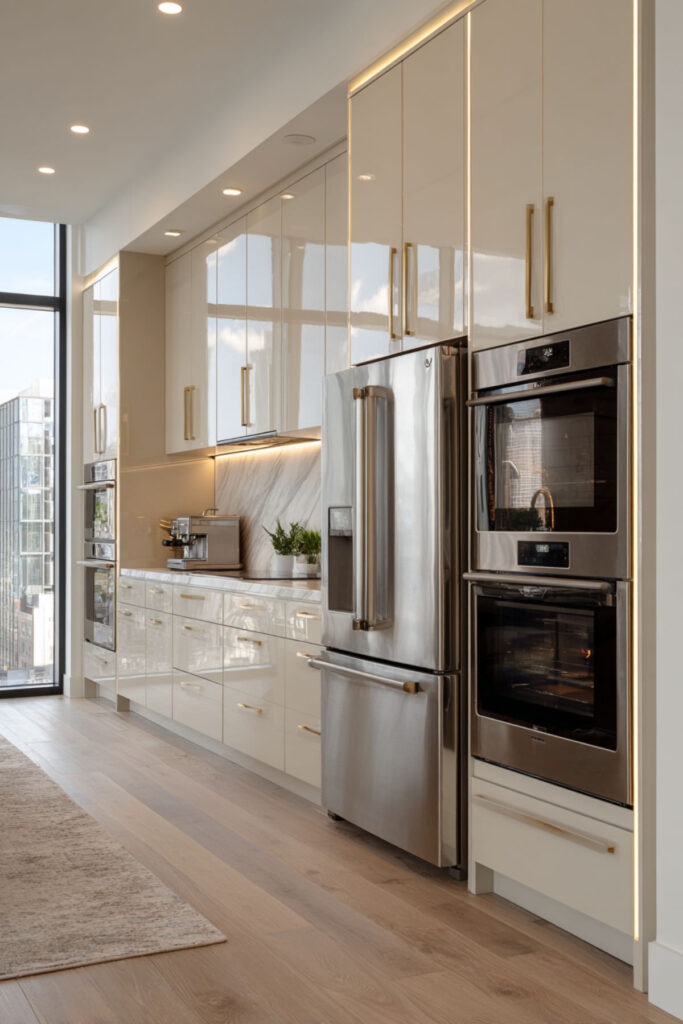
An appliance wall consolidates everything tall – refrigerator, double ovens, microwave, maybe even a coffee machine – into one sleek elevation. This frees up the rest of your kitchen for uninterrupted counter space and clean sight lines. The key is matching heights and finishes. Panel-ready appliances that accept cabinet fronts make everything disappear into what looks like a wall of storage.
Some worry this puts everything too far from the island, but proper planning keeps distances reasonable. I strongly recommend these integrated refrigerator models that sit flush with cabinets – the seamless look is worth every penny.
Kitchen Layouts with Island and Strategic Appliance Zones
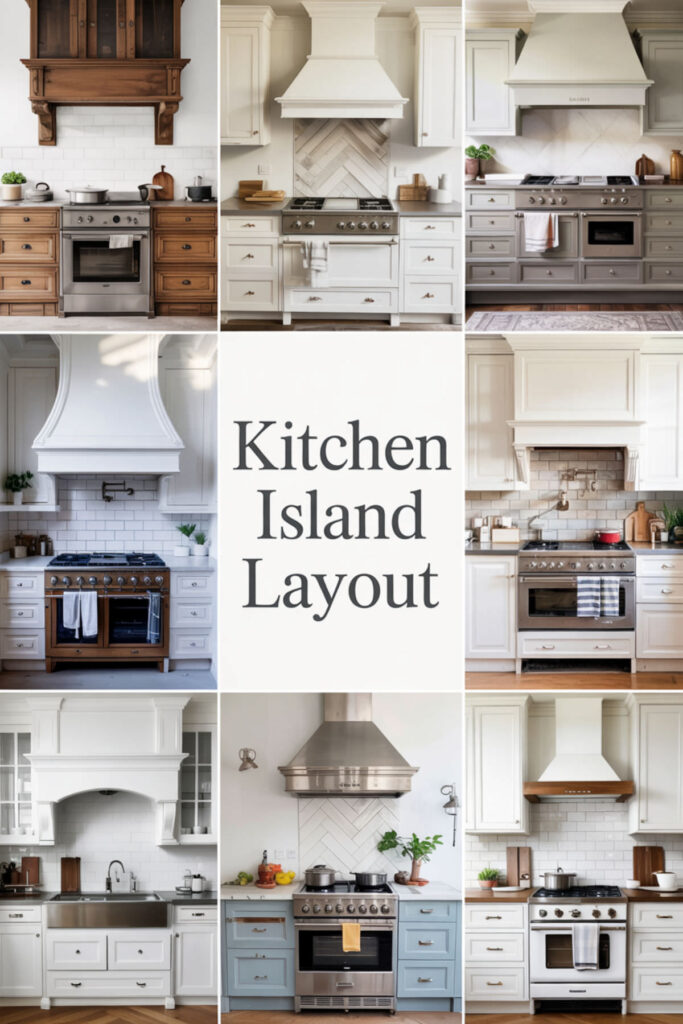
Islands change everything about appliance placement. Should the sink go there? The cooktop? Maybe just the dishwasher? The answer depends on your space and habits. Kitchen sink with island works great for prep and cleanup, but requires plumbing and often means sacrificing storage. Cooktops create a social cooking experience but need serious ventilation.
Sometimes the smartest move is keeping the island clear except for maybe a microwave drawer or beverage fridge. This reminds us of those sprawling Napa Valley homes where the island becomes command central. I really recommend this downdraft ventilation system if you’re considering an island cooktop – no hood blocking sightlines.
L-Shaped Kitchen Appliance Layout Maximizing Corners
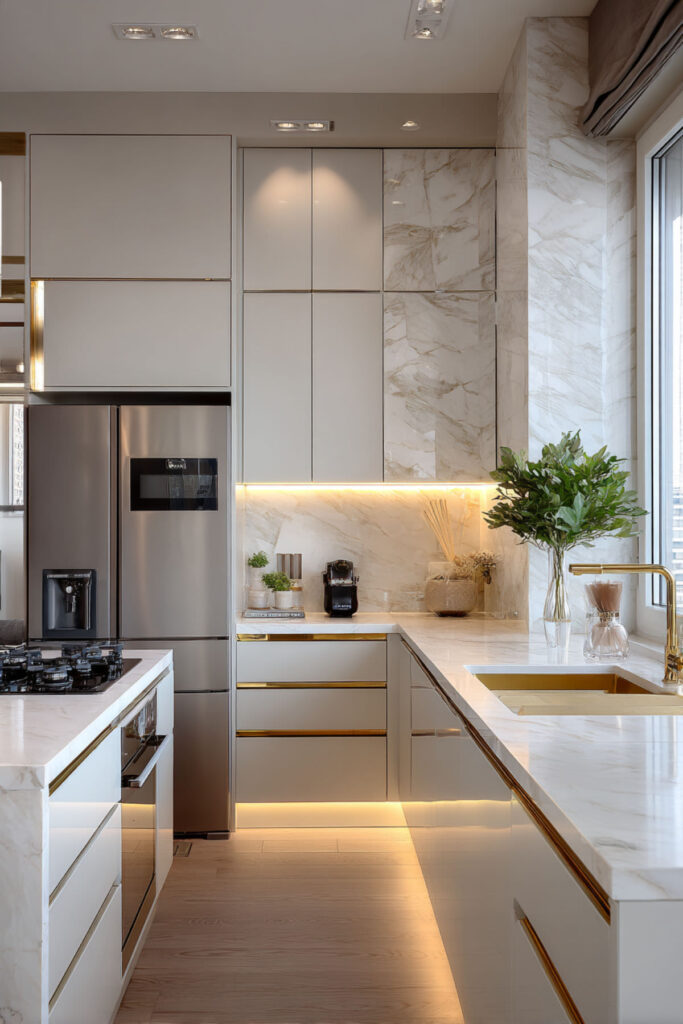
L-shaped kitchens offer natural zone separation, but corners can be tricky for appliances. Never put a dishwasher or oven in a corner – door clearance becomes a nightmare. Instead, use corners for pantry storage or lazy Susans, placing appliances along the straight runs. The refrigerator often works best at the end of one leg, creating a natural boundary.
Position your sink under a window if possible, range on the perpendicular wall. This configuration keeps the cook from feeling trapped in the corner. I strongly recommend these magic corner pull-out systems that make corner cabinets actually useful.
Integrated Kitchen Appliances Disappearing Into Cabinetry

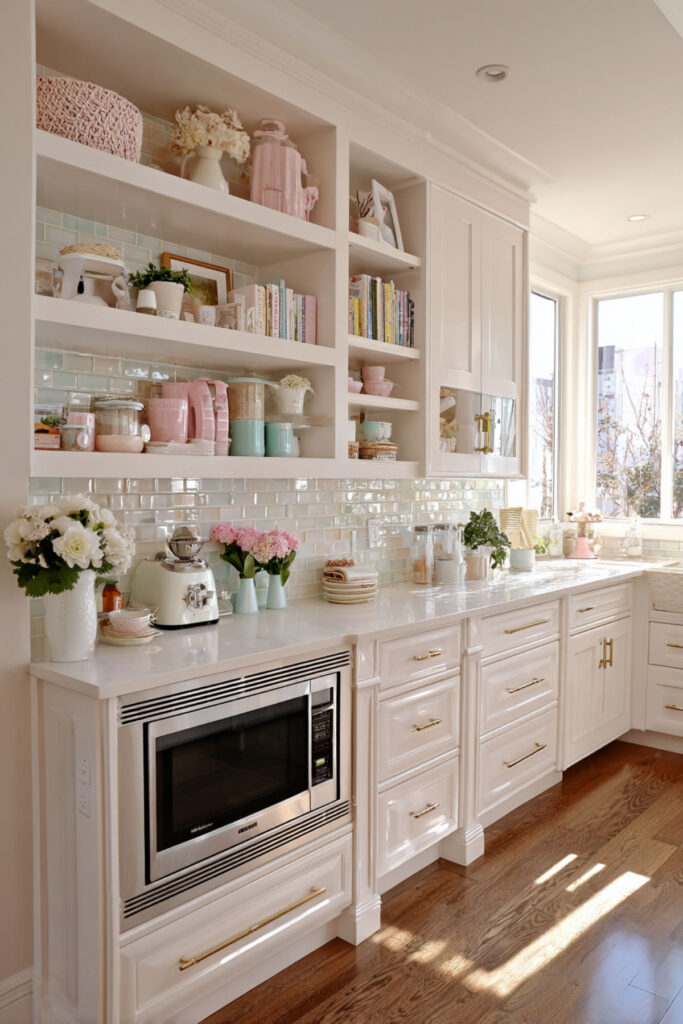
Fully integrated appliances take the seamless thing to another level. We’re talking dishwashers that look like drawer fronts, refrigerators indistinguishable from pantry cabinets, and ovens that blend into walls. This approach works especially well in open-plan homes where the kitchen is always visible. The cost is higher, but the visual payoff is huge.
Consider integrating some appliances while leaving others exposed for contrast – maybe hidden dishwasher but visible range. I really recommend these panel-ready dishwashers that run whisper-quiet – integration plus performance.
Appliance Garage Ideas for Small Kitchen Gadgets

Appliance garages are having their moment, and thank goodness. These cabinet-level hiding spots keep counters clear while maintaining easy access. Corner locations work brilliantly – that dead space becomes prime real estate for your coffee maker, toaster, and stand mixer. Include outlets inside and doors that lift up or slide back completely.
Some versions even have pull-out shelves that bring appliances forward for use. Ever since Marie Kondo made us all organization-obsessed, built-in garages have become standard in high-end kitchens. I strongly recommend these lift-up door mechanisms that lock in the open position – no bonked heads while making coffee.
Butler’s Pantry as Secondary Appliance Station

If you have the space, a butler’s pantry solves every appliance storage problem. This secondary prep area houses everything from the instant pot to the bread maker, keeping the main kitchen pristine. Include a second sink, counter space, and plenty of outlets. This is where messy prep happens, where appliances live permanently plugged in, where the real cooking chaos unfolds.
Think of it as your kitchen’s backstage. This reminds us of those grand Southern homes where the butler’s pantry is bigger than most people’s entire kitchens. I really recommend this compact dishwasher for butler’s pantries – perfect for prep dishes.
Pull-Out Shelves Making Deep Cabinets Appliance-Friendly

Deep cabinets swallow appliances whole, never to be seen again. Pull-out shelves change that dynamic completely. Heavy appliances like stand mixers live on sturdy pull-outs that bring them to counter height for use. No more back-breaking lifts or forgotten gadgets. The key is heavy-duty, soft-close slides rated for the weight.
Include outlets in the cabinet so appliances can stay plugged in. Some people worry about the cost, but compared to physical therapy for your back? Bargain. I strongly recommend these 200-pound-rated drawer slides – they handle even the heaviest kitchen aid without complaining.
Coffee Bar and Small Appliance Organization Centers
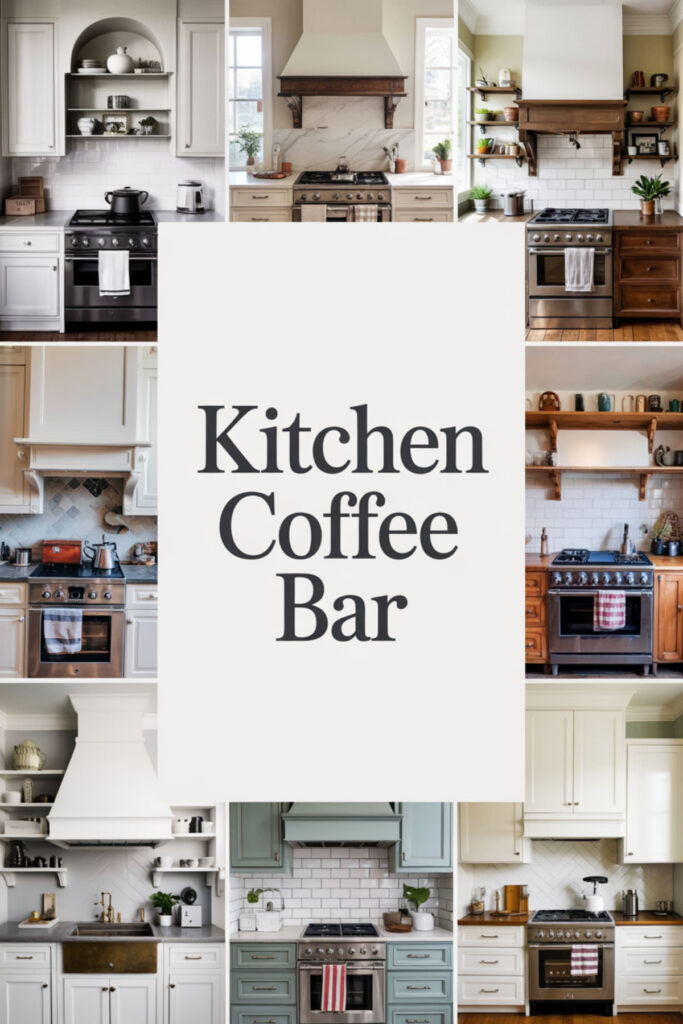
Dedicated beverage stations remove morning chaos from main prep areas. Position your coffee bar near the refrigerator but away from main cooking zones – nobody needs to dodge the espresso maker while flipping pancakes. Include storage for mugs, a small sink if possible, and maybe a mini fridge for cream. This becomes a destination, not just storage.
The same principle works for baking stations or smoothie centers. I really recommend these refrigerator drawers that fit under counters – perfect for beverage station additions.
One-Wall Kitchen Making Every Appliance Count
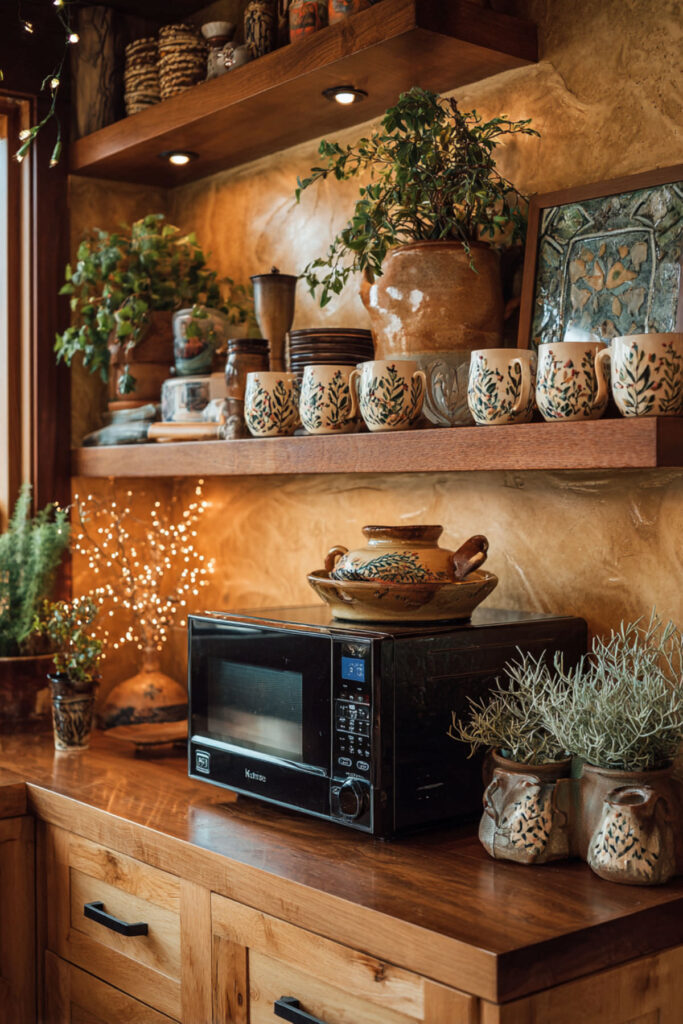
One-wall kitchens demand military precision in appliance placement. Start with the sink in the center, flanked by dishwasher and trash pull-out. Range to one side, refrigerator to the other, creating a condensed but functional work triangle. Use upper cabinets for microwave placement at eye level. Every appliance needs to earn its spot – no room for rarely-used gadgets. This layout actually forces better cooking habits through constraint.
I strongly recommend these counter-depth appliances that don’t protrude – crucial for maintaining walkway clearance. To soften the streamlined look, I recommend the dimmable pendant light. Its clean design adds both task lighting and modern elegance to a one-wall kitchen.
Smart Kitchen Design with Tech-Forward Appliances
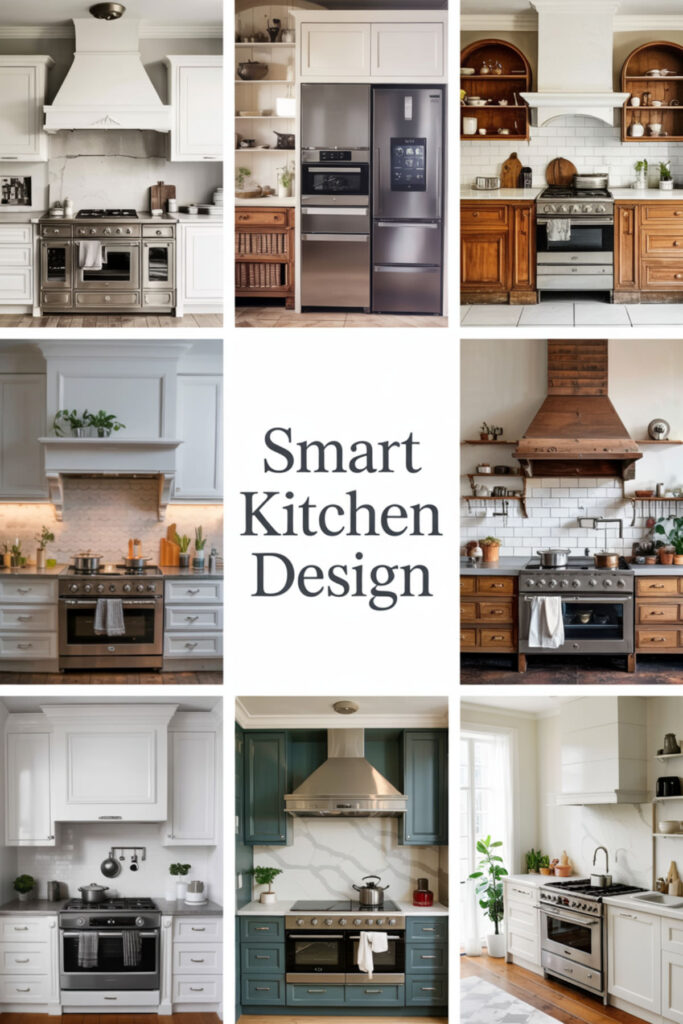
Smart appliances aren’t just about Wi-Fi connectivity anymore. They’re about placement that anticipates needs. Refrigerators with door-in-door access reduce traffic jams. Microwaves with sensor cooking need ventilation space. Induction cooktops require specific cookware storage nearby.
Plan for charging stations, tablet holders, and maybe a dedicated spot for your smart speaker. The technology should enhance workflow, not complicate it. I really recommend these smart outlets that can be controlled remotely – perfect for turning off forgotten appliances.
Microwave Placement Options Beyond the Counter

Counter microwaves waste precious real estate. Consider these alternatives: drawer microwaves in islands (kid-friendly height), over-range models with built-in ventilation, or speed ovens that combine microwave with convection. Built-in trim kits make countertop models look integrated.
The key is placing them between knee and shoulder height – no climbing or crouching. Some designers insist on hiding microwaves, but accessibility trumps aesthetics here. I strongly recommend these microwave drawers that open smoothly – easier than reaching over hot cooktops.
Hidden Appliances Behind Sliding Cabinet Doors
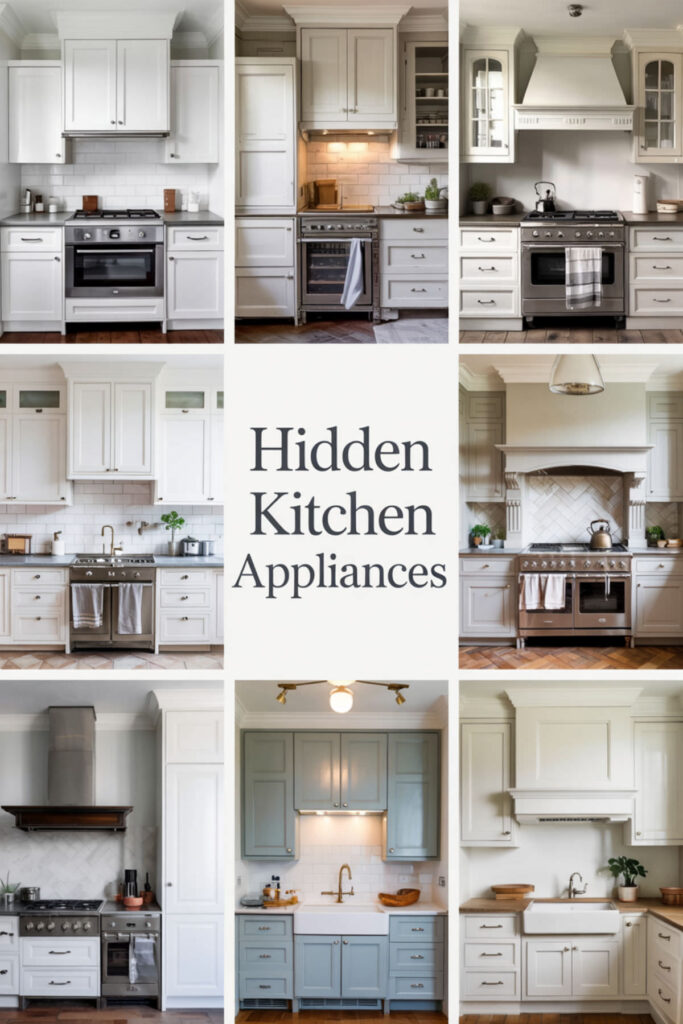
Pocket doors and sliding panels conceal entire appliance stations when not in use. This works brilliantly for coffee bars, baking centers, or even entire walls of small appliances. Open the doors, and everything’s accessible.
Close them, and your kitchen looks like a minimalist dream. The hardware needs to be commercial-grade to handle daily use. This approach reminds us of those Japanese-inspired kitchens where everything has a place and a cover. I really recommend these soft-close sliding door systems that prevent slamming.
Kitchen Island Storage Specifically for Appliances
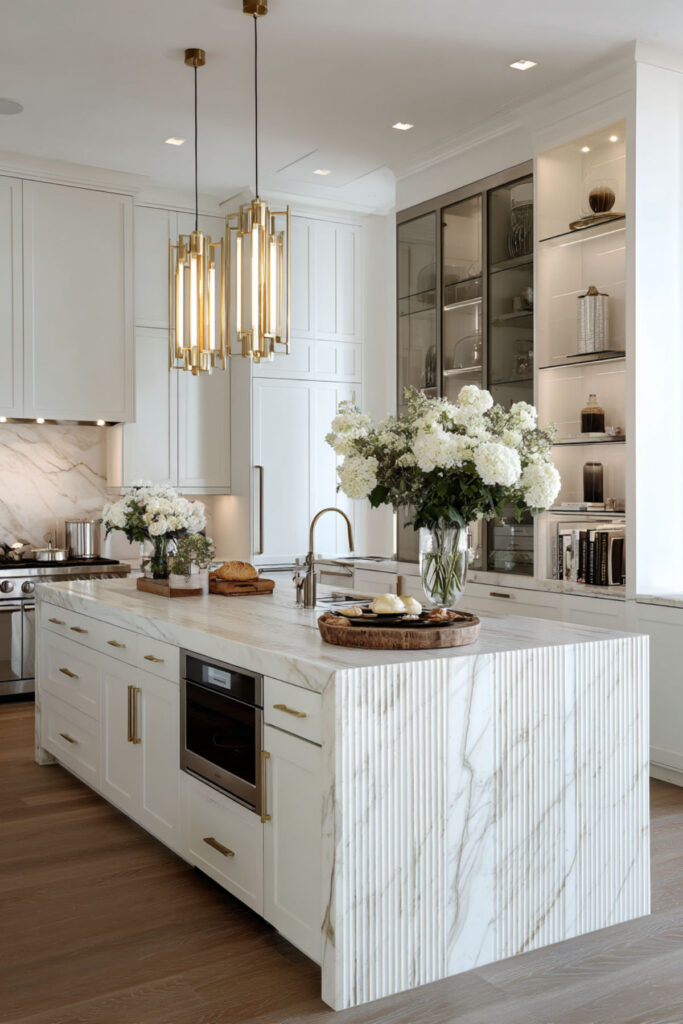
Islands offer untapped appliance storage potential. Deep drawers hold instant pots and slow cookers. Open shelving displays pretty mixers. End panels hide coffee makers or microwaves. The key is maintaining the island’s role as gathering space while maximizing function.
Include outlets every 24 inches for appliance use anywhere. Consider water lines for espresso machines or pot fillers. I strongly recommend these pop-up outlets that disappear when not needed – maintain clean lines.
Compact Appliance Solutions for Tiny Kitchens

Small kitchens need appliances that multitask. Combination microwave-convection ovens, dishwasher drawers that fit in narrow spaces, and apartment-sized refrigerators that don’t dominate. Look for appliances that mount under cabinets or integrate into existing furniture.
Every choice should solve multiple problems. The European approach to compact appliances has finally reached American markets with style. I really recommend these 18-inch dishwashers that clean as well as full-size models.
Luxury Kitchen Appliances as Design Statements
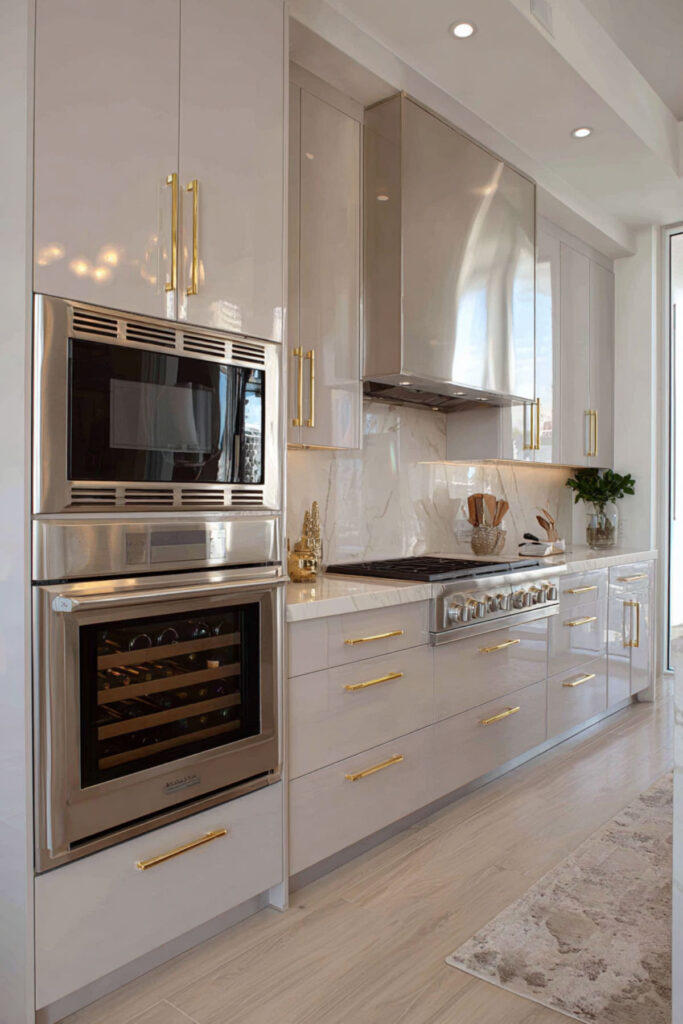
Sometimes appliances shouldn’t hide. That La Cornue range, Sub-Zero refrigerator, or copper espresso machine deserves spotlight placement. Build your layout around these showpieces. Position statement appliances where they’re visible from living areas, creating kitchen jewelry. Support them with subtle integrated appliances elsewhere.
This reminds us of those Architectural Digest kitchens where the range costs more than most cars. I strongly recommend these professional-style ranges with custom color options – if you’re going bold, commit fully.
Air Fryer Cabinet Storage and New Appliance Challenges

Air fryers, instant pots, and sous vide circulators didn’t exist when most kitchens were designed. Creating homes for these newcomers requires creativity. Deep drawers with outlets, pull-out shelves in pantries, or dedicated small appliance cabinets with doors that stay open during use. The challenge is maintaining accessibility without cluttering counters. Plan for the appliances you’ll actually use, not every gadget that exists. I really recommend these adjustable drawer dividers that accommodate changing appliance collections.
The perfect appliance layout isn’t about following rigid rules – it’s about understanding how you actually cook and building around that reality. Whether you’re working with a massive kitchen or a tiny galley, the goal remains the same: appliances that work hard without working against each other or your workflow. Make sure to explore these loft kitchen ideas that blend raw industrial charm with the ease of modern comfort.
Remember, the best kitchen is one where cooking feels effortless, not like solving a puzzle every meal. Ready to tackle more kitchen challenges? Check out our guides on cabinet organization and pantry systems – because great appliance layout is just the beginning of a truly functional kitchen. Don’t miss these mini kitchen ideas for bedrooms that maximize comfort and everyday convenience.
Don’t miss these last dreamy touches — save them while you can.


I hope this gave you new direction—there’s more to see on my site.
guiadenoivos.saojosedojardimeuropa.com.br
beyond.globalpranichealing.com