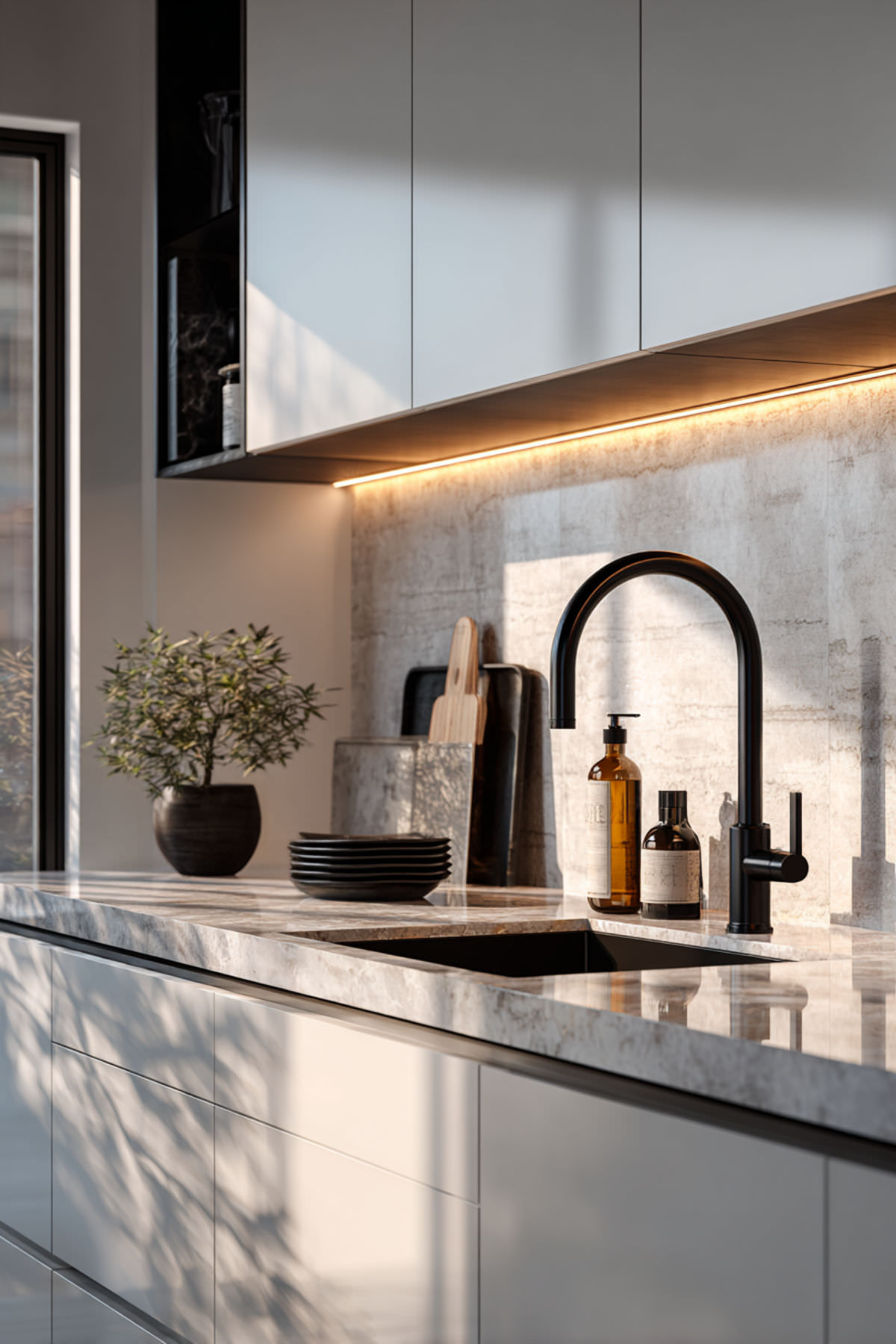
There’s a moment at every great gathering — the one where someone walks in, sees the spread, and says, “Oh wow.” That moment is what a charcuterie board is really for. Not just feeding people (though it does that beautifully), but creating something visual, generous, and inviting that sets the tone before anyone takes a single bite.
A well-built charcuterie board is the easiest way to look like you’ve been planning for days when you really only spent thirty minutes. It’s the kind of hosting that’s all impact, minimal stress — and once you know a few principles, you can assemble one that looks like it belongs in a food magazine. I’ve gathered 17 of the best charcuterie board ideas for women who take pride in beautiful presentations and want every gathering to feel like something worth remembering.
There are product recommendations and styling tips woven throughout, so keep an eye out. Save the ones that match your hosting style, and be sure to browse the rest of the site for more ideas that make at-home entertaining feel effortless. The content here is focused on kitchen design inspiration and not scientific research; some examples may be fictional.
The Classic Charcuterie Board: Meats, Cheeses, and the 3-3-3-3 Rule
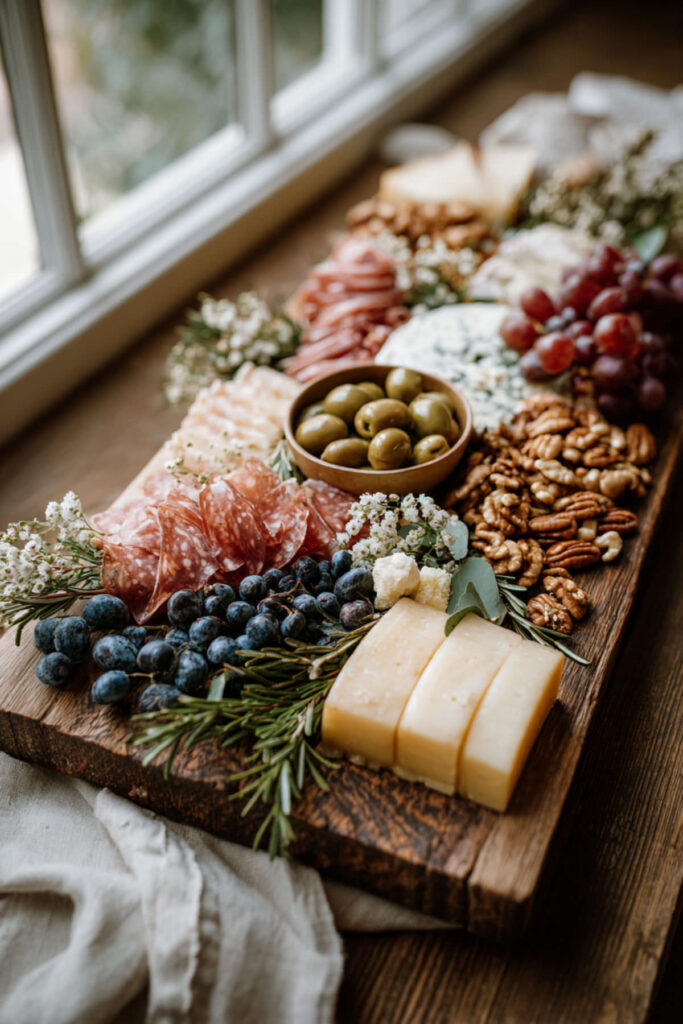
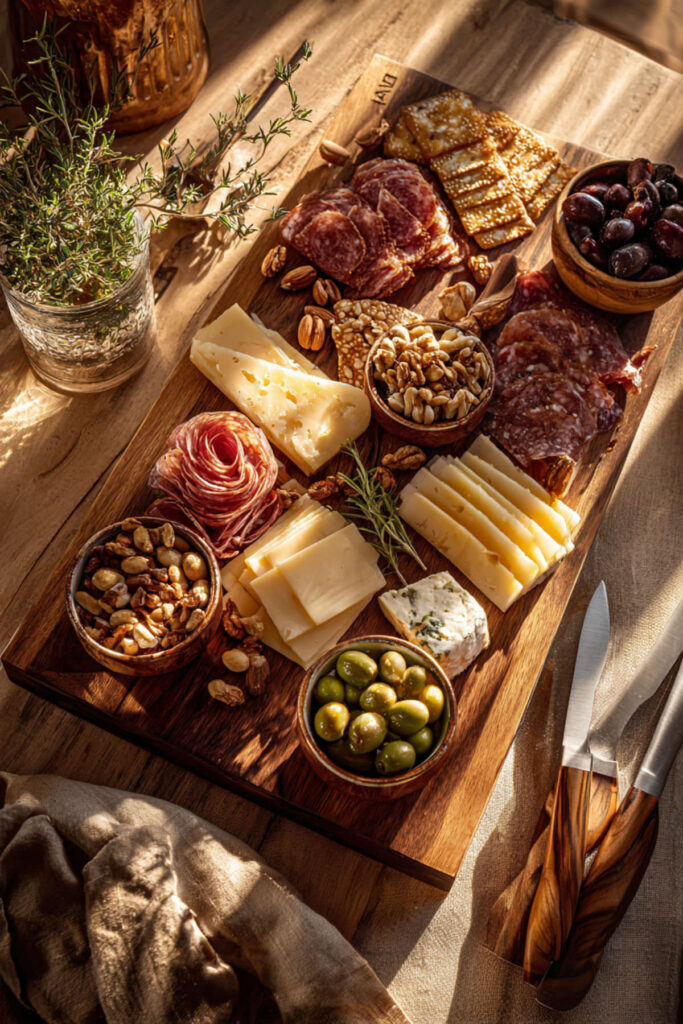
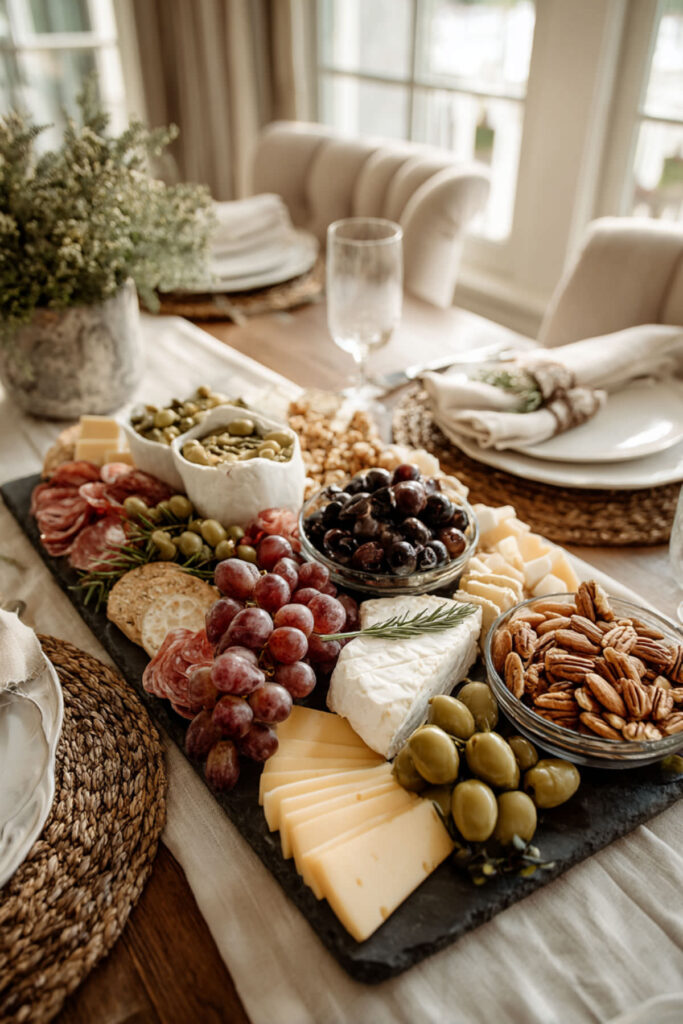
Start here if you’re new to the charcuterie game. The classic board follows a simple formula that works every time: three cheeses (one soft, one semi-hard, one aged), three meats (prosciutto, salami, and a spicy soppressata), three starches (a crusty baguette, water crackers, and breadsticks), and three accompaniments (fig jam, whole-grain mustard, and Marcona almonds). Arrange everything in clusters with small bowls for the spreads, and let the ingredients do the talking. I recommend a large oval acacia wood board as your base — the warm grain looks beautiful in photos and on the table. It reminds me of those effortless dinner party spreads you’d see at a wine bar in Napa — abundant, balanced, and completely inviting. This charcuterie board for beginners approach is foolproof, and it only gets easier with practice.
Beautiful Wooden Charcuterie Boards for a Warm, Rustic Anchor
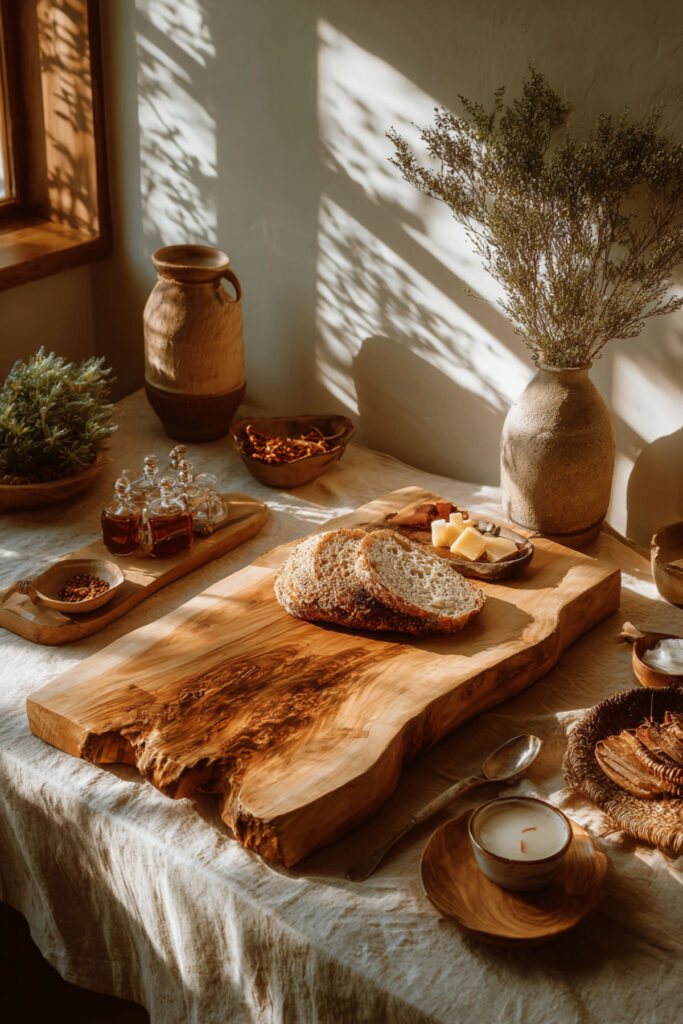
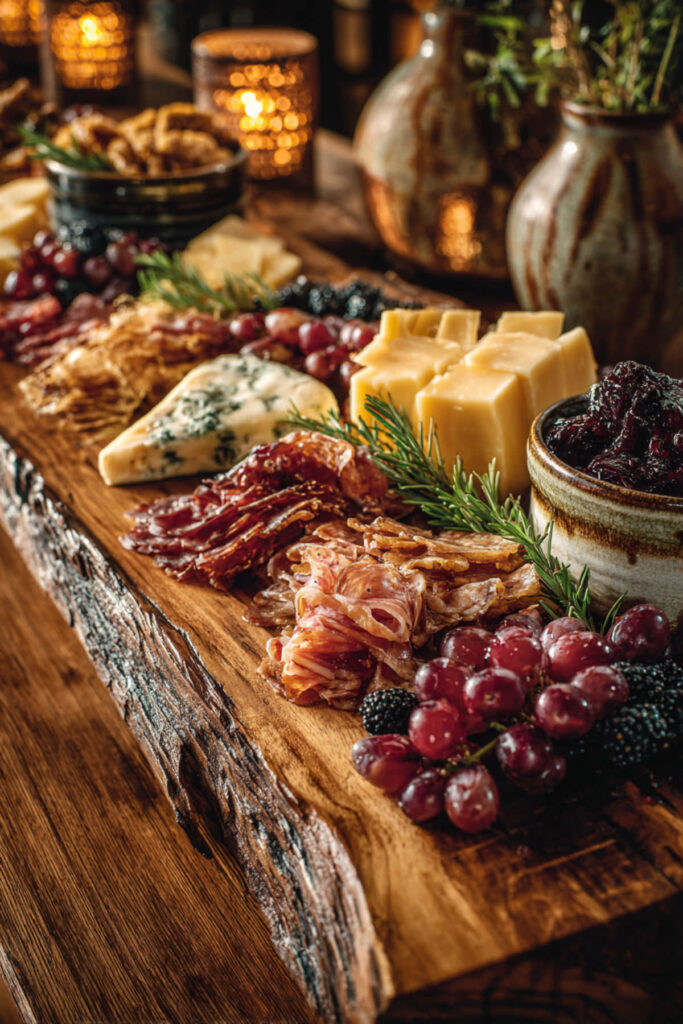
The board itself matters just as much as what’s on it. A beautiful wooden charcuterie board in walnut, olive wood, or acacia becomes a serving piece and a design statement at the same time. The natural grain, the warm tones, the way the wood patinas with use — it turns a simple spread into something that looks crafted and intentional. I recommend a thick-cut walnut board with a live edge for maximum visual impact. The natural edge becomes part of the presentation — organic, a little imperfect, and completely stunning. A board like this can double as kitchen decor when it’s not in use, propped against the backsplash with a few other wooden pieces. These wood boards for charcuterie are the kind of investment that makes every gathering feel more elevated.
Mini Charcuterie Boards for Intimate Gatherings of Two
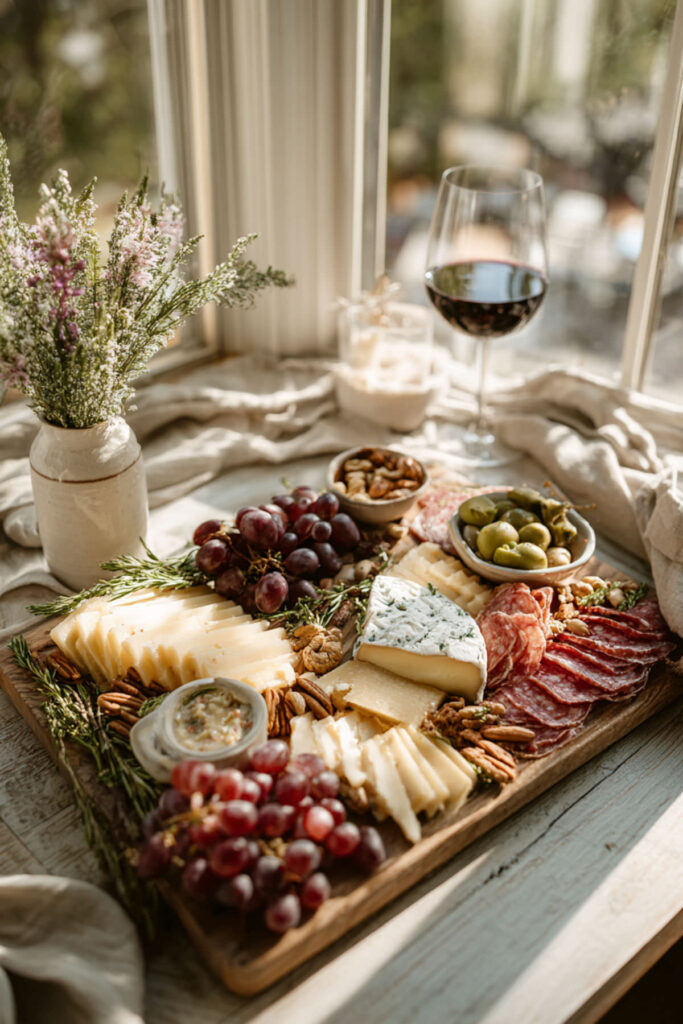
Not every gathering is a crowd. Sometimes it’s just you and your partner, a bottle of wine, and a Friday night with nowhere to be. A charcuterie board for two — a small, personal-sized board with just enough for a few bites — turns a regular evening into something special. A few slices of prosciutto, a wedge of brie, some grapes, a drizzle of honey, and a handful of crackers. That’s it. I recommend a small round olive wood board, about 10 to 12 inches. The intimate size keeps things from looking sparse, and the olive wood grain is stunning even at a smaller scale. These individual charcuterie boards are proof that elegant hosting doesn’t require a crowd — sometimes the best gatherings are the quietest ones.
Dessert Charcuterie Board Ideas for Sweet Endings
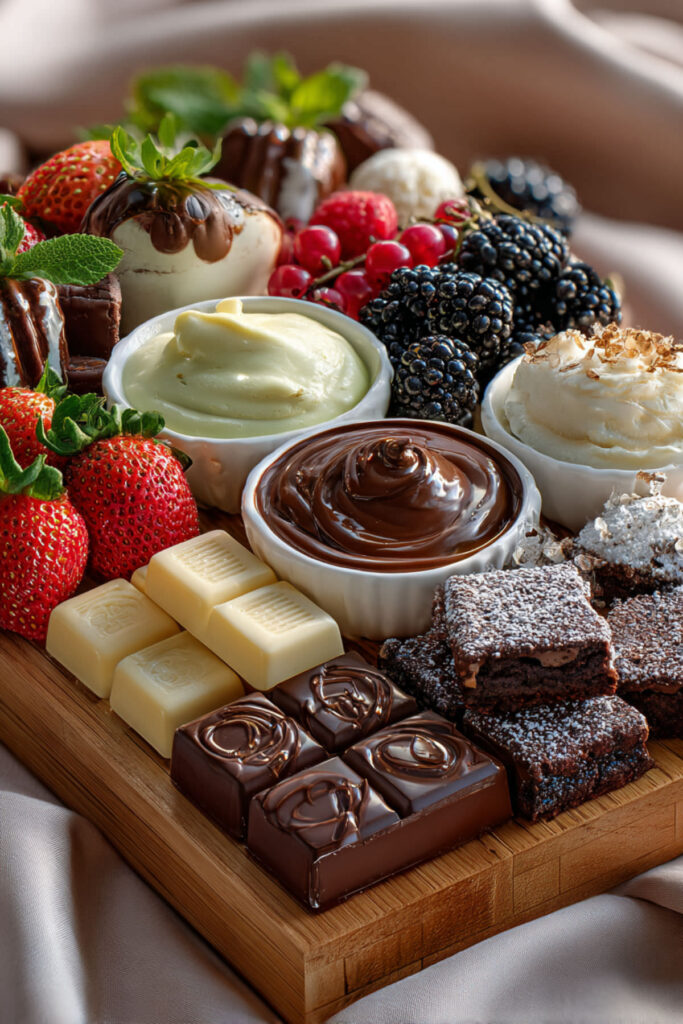
Here’s where charcuterie goes off-script — and honestly, it might be the most popular version at every gathering I’ve seen lately. A dessert charcuterie board replaces the meats and cheeses with chocolate truffles, macarons, fresh berries, candied nuts, mini cookies, a pot of chocolate ganache for dipping, and maybe a few squares of dark chocolate with sea salt. It’s a build-your-own dessert experience that feels special without any baking required. I recommend a marble or slate board as the base for a dessert spread — the cool, dark surface makes the colorful sweets pop. A small pot of salted caramel and a ramekin of whipped cream as dipping options, and you’ve got a sweet charcuterie board that steals the show at any dinner party.
Charcuterie Boards for a Crowd With Multiple Levels
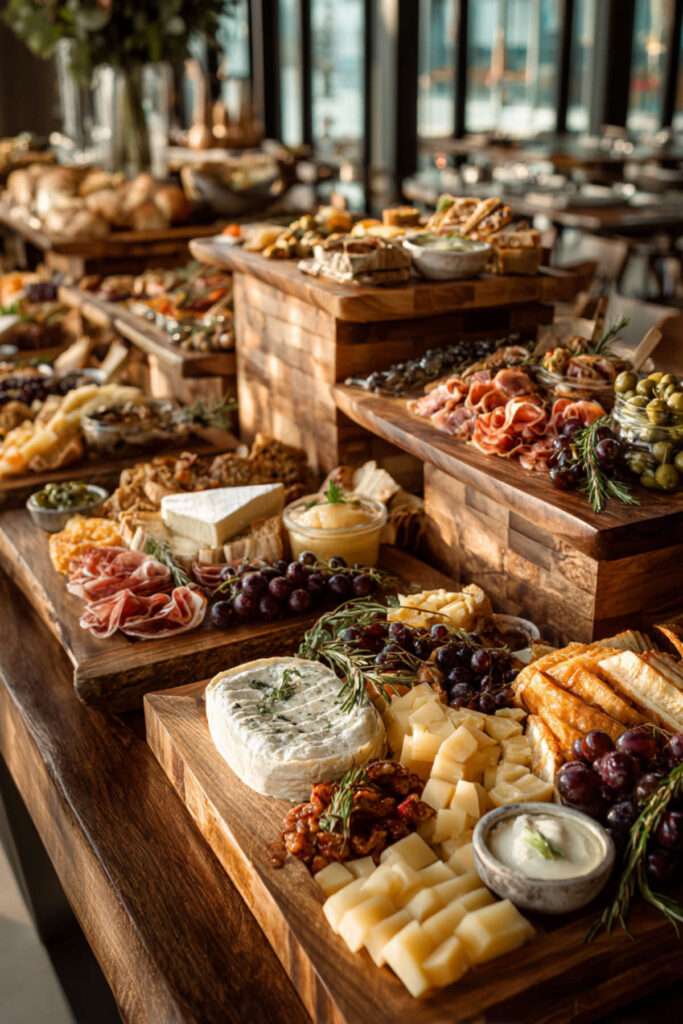
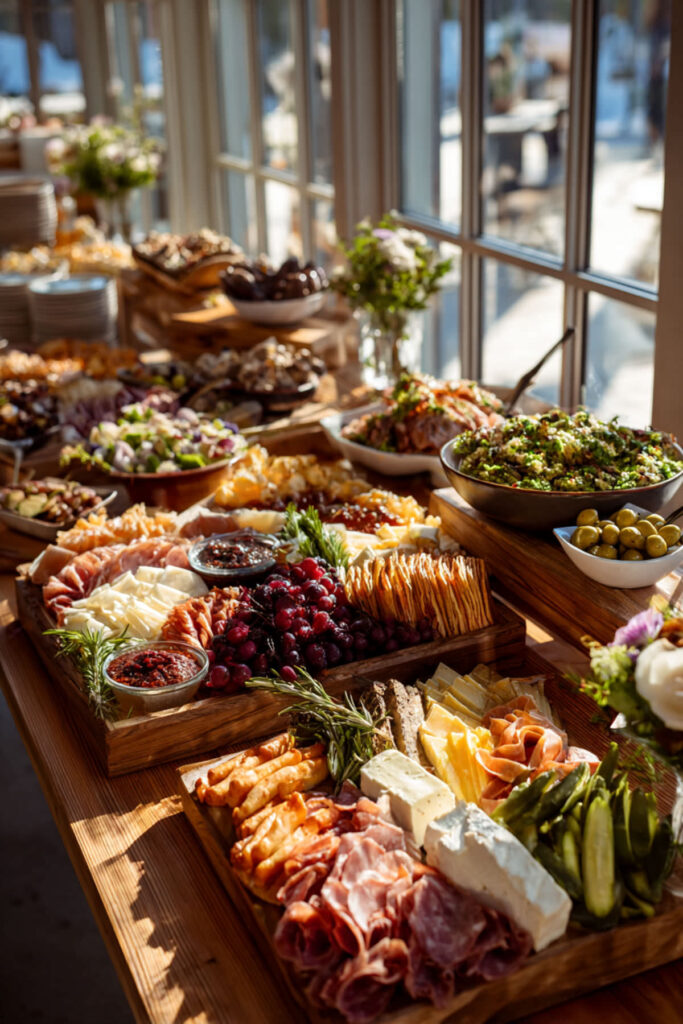
When you’re hosting more than eight or ten people, one board often isn’t enough — and that’s where the magic of multiple charcuterie boards comes in. Instead of one massive spread, create three or four smaller boards at different heights: one on a cake stand, one flat on the table, one on a stack of books or a wooden riser. The varying heights create visual drama and make the spread look like a proper food display. I recommend mixing board materials: one acacia wood, one marble, one slate. The variety of textures and tones creates visual interest, and the different surfaces actually help define zones — the marble for cheeses, the wood for meats, the slate for accompaniments. This charcuterie board for a crowd approach turns a simple table into a grazing destination that guests keep coming back to.
Mediterranean Charcuterie Board With Olives, Hummus, and Flatbread
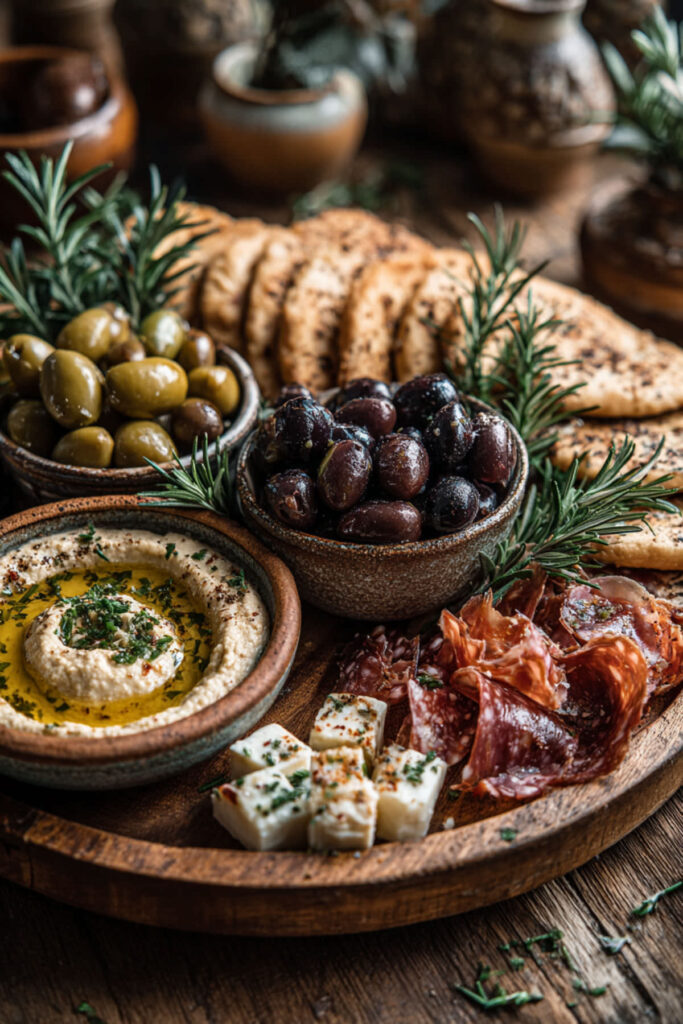
A Mediterranean-inspired board leans into warmer, brighter flavors — marinated olives, hummus, roasted red peppers, stuffed grape leaves, pita chips, flatbread, feta drizzled with olive oil, and sun-dried tomatoes. The color palette alone is gorgeous: deep reds, bright greens, warm golds. It feels like summer even in February. I recommend a large round olive wood board and several small ceramic bowls for the dips and spreads. The Mediterranean charcuterie board is perfect for women who want to serve something a little different from the standard meat-and-cheese setup. It’s healthier, more colorful, and endlessly adaptable — add some lamb meatballs or grilled halloumi and it becomes a full meal. Like those incredible mezze spreads you’d find at a rooftop dinner party in the West Village.
Brunch Charcuterie Board for Weekend Morning Gatherings
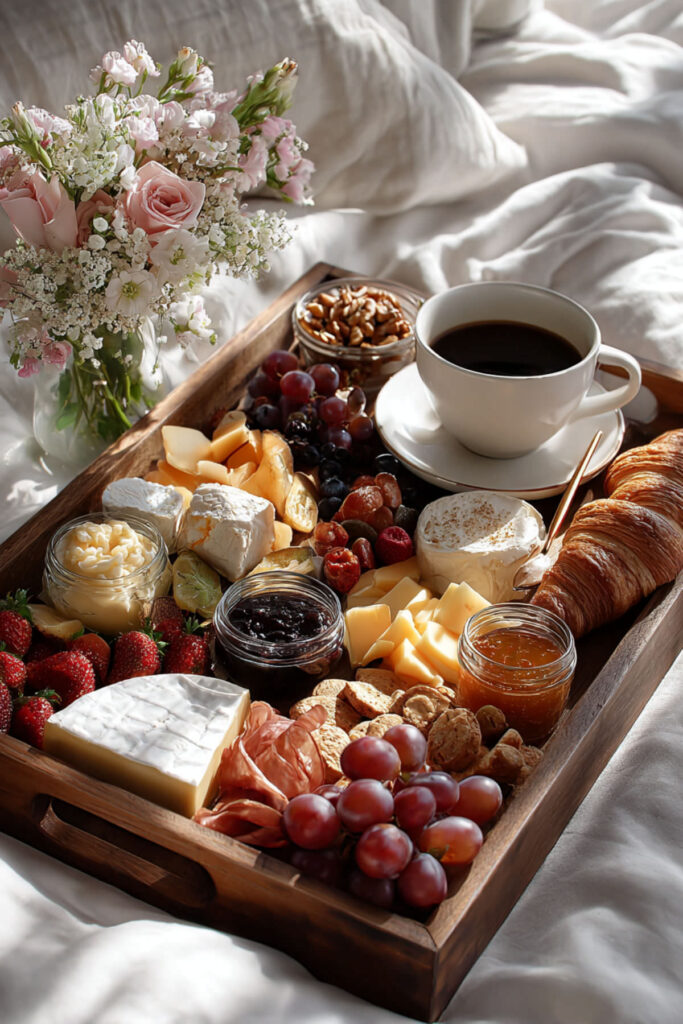
Brunch and charcuterie were made for each other. A charcuterie boards brunch spread replaces the traditional meats with breakfast proteins — smoked salmon, prosciutto, crispy bacon — and adds soft cheeses, fresh fruit, mini croissants, honeycomb, granola clusters, and a few ramekins of preserves. It’s the kind of brunch spread that makes everyone feel like they’re at a boutique hotel instead of your kitchen. I recommend arranging the board the night before minus the fresh fruit and warm items, then adding those in the morning. A wooden board with a linen napkin draped alongside, a few fresh flowers in a small vase nearby, and the table looks like a styled editorial. This breakfast charcuterie board approach turns a simple weekend morning into something genuinely memorable.
Vegetarian Charcuterie Board With Garden-Fresh Color
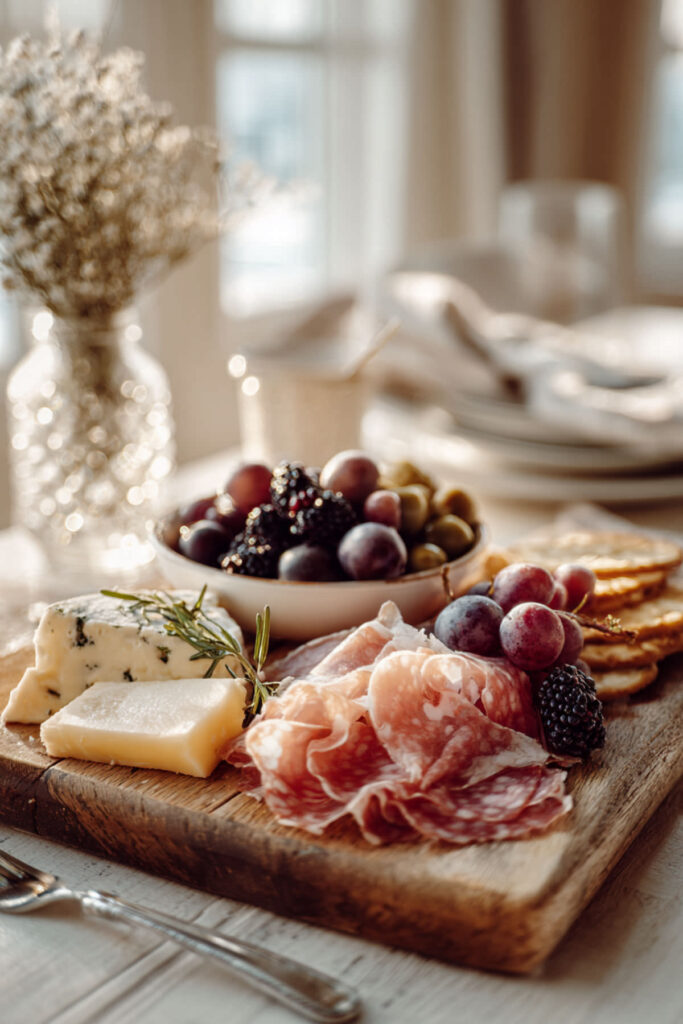
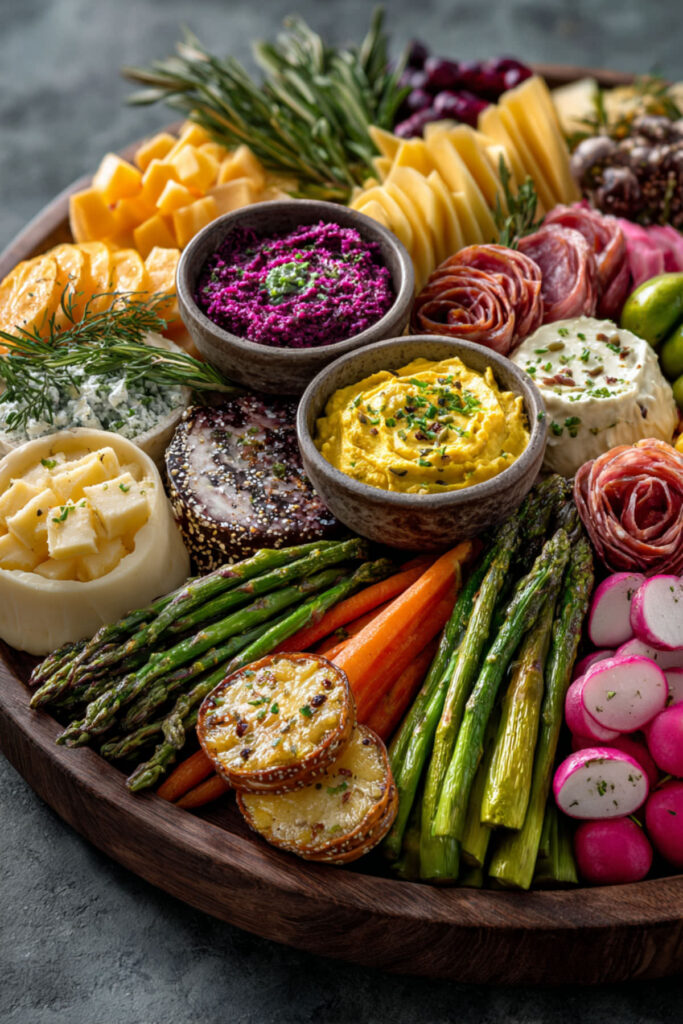
A charcuterie board doesn’t need meat to be impressive. A vegetarian charcuterie board bursts with color and texture: marinated artichokes, roasted red peppers, an array of cheeses, honeycomb, fig jam, nuts, olives, crudités, hummus, whipped goat cheese, grapes, dried apricots, and an assortment of crackers and bread. The absence of meat actually makes the board more colorful — and for plant-forward guests, it’s deeply appreciated. I recommend building the veggie charcuterie board around three strong cheeses as your anchors — a creamy brie, a tangy goat cheese, and an aged manchego. Place small bowls of dips between the cheeses and fill the gaps with produce and crackers. The result is a vibrant, abundant spread that proves the best charcuterie boards are defined by variety, not just cured meats.
Charcuterie on a Budget: Elegant Without the Price Tag
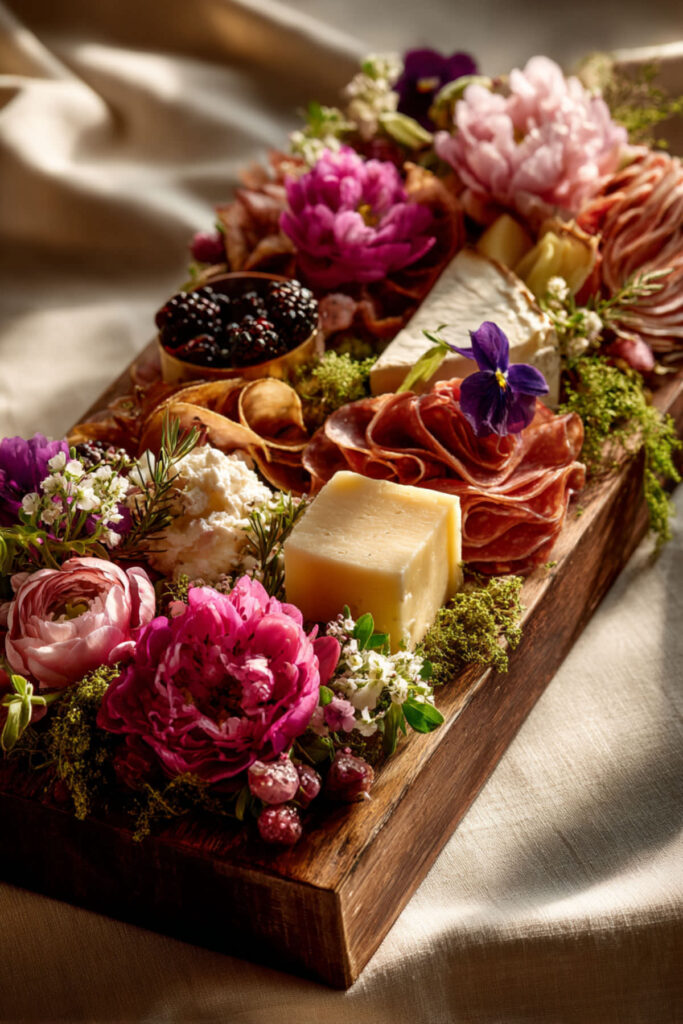
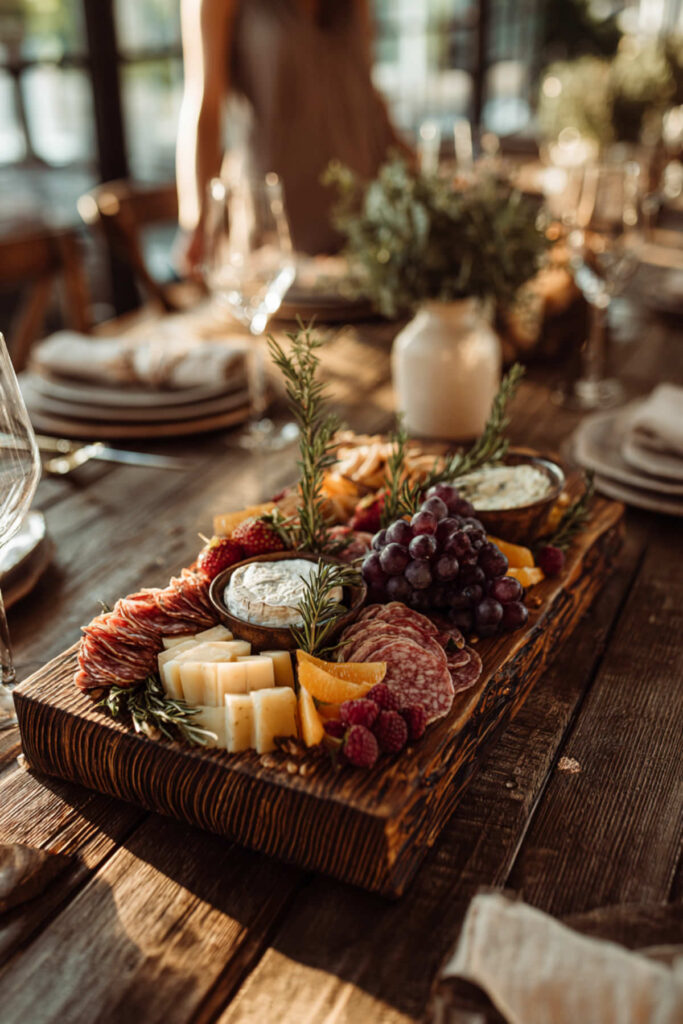
Here’s a truth that experienced hosts know: the most impressive-looking boards aren’t always the most expensive. A charcuterie board on a budget uses fewer premium ingredients, but arranges them with intention. One good cheese instead of three, a block of salami sliced at home, seasonal fruit from the farmers market, a homemade honey-rosemary dip, and a few handfuls of nuts and dried fruit. The visual abundance comes from how you arrange, not how much you spend. I recommend buying one splurge item — a beautiful wedge of brie or a jar of imported fig preserves — and letting everything else be simple, seasonal, and inexpensive. Fan the salami into rosettes, scatter the fruit strategically, tuck in some fresh rosemary sprigs for color. This budget charcuterie board approach proves that elegance is a skill, not a price tag.
Charcuterie Board With Flowers for a Stunning Centerpiece
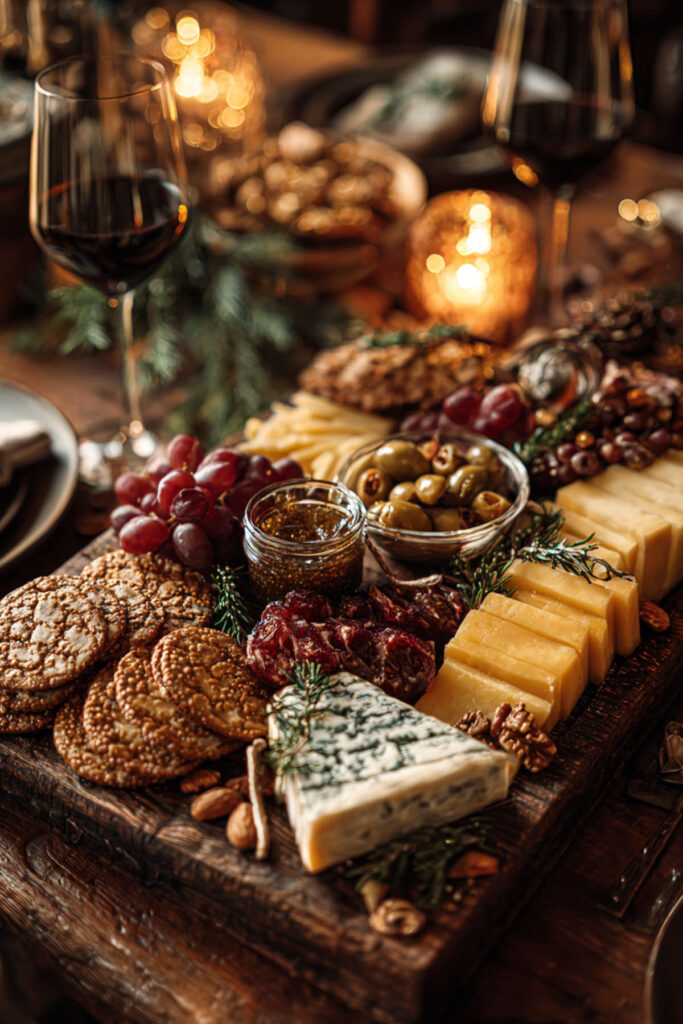
Adding edible or decorative flowers to a charcuterie board instantly elevates it from appetizer to centerpiece. Small clusters of fresh herbs (rosemary, thyme, sage), edible flowers (nasturtiums, pansies, violets), or even a few small fresh-cut blooms tucked around the edges transform the board into something that looks like it belongs in a styled photoshoot. I recommend edible flowers specifically — nasturtiums add a peppery flavor and gorgeous orange-and-red color, while pansies add soft purples and yellows. Place them in small clusters at the corners and edges of the board. These charcuterie boards with flowers are the kind of detail that makes guests pull out their phones — in the best possible way.
Holiday Party Charcuterie Board With Seasonal Flair
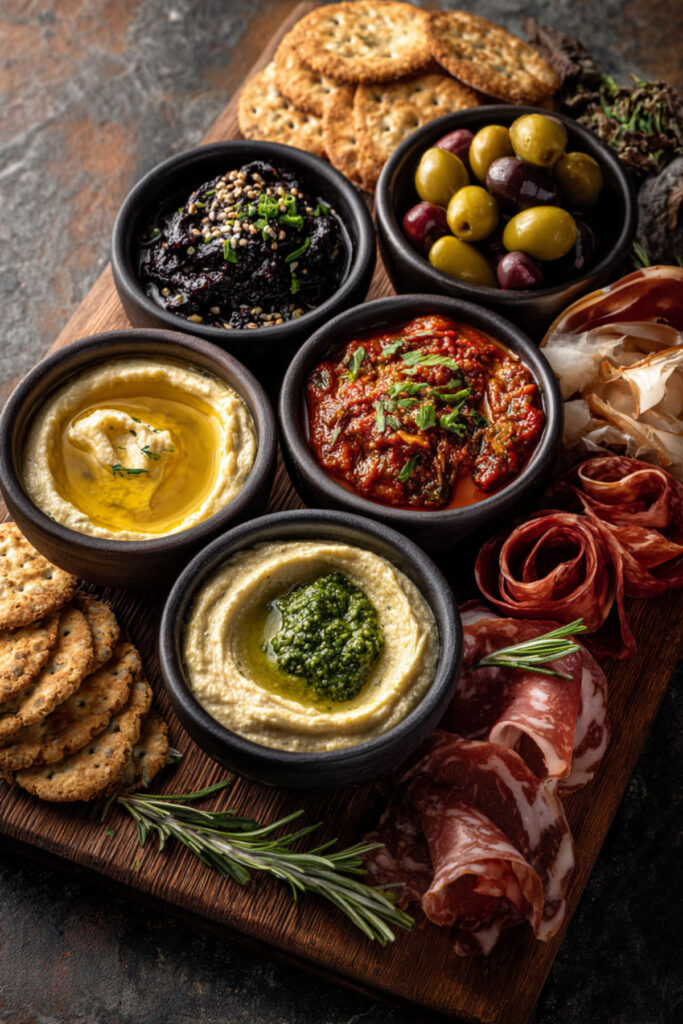
Every holiday has its own charcuterie personality. A Christmas board might feature cranberry goat cheese, pomegranate seeds, rosemary sprigs, and red-and-white color pops. A Thanksgiving board leans into dried fruit, apple butter, aged cheddar, and pecan clusters. A summer Fourth of July board goes bright with strawberries, blueberries, and white cheddar. Matching your board to the season makes it feel intentional and festive. I recommend keeping one or two seasonal “hero” ingredients — like pomegranate seeds at Christmas or fresh figs in autumn — and building the rest around your standard favorites. The seasonal touches provide the personality; the classic ingredients provide the substance. This holiday party menu charcuterie approach works year-round and gives you a built-in theme for every gathering.
Charcuterie Boards With Dips for Interactive Grazing
Dips turn a charcuterie board from a display into an experience. When guests can scoop, dip, and build their own bites, the board becomes interactive — and interactive food is always the most popular at a party. A charcuterie board with dips spread might include whipped ricotta with honey, a roasted garlic and white bean dip, a classic olive tapenade, and a warm baked brie with fig jam. I recommend placing three or four small ceramic bowls or ramekins directly on the board, spaced evenly. Surround each dip with its ideal dipping vehicle — crostini for the ricotta, crackers for the tapenade, sliced baguette for the brie. These dips board ideas turn passive snacking into active, joyful eating — which is exactly the energy you want at an elegant gathering.
Fruit Charcuterie Board for Light, Colorful Hosting
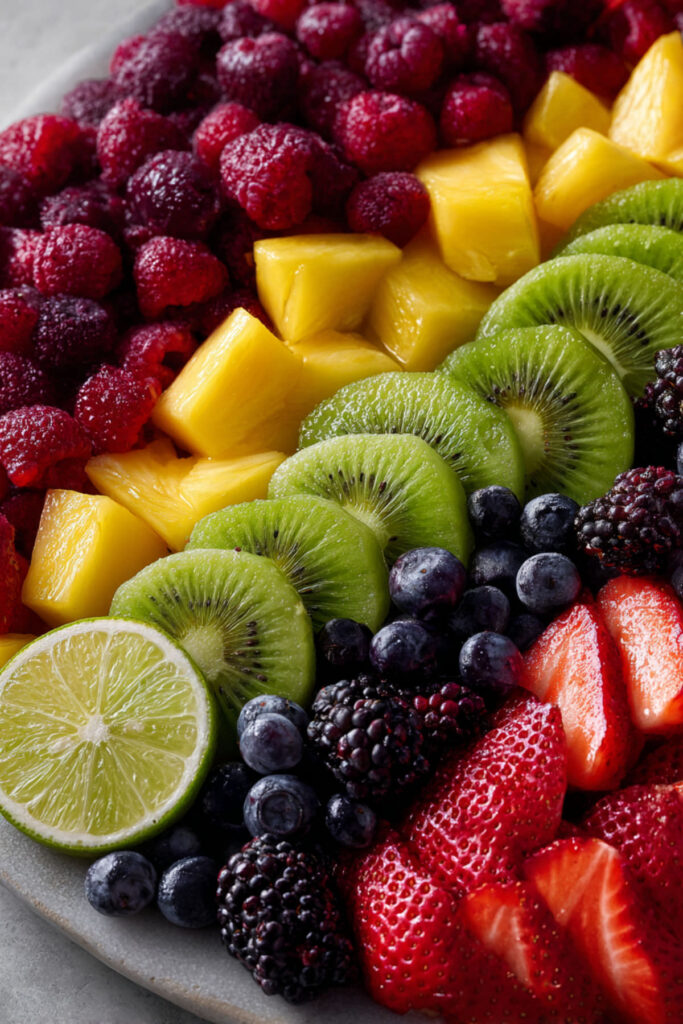
A fruit charcuterie board is the freshest, most vibrant version of the concept — and it’s surprisingly impressive. Think sliced mango fans, strawberry halves, blueberry clusters, grapes on the vine, kiwi wheels, pomegranate seeds scattered like jewels, and a pot of Greek yogurt with honey for dipping. The colors alone make it a showstopper. I recommend a white marble or light ceramic platter as the base — the pale surface makes the fruit colors absolutely sing. A small ramekin of dark chocolate ganache for dipping adds a decadent touch. This healthy charcuterie board is perfect for daytime gatherings, baby showers, or any event where you want the food to feel fresh and celebratory without being heavy.
Epoxy Resin Charcuterie Boards for Art-Meets-Function
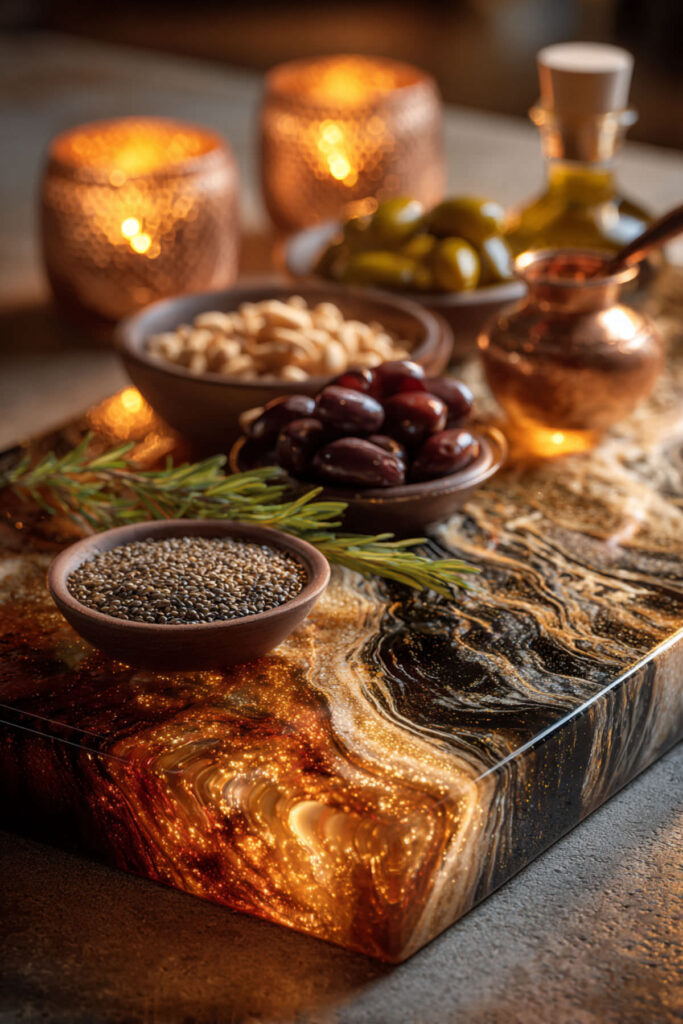
If you want a serving piece that doubles as a conversation starter, an epoxy resin charcuterie board is the answer. These boards combine natural wood with swirls of colored resin — ocean blues, marbled whites, geode-inspired crystals — creating a surface that’s genuinely one of a kind. The resin side is food-safe and wipeable, while the wood side retains that organic warmth. I recommend a resin board with ocean-inspired blue tones for a coastal feel, or a white-and-gold resin for a more formal, elegant look. These resin art charcuterie boards are the kind of piece guests ask about — “Where did you get that?” — which is exactly the energy of a great hosting moment. Display it on the counter between uses; it’s beautiful enough to be art.
Antipasto Platter: The Italian-Inspired Charcuterie Board
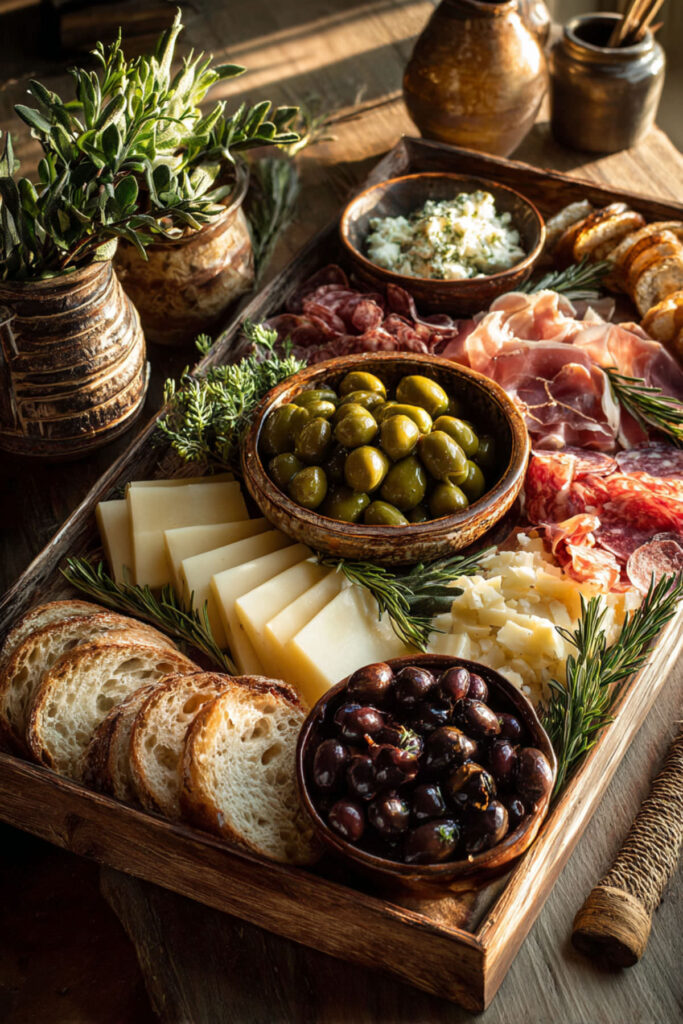
An antipasto platter is charcuterie’s Italian cousin — and it’s arguably the most flavorful version. Think capicola, mortadella, bresaola alongside mozzarella balls, marinated artichokes, roasted red peppers, castelvetrano olives, sun-dried tomatoes, fresh basil, and a drizzle of really good olive oil over everything. The Italian ingredients bring bold, rich flavors that pair perfectly with a glass of Chianti or Prosecco. I recommend a large rectangular wooden board for an antipasto spread — the long shape gives you room to create lanes of ingredients that guests can work their way through. A small dish of pesto and another of balsamic reduction complete the picture. This meat and cheese board with Italian flair is perfect for a dinner party where the board is the main event, not just the appetizer.
DIY Charcuterie Board: Building Your Own Serving Piece
For the woman who loves crafting as much as hosting, a charcuterie board DIY project lets you create a serving piece that’s completely yours. A simple live-edge wood slab, sanded smooth, oiled with food-safe mineral oil, and finished with a leather handle or brass hardware makes a stunning, custom board that costs a fraction of boutique prices. The process is meditative, the result is beautiful, and the board comes with a story — yours. I recommend starting with a walnut or acacia slab from a local lumber supplier. Sand it with progressively finer grit (80, 120, 220), apply three coats of food-safe mineral oil, and let it cure for 24 hours between coats. Add a simple leather strap handle with brass screws. These diy charcuterie boards wood projects make incredible gifts too — handmade, personal, and guaranteed to be the most beautiful thing on the table.
The Party Food Bar: Table-Length Charcuterie Board Display
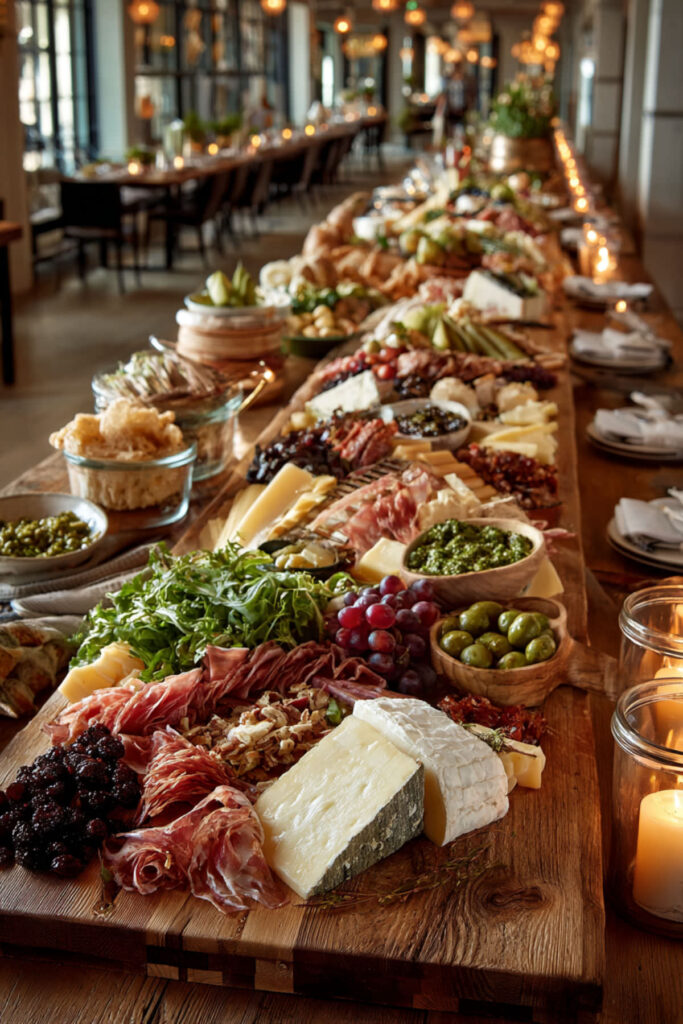
Let’s close with the ultimate hosting move: a table-length charcuterie spread. Instead of a single board, cover the entire table — or a long section of it — with parchment paper, and build the spread directly on the surface. Cheeses placed every two feet, meats fanned between them, clusters of fruit, bowls of dips, breadsticks standing upright in jars, flowers tucked between sections. The table itself becomes the board, and the effect is jaw-dropping. I recommend planning zones: a meat-and-cheese section, a fruit-and-sweets section, a dips-and-bread section, and a nuts-and-dried-fruit section. Distribute the colors evenly so no single area is all one tone. Fresh herbs and edible flowers fill the gaps. Would you try a table-length spread? I think for women who host with intention and love making people feel welcome, this is the move that turns a gathering into an event — the kind of evening guests talk about for months.
Set the Board, Set the Tone
Seventeen ideas, and every one of them built around the same belief: the way you present food changes the way people experience the evening. A charcuterie board isn’t just an appetizer. It’s a welcome. It’s a signal that says, “I thought about this. I’m glad you’re here.” Keep these kitchen vibes saved for when you need a reset.
Whether it’s a simple board for two on a Friday night or a table-length spread for twenty, the principle is the same: generous, beautiful, and made with care. Take a look at these paper towel holder ideas that combine everyday practicality with a subtle, stylish touch.
There’s plenty more hosting inspiration, food styling ideas, and entertaining approaches across the rest of the site — take your time and look around. Save the pins that match your hosting style. Share them with a friend who’s got a dinner party coming up. And next time you’re standing in the kitchen, arranging cheese on a board, remember: you’re not just making food. You’re making a moment. And that’s what people remember.
More inspiration is always available when you’re ready.