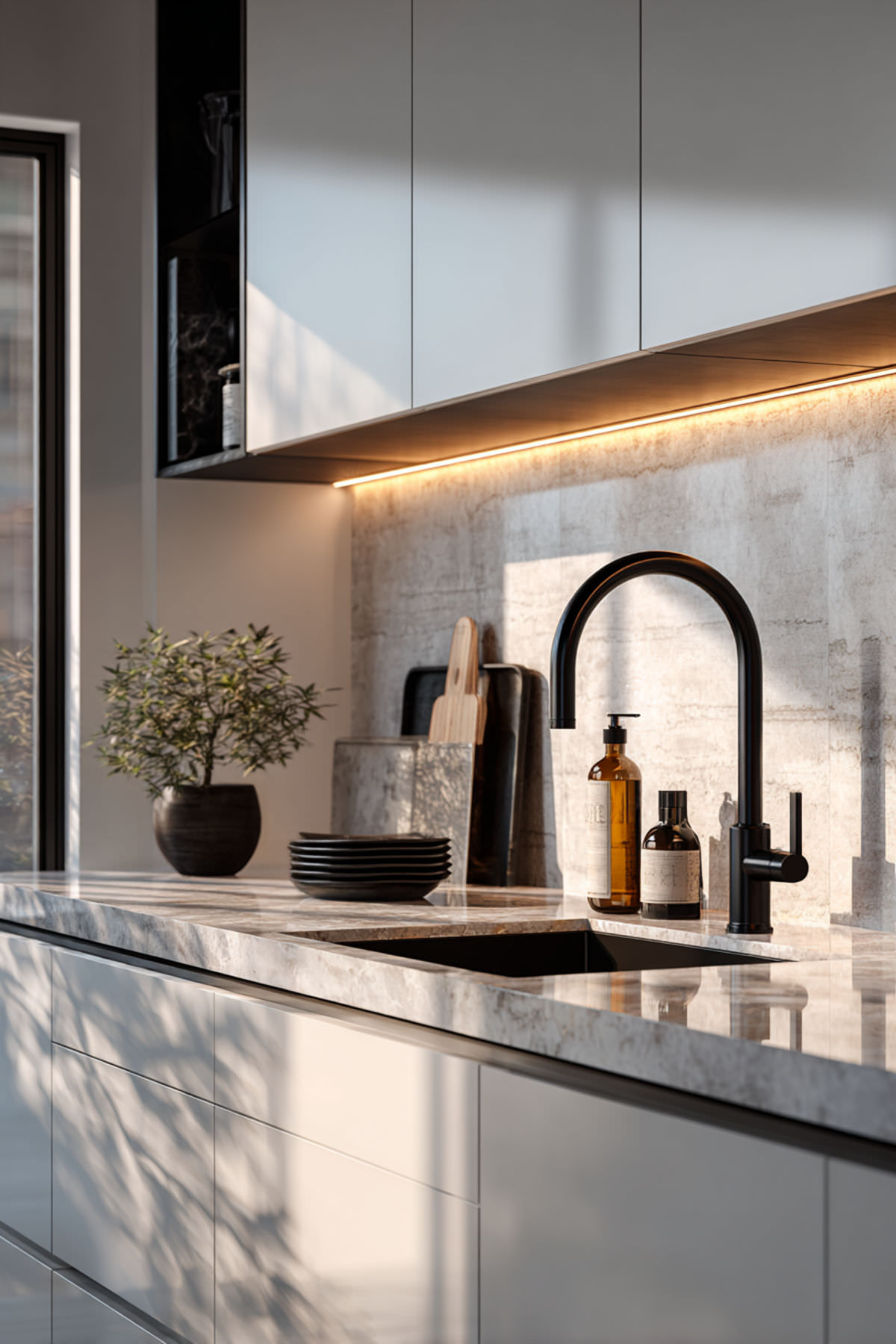
Here’s something nobody warns you about when you renovate your kitchen with beautiful hardwood or tile: standing on a hard surface for an hour while you chop, stir, and clean up takes a real toll on your feet, your back, and honestly your mood. The floor looks great — but your body is begging for something softer. That’s where a kitchen rug completely changes the experience. It adds warmth underfoot, color and texture to the room, and it turns the kitchen from a workspace into a space that actually feels comfortable to be in.
A good rug doesn’t just sit there. It works. I put together 16 kitchen rug ideas for women who want their cooking space to feel as warm and inviting as the rest of their home. There are product recommendations in every section, so scroll through all of them — some of the best picks are further down.
Save the pins you love, and check out the rest of our website for even more kitchen decor inspiration. This article highlights kitchen styling ideas rather than scientific findings, and some examples may be illustrative.
Washable Kitchen Runner Rug for the Hardest-Working Spot
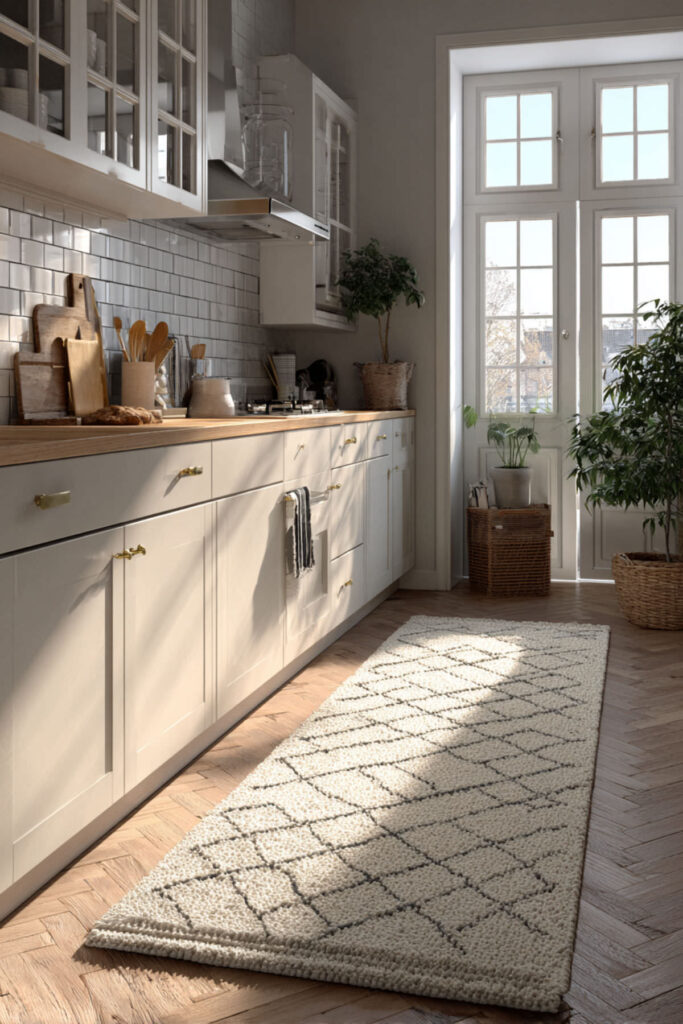
Let’s start with the most practical option: a washable kitchen runner rug. This goes right in the high-traffic zone between the sink and the stove — the spot where spills happen, crumbs collect, and your feet spend the most time. Machine-washable rugs have come a long way in the last few years; they look just as beautiful as traditional rugs but you can throw them in the wash whenever they need it. For a house with kids, pets, or anyone who actually cooks regularly, washable is non-negotiable. I really recommend a low-pile washable runner in a vintage-inspired pattern — it hides stains between washes and looks like something you’d find in a gorgeous old kitchen in Charleston. This kitchen runner rug washable option is the starting point for any kitchen rug setup.
Anti-Fatigue Kitchen Runner for Serious Comfort
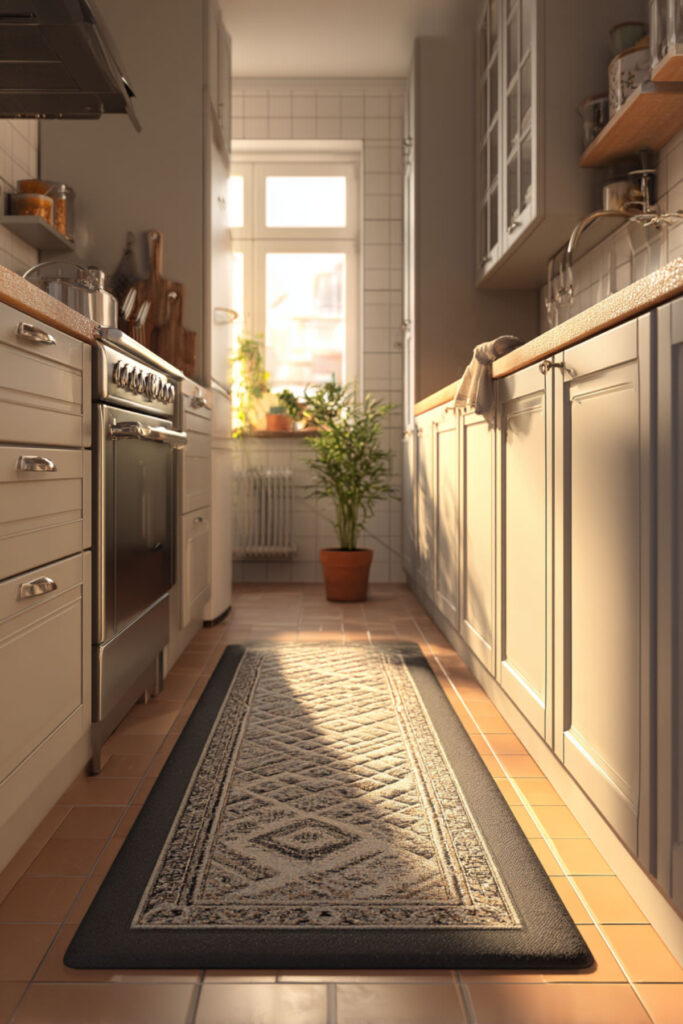
If you spend real time on your feet in the kitchen — and most moms do — an anti-fatigue kitchen runner is worth every penny. These rugs have a cushioned core (usually memory foam or gel) that absorbs pressure and reduces the strain on your feet, knees, and lower back. The difference is noticeable within the first week. You’ll stand longer without that aching feeling that creeps in after 45 minutes of meal prep. I came across this trending category and I think it’s one of the smartest investments for anyone who cooks daily. I’d suggest a cushioned anti-fatigue runner with a woven fabric top (not just PVC) — it gives you comfort plus a texture that looks like a real rug. This comfort kitchen rug concept is a game-changer.
Neutral Kitchen Rug for a Calm, Cohesive Look
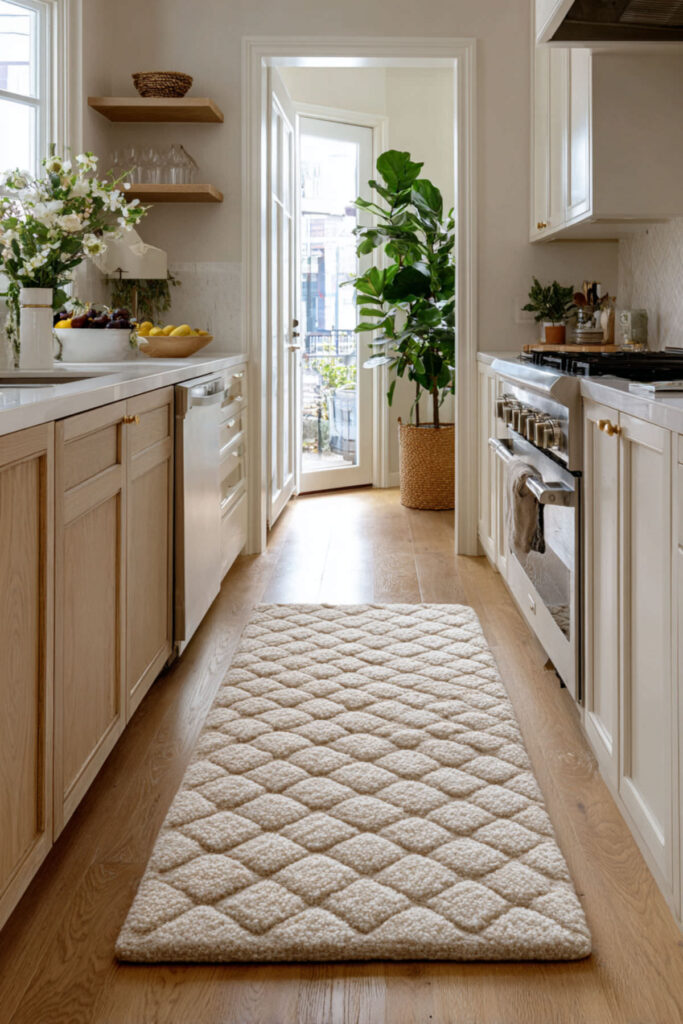
In a kitchen where the cabinets, countertops, and backsplash are already doing a lot visually, a neutral kitchen rug lets the room breathe. Think soft cream, warm beige, pale gray, or oatmeal — tones that add texture and warmth without competing with anything above them. A neutral rug is the visual equivalent of a deep breath. It grounds the space and ties everything together quietly. I recommend a flatweave neutral runner in a subtle geometric or stripe pattern — the texture keeps it from looking bland while the muted color keeps things serene. This neutral kitchen rug approach works in literally every kitchen style, from modern to farmhouse.
Jute Rug in the Kitchen for Natural Texture
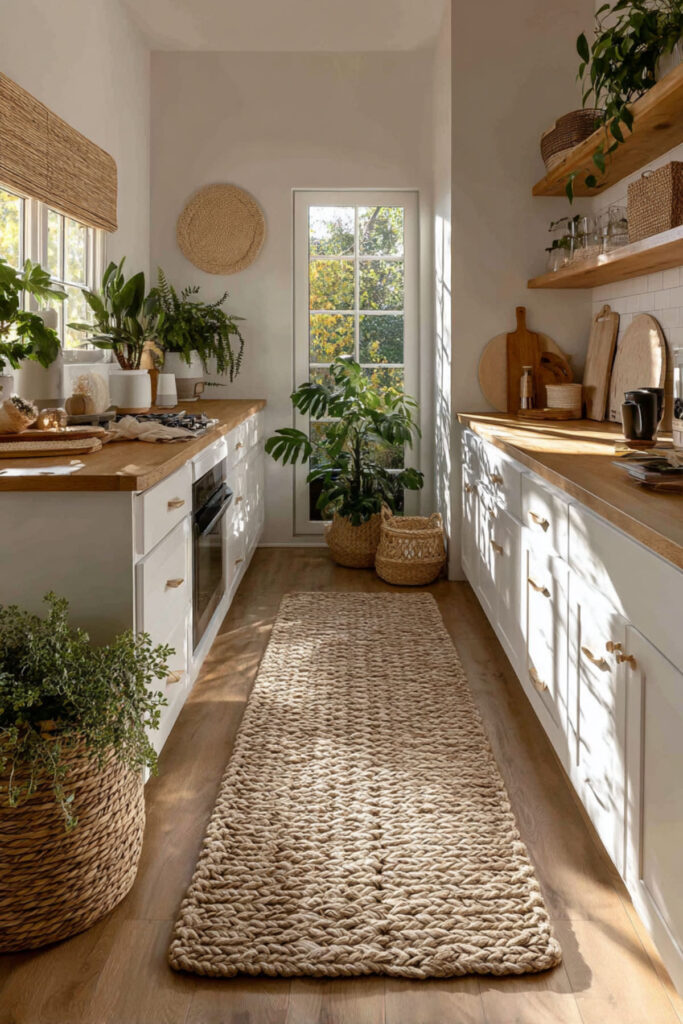
Jute rugs bring a texture to the kitchen floor that nothing else quite matches — earthy, organic, and warm. A jute runner or area rug adds that natural element that bridges the gap between a polished kitchen and the outdoors. The braided weave is durable enough for foot traffic and the golden-brown tone warms up everything around it. Some people worry about cleaning jute — I think if you spot-clean spills quickly and shake it out regularly, it holds up beautifully. I’d suggest a hand-braided jute runner in a natural tone for between the island and the counter — it adds instant warmth without any visual noise. Jute rugs in the kitchen are for women who love that organic, collected feel.
Farmhouse Kitchen Rug With Vintage Character
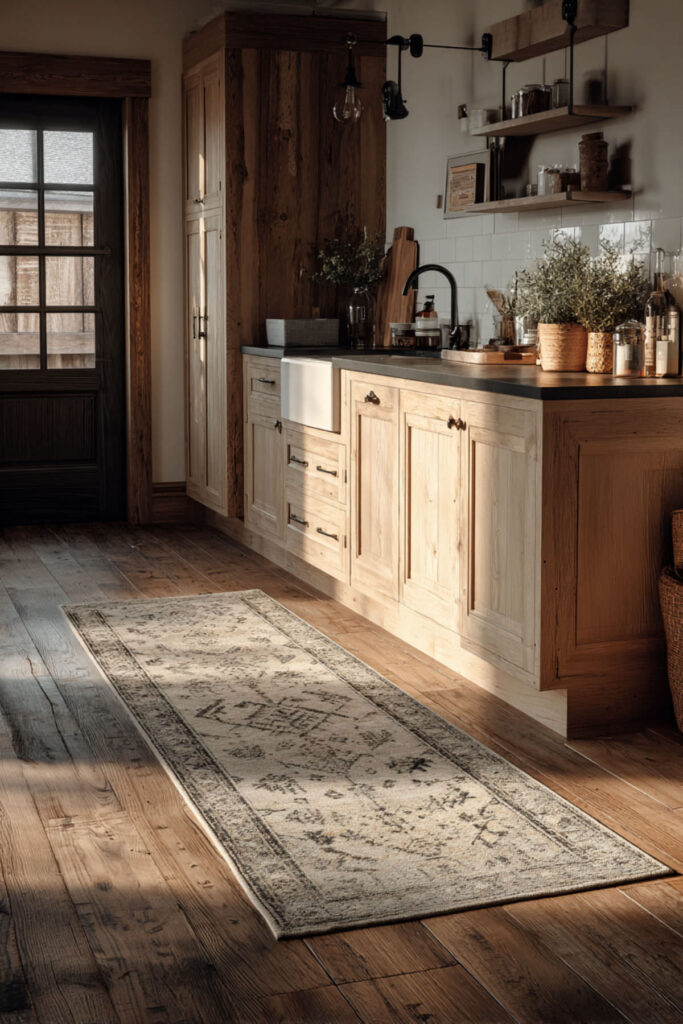
A faded Persian-style runner in a farmhouse kitchen is one of those details that makes the whole room feel like it has a story. The worn-in pattern, the muted colors, the slight imperfections — it all creates a warmth that brand-new rugs struggle to replicate. Vintage-look rugs (or actual vintage rugs if you can find them) work beautifully with white cabinets, wood floors, and farmhouse sinks. I recommend a machine-washable rug in a distressed vintage pattern — you get the look of an heirloom rug with the practicality of modern construction. This farmhouse kitchen rug idea brings character and comfort in one move.
Rug in Front of Kitchen Sink for Standing Comfort
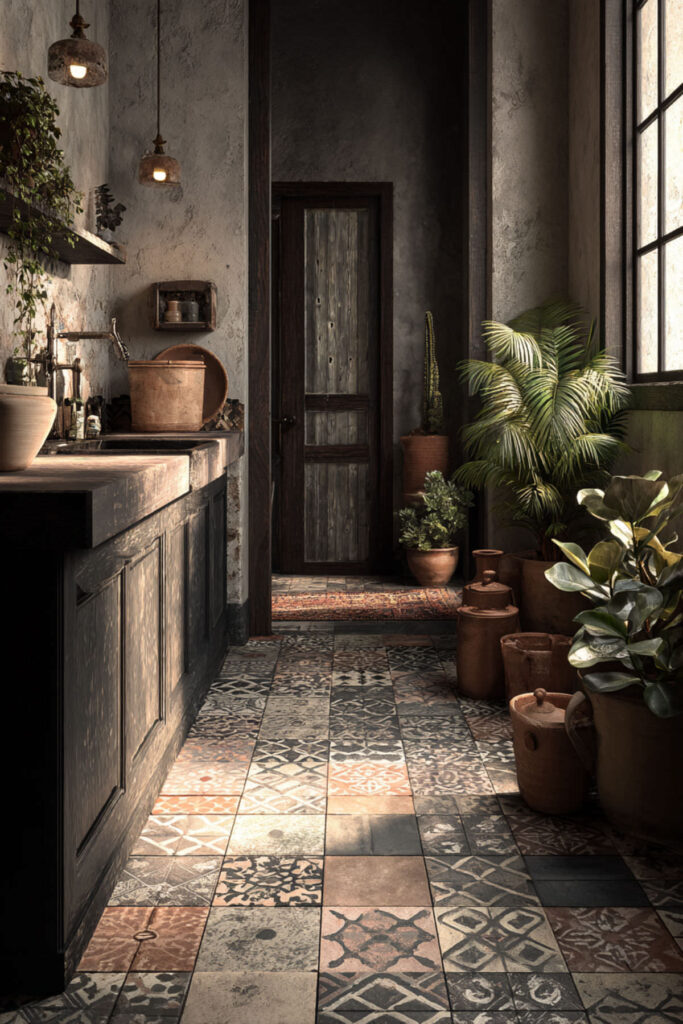
The spot in front of the kitchen sink is where you spend more standing time than almost anywhere else in the house — washing dishes, rinsing produce, and filling pots. A rug specifically placed here cushions your feet during all of it. It doesn’t need to be big — a 2×3 or 2×4 mat is perfect. The key is something with a non-slip backing and enough cushion to actually make a difference. I’d recommend a cushioned kitchen mat with a textured surface in a tone that coordinates with your runner — it creates a layered look while giving your feet serious relief. This rug in front of the kitchen sink idea is the smallest change that makes the biggest daily difference.
Boho Kitchen Rug for Layered, Relaxed Energy
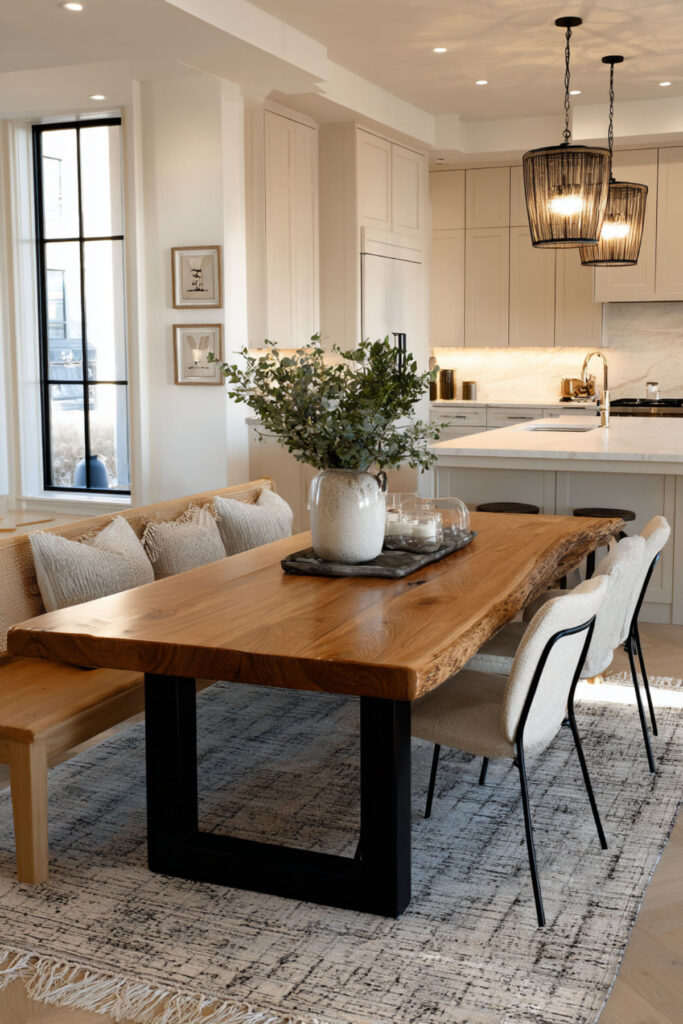
A boho kitchen rug — something with a slightly faded pattern, warm earth tones, tasseled edges, or a woven texture — adds this beautifully relaxed energy to a cooking space that might otherwise feel too polished or too utilitarian. Boho rugs love company, so feel free to layer a runner over a larger jute rug or mix patterns in the same color family. It’s the kitchen styling move that makes a room feel like it belongs to someone with great taste who doesn’t take things too seriously. I recommend a flat-weave cotton or wool-blend runner in a warm terracotta or dusty rose pattern for a boho kitchen — it’s lightweight, easy to shake out, and full of personality.
Large Kitchen Rug Under the Table
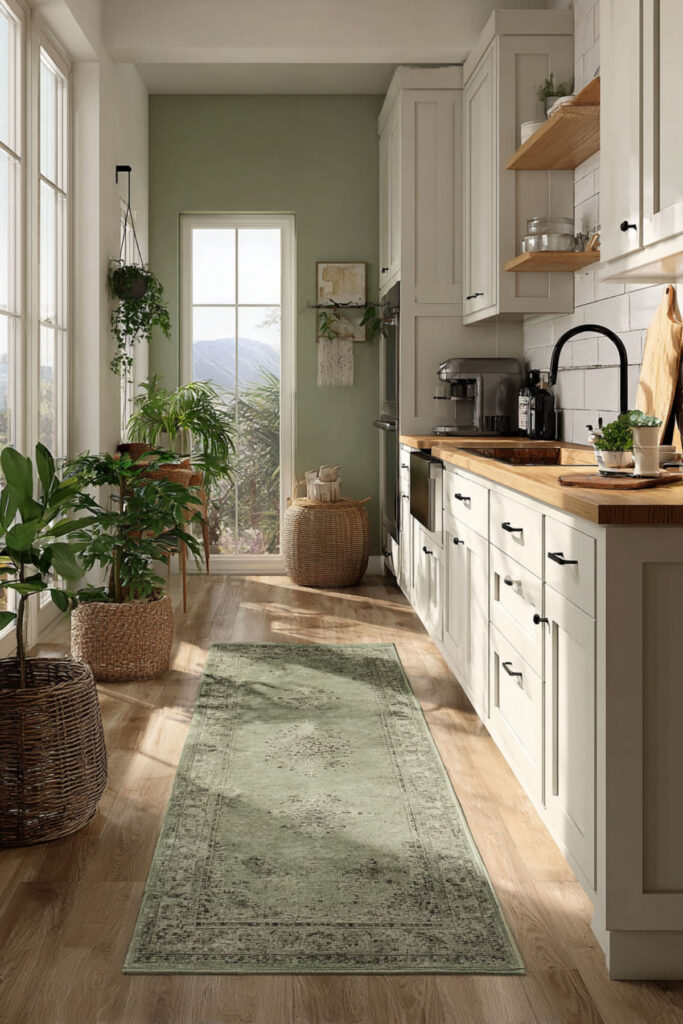
If your kitchen has an eat-in table or a breakfast nook, a large kitchen rug underneath it defines the dining zone and adds a layer of warmth that makes sitting down to a meal feel more intentional. The rug should extend at least 24 inches past the chairs on all sides when pulled out — this keeps the chairs from catching on the rug edge every time someone sits down. I’d suggest a durable, low-pile area rug in a pattern that hides crumbs (because let’s be real — crumbs happen). A 5×7 or 6×9 in a muted vintage or geometric pattern works beautifully. This kitchen rugs under table idea turns the eating area from “chairs in the kitchen” into a proper dining spot.
Green Kitchen Rug for a Natural Pop of Color
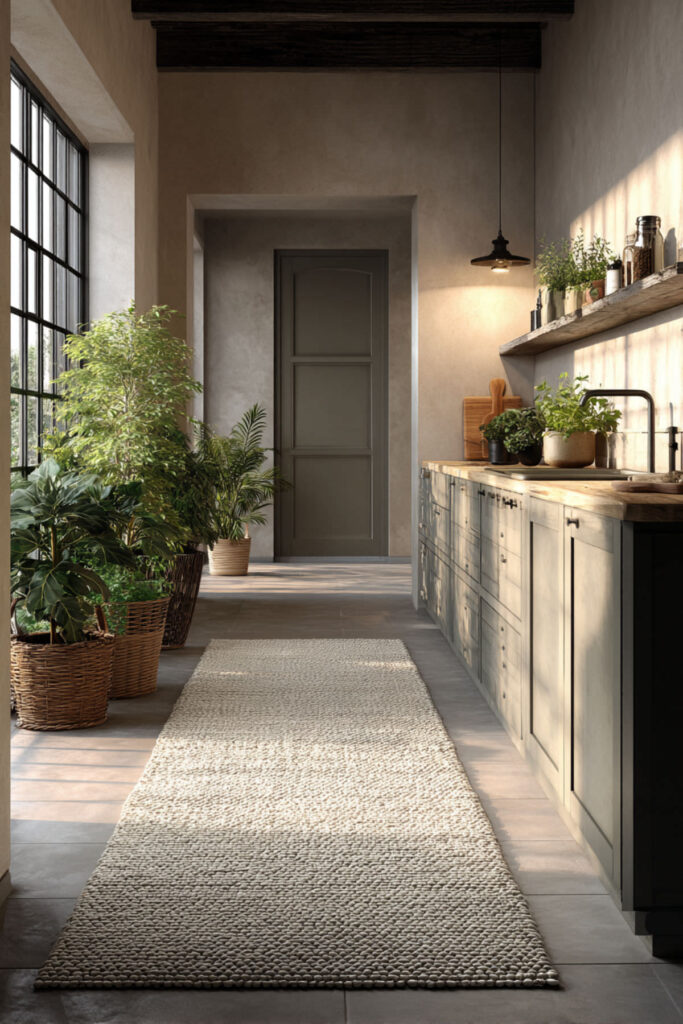
Green in a kitchen — whether sage, olive, or a deeper emerald — connects the room to the natural world in a way that no other color does. A green kitchen runner rug adds that pop of organic color to a neutral floor, and it pairs beautifully with wood tones, white cabinets, and brass fixtures. It’s the kind of color pop that feels grounded rather than jarring. I recommend a flat-weave runner in a muted olive or sage green with a subtle pattern — it reads as both natural and stylish, and it coordinates with everything from modern to farmhouse kitchen decor. This green kitchen runner rug idea is for anyone who wants color without the commitment of painting a wall.
Non-Slip Kitchen Runner for Safety on Hard Floors
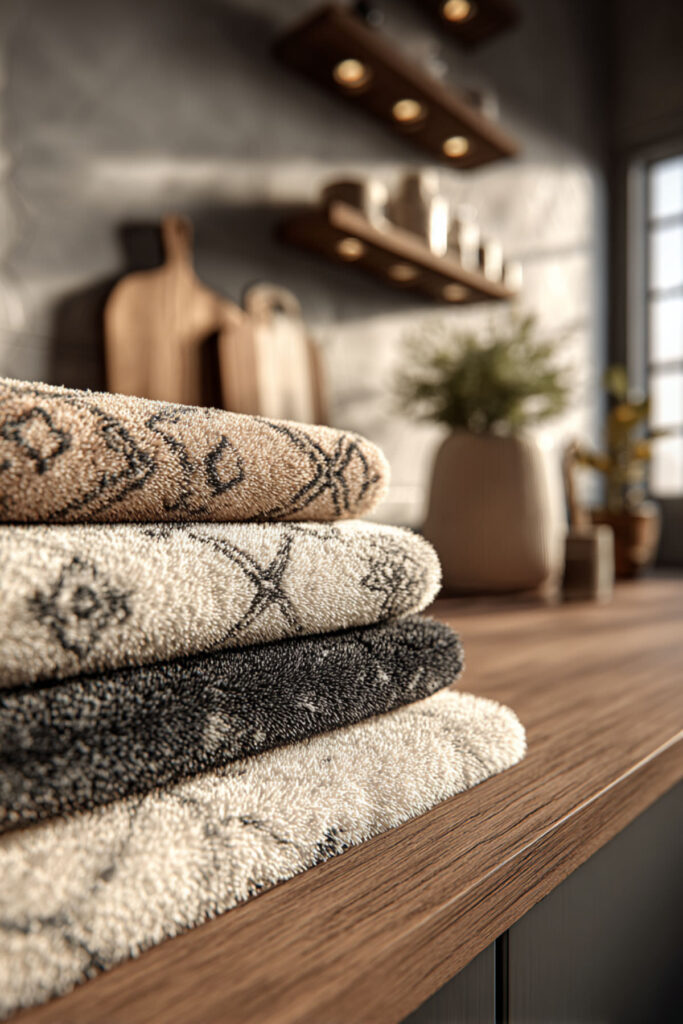
Safety first — especially in a kitchen where spills happen and you’re often moving quickly between the stove and the counter. A non-slip kitchen runner with rubber-backed construction stays put on tile, wood, and vinyl floors without bunching or sliding. For families with kids running through the kitchen (or dogs skidding around corners), a non-slip backing isn’t optional — it’s essential. I strongly recommend checking that any kitchen runner you buy has either a built-in non-slip backing or adding a quality rug pad underneath. A textured rubber rug pad cut to size is an affordable way to make any rug safer on a hard kitchen floor. This non-slip kitchen runner priority applies to every single rug on this list.
Layered Kitchen Rugs for Added Depth
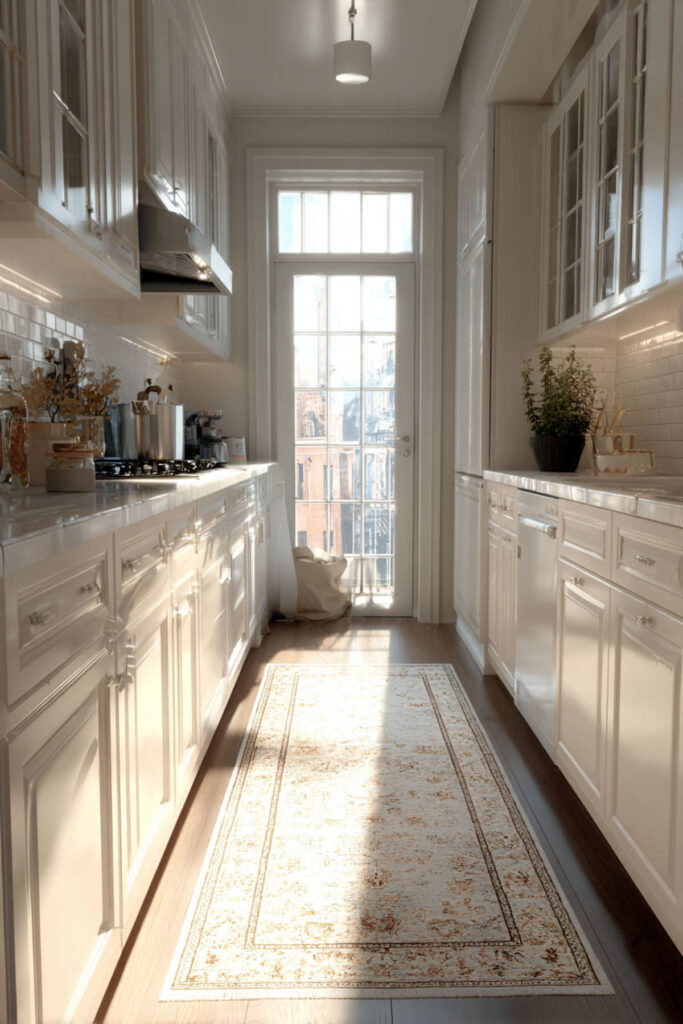
Layering rugs is one of those kitchen styling tricks that interior designers love — and it’s easier than it sounds. Place a large jute or sisal rug as the base layer, then lay a smaller patterned runner on top. The base adds warmth and texture across a bigger area, and the top runner adds color and personality. The layered effect makes the kitchen feel collected and intentional, like someone spent time curating the space. It reminds me of those beautifully styled kitchens in historic brownstones in Savannah — where everything looks like it belongs together even though nothing matches. I’d recommend a natural jute base with a vintage-pattern washable runner on top — it’s the best of both worlds.
Small Kitchen Rug That Doesn’t Overwhelm the Space
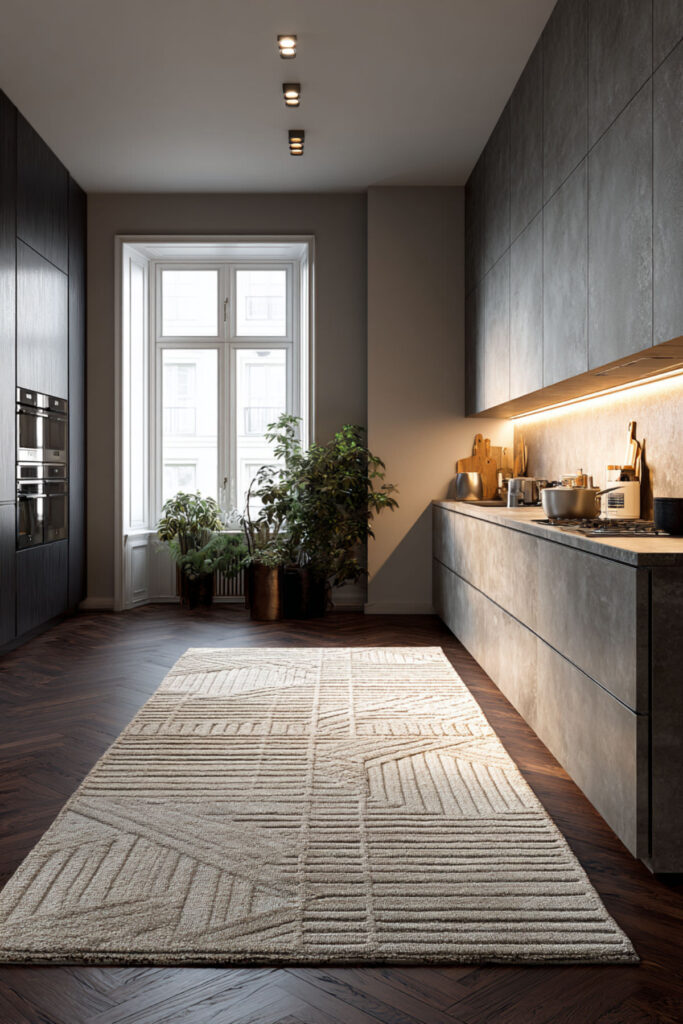
In a small kitchen, a too-large rug can actually make the room feel more cluttered. The trick is choosing a small kitchen rug — a compact 2×3 or 2×4 size — and placing it strategically: in front of the sink, at the foot of the stove, or right inside the doorway. One well-placed small rug does more for the room than a runner that’s crammed into a tight space. I recommend a small, cushioned mat in a warm neutral or subtle pattern — it adds comfort exactly where you need it without eating up precious floor space. Small kitchen rugs prove that sometimes less really is more, especially in a compact layout.
Modern Kitchen Rug With Clean Lines
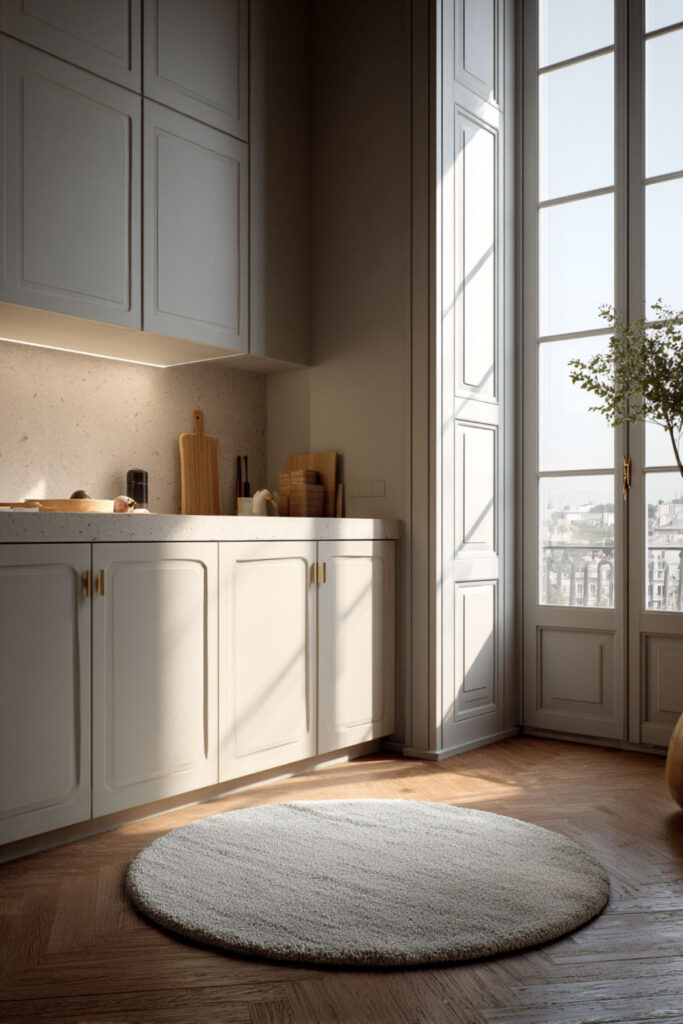
For sleek, contemporary kitchens, a modern kitchen rug with a simple geometric pattern, thin lines, or a solid color with a textured weave keeps the space looking sharp. The rug should complement the clean lines of the cabinetry and countertops, not fight them. Think monochromatic palettes, low pile, and subtle patterns that read as texture rather than decoration. I’d suggest a flat-weave runner in charcoal, warm gray, or black with a minimalist stripe or thin border — it feels intentional and architectural, which is exactly what a modern kitchen needs. This minimalist rug kitchen idea adds comfort without compromising the clean aesthetic.
Round Kitchen Rug for a Soft Visual Break
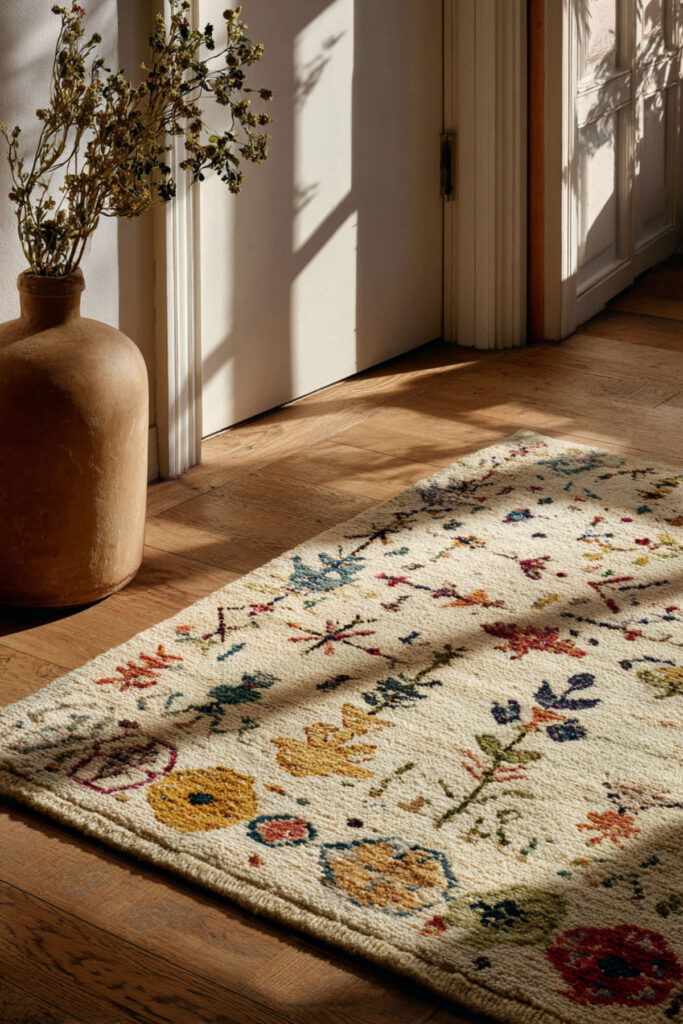
Most kitchen elements are rectangular — the island, the counters, the cabinets. A round kitchen rug breaks up all that geometry and introduces a soft, organic shape that instantly relaxes the room. A round rug works especially well in the center of an open kitchen, under a breakfast table, or in a nook between the island and the stove. It adds visual interest simply by being a different shape. I recommend a round braided jute rug or a round washable rug in a muted pattern — the circular form softens the hard angles around it and creates a welcoming focal point. Round rugs in the kitchen are an underrated move that always looks right.
Colorful Kitchen Rug for Personality and Joy
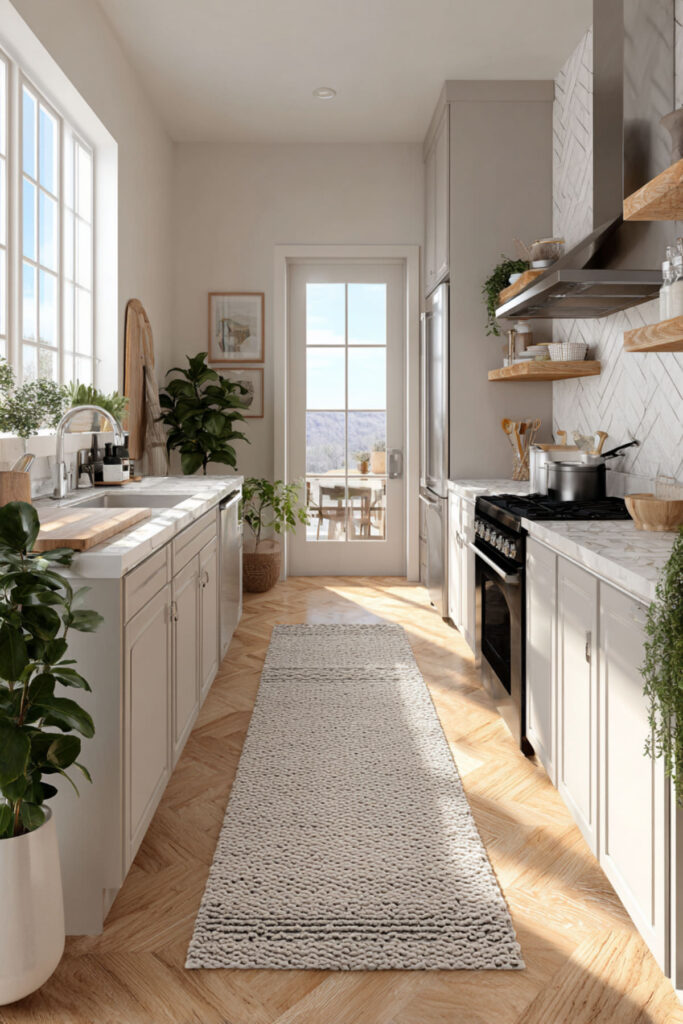
Some kitchens need a color pop — and the floor is the perfect place to do it. A colorful kitchen rug in rich blues, warm terracottas, or bold pattern mixes adds energy and personality to a room that might otherwise feel too quiet. For neutral kitchens especially, a vibrant rug becomes the one element that gives the room its voice. Some people play it safe with kitchen rugs — I think the kitchen is actually the best room to go bold because the rug is easy to swap out when you want a change. I’d suggest a flat-weave runner in a multi-toned pattern with warm and cool colors mixed together — it ties into multiple elements in the room at once. This funky kitchen rug approach is joy underfoot.
Kitchen Rug Placement Guide for Every Layout
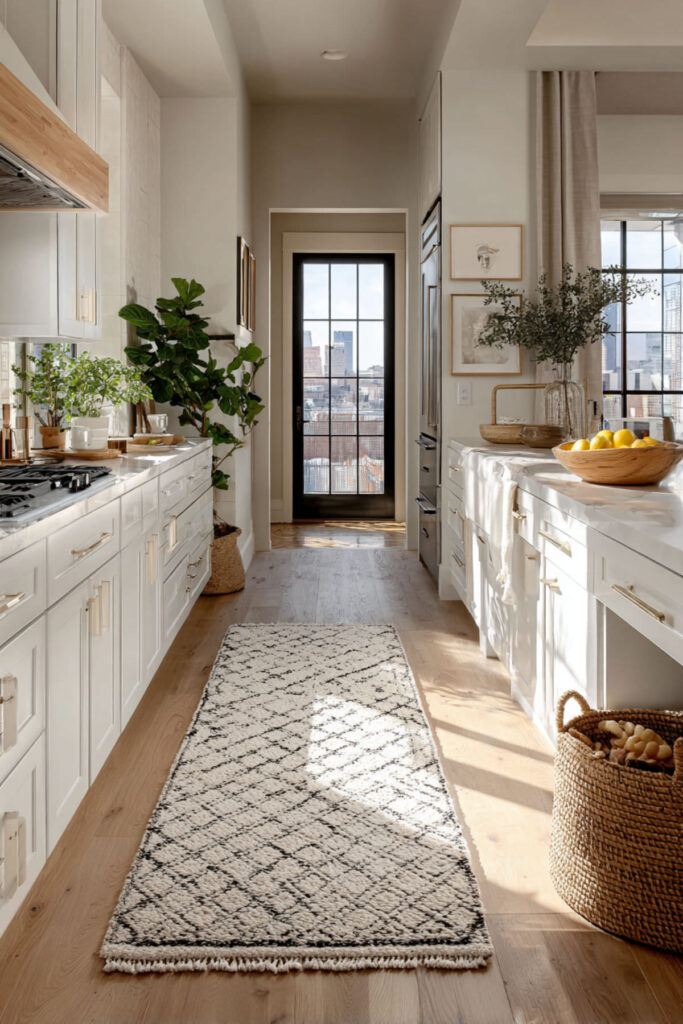
Where you place your rug matters as much as what rug you choose. For a galley kitchen, one long runner down the center is the classic move. For an L-shaped kitchen, two rugs — one along the sink wall, one along the stove wall — create coverage without overlap. For a U-shaped kitchen, the most effective rug placement is a runner along the longest leg with a small mat at the sink. And for open-plan kitchens with an island, a large area rug or runner between the island and the perimeter cabinets defines the cooking zone beautifully. I recommend measuring your space before buying — leave 3 to 8 inches of bare floor on each side of the rug for a balanced, intentional look. This kitchen rug placement guide helps you get it right the first time.
Your Feet (and Your Kitchen) Will Thank You
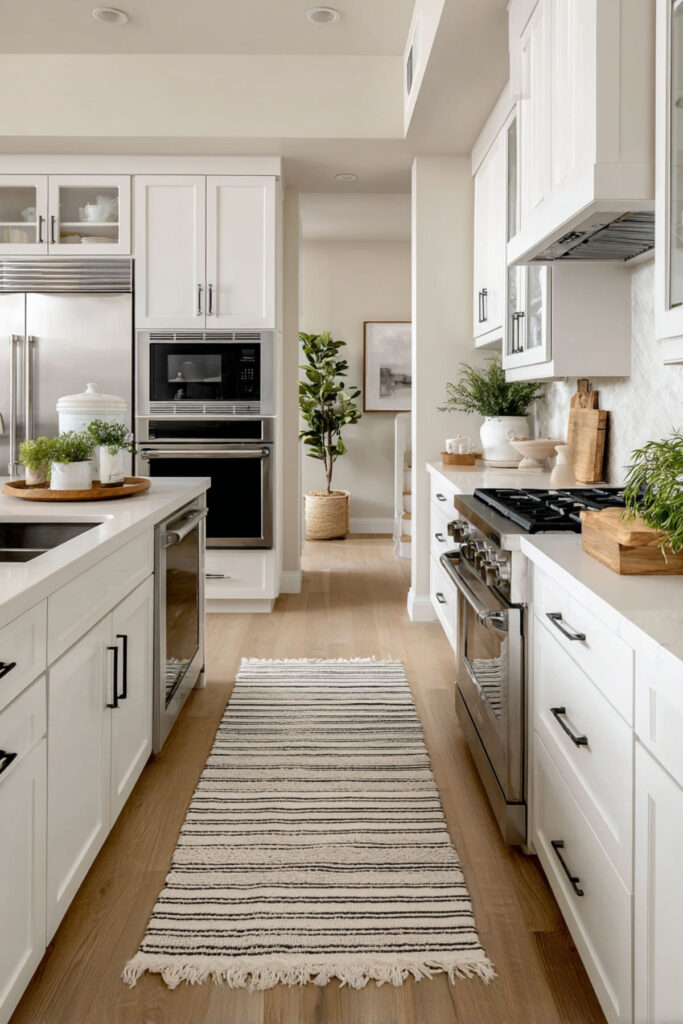
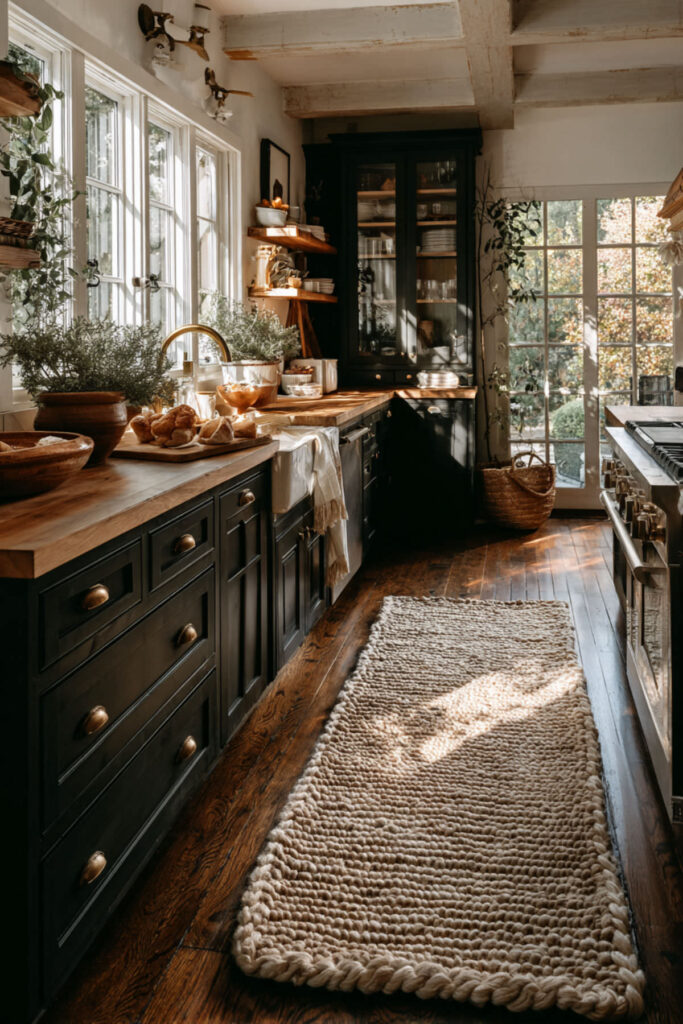
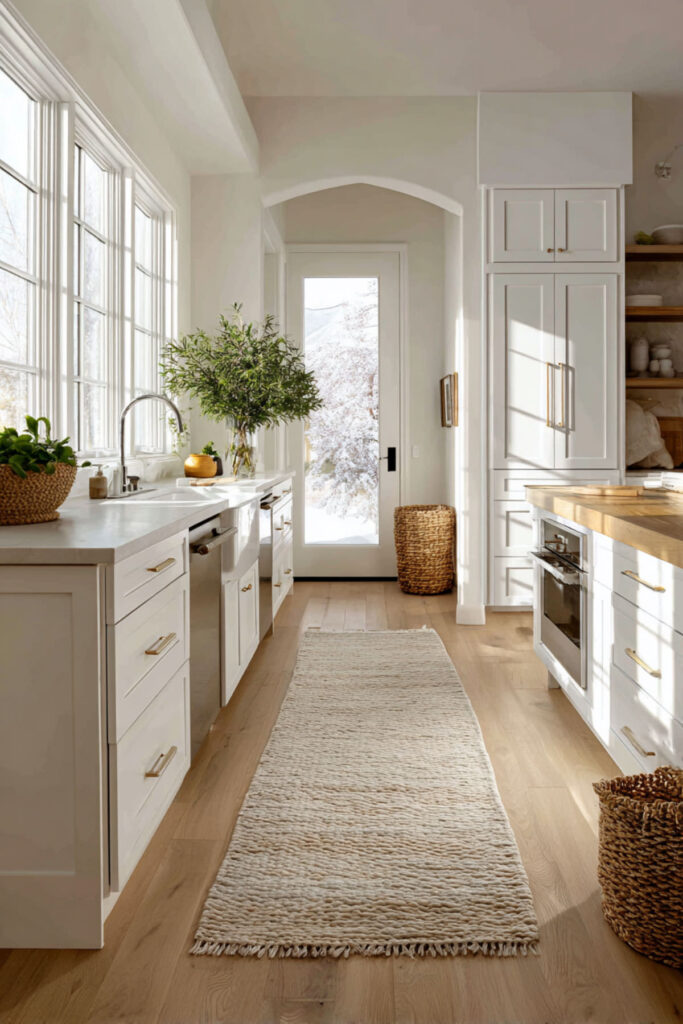
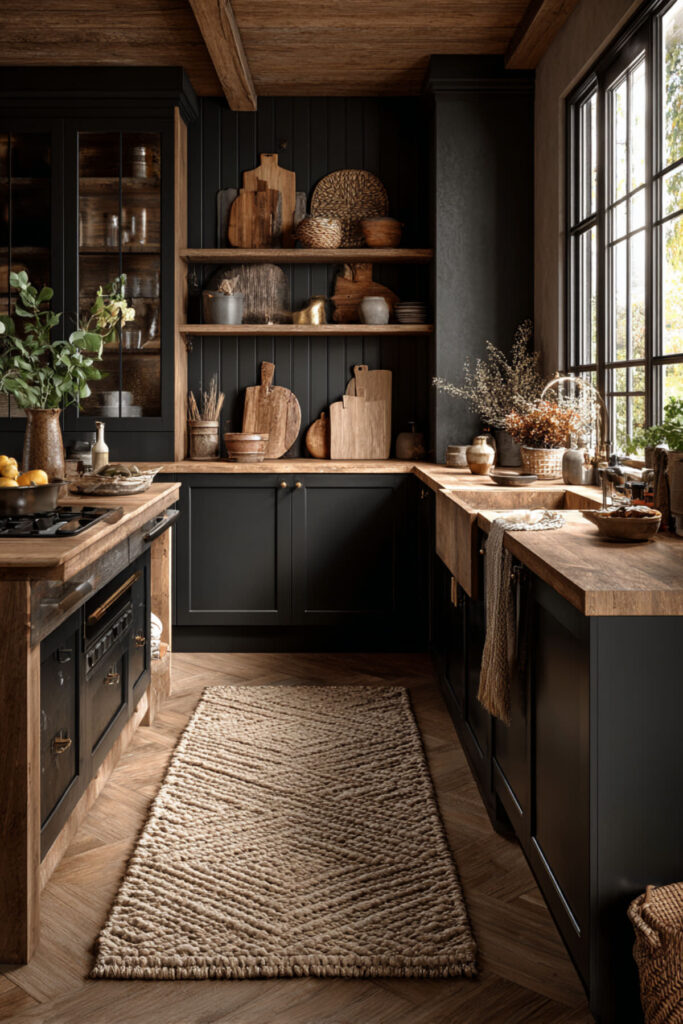
A kitchen rug is one of those small additions that changes how the entire room feels — softer, warmer, more like a place you actually want to spend time in. Whether you go with a washable runner, a plush anti-fatigue mat, or a gorgeous vintage-look rug with character to spare, the goal is the same: a kitchen that supports you while you cook, clean, and gather with the people you love. Save this for when you’re ready to redesign your kitchen space.
Save the ideas that caught your eye, pin them for later, and make sure to look around the rest of our website for more ways to make your kitchen feel like home. There’s so much more waiting. Don’t miss these butcher block island ideas that bring warmth, function, and a naturally inviting center to your kitchen.
There’s always more to discover when it comes to kitchen design.