There’s a kitchen in a 1920s bungalow in Pasadena — the kind of house where the original built-ins are still intact and the light comes through the windows in long, warm sheets — that has the most perfectly balanced color palette I’ve ever seen in a cooking space. The lower cabinets are a deep, quiet green. The upper cabinets are a soft, warm cream. And between them, a stretch of buttery marble countertop and a simple subway tile backsplash in off-white. No accent colors. No competing materials. Just green and cream and natural light, looking like they’ve been that way since the house was built. They probably haven’t. But they feel like they have. And that’s the point.
Green and cream is one of those combinations that transcends trends entirely. It looked beautiful in kitchens a hundred years ago. It looks beautiful right now. And it’ll look beautiful a hundred years from now. The reason is balance — green brings freshness, depth, and a connection to the natural world, while cream brings softness, warmth, and a neutrality that never feels cold. Together, they create a kitchen that doesn’t chase what’s current. It just exists in this timeless space where everything feels right. Whether the green is sage, olive, celadon, fern, or something deeper, and whether the cream is ivory, off-white, or warm linen — the pairing works. Every time.
I’ve gathered 18 green and cream kitchen ideas for women who are designing around balance and longevity rather than trends. Product recommendations are throughout. Pin the ideas you love, and browse the rest of our site for more inspiration. The content here is about kitchen design inspiration, not scientific claims, and some scenarios may be illustrative.
Green Lower Cabinets With Cream Upper Cabinets
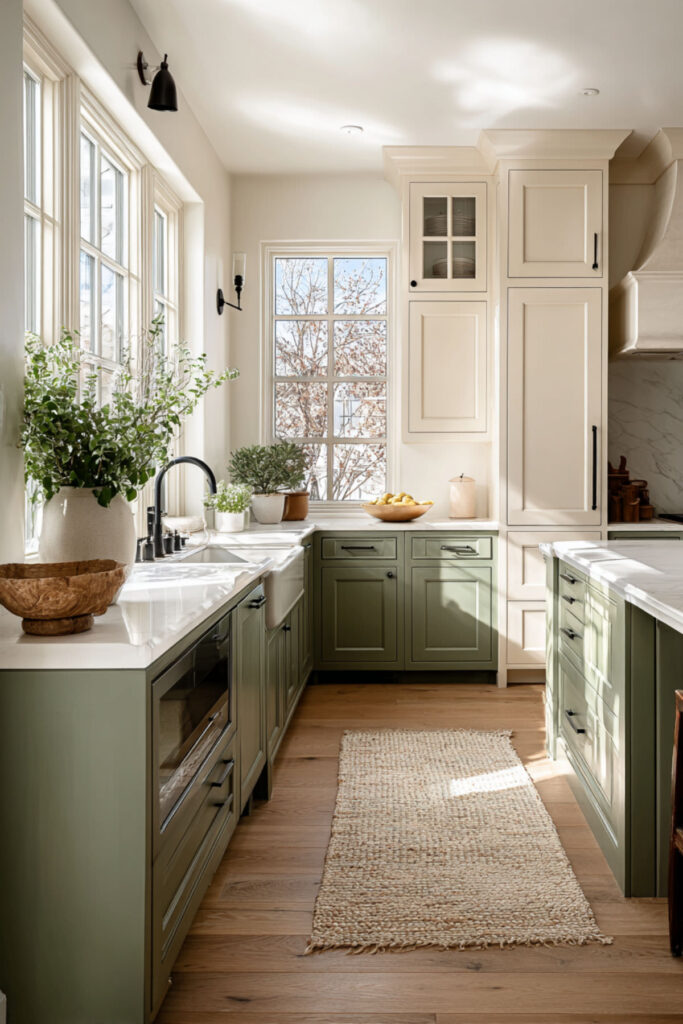
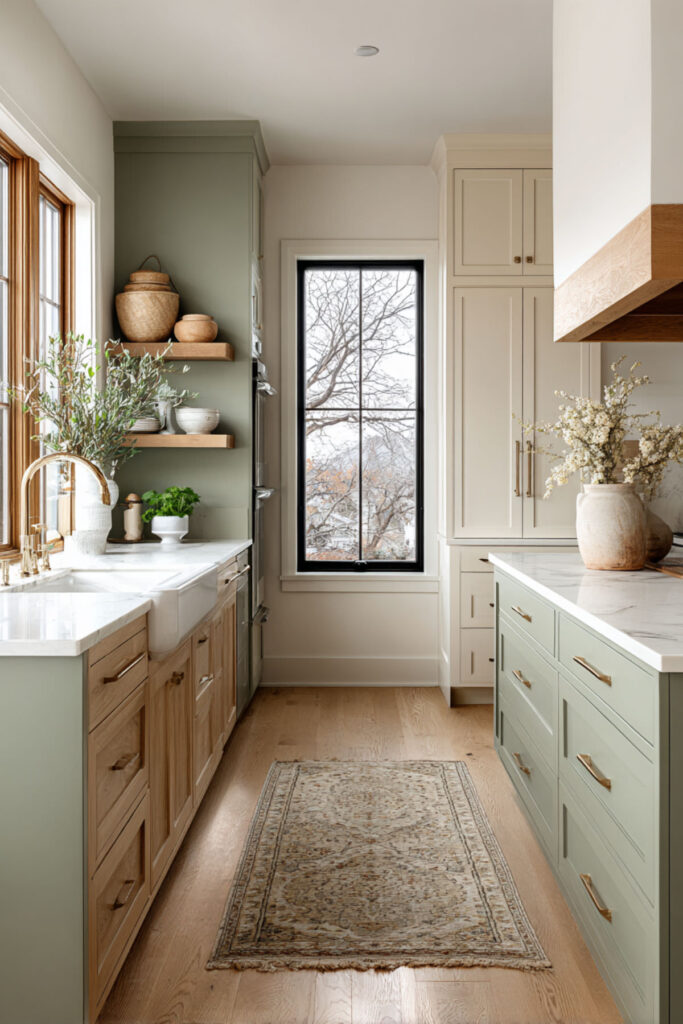
This is the two-tone arrangement that defines the green and cream kitchen — and it’s the most popular for a reason. Green on the bottom creates a grounded, earthy base. Cream on top keeps the upper half of the room light and open. The countertop between them creates a clean horizontal line that separates the two tones. It’s balanced, it’s beautiful, and it works in kitchens of every size and style.
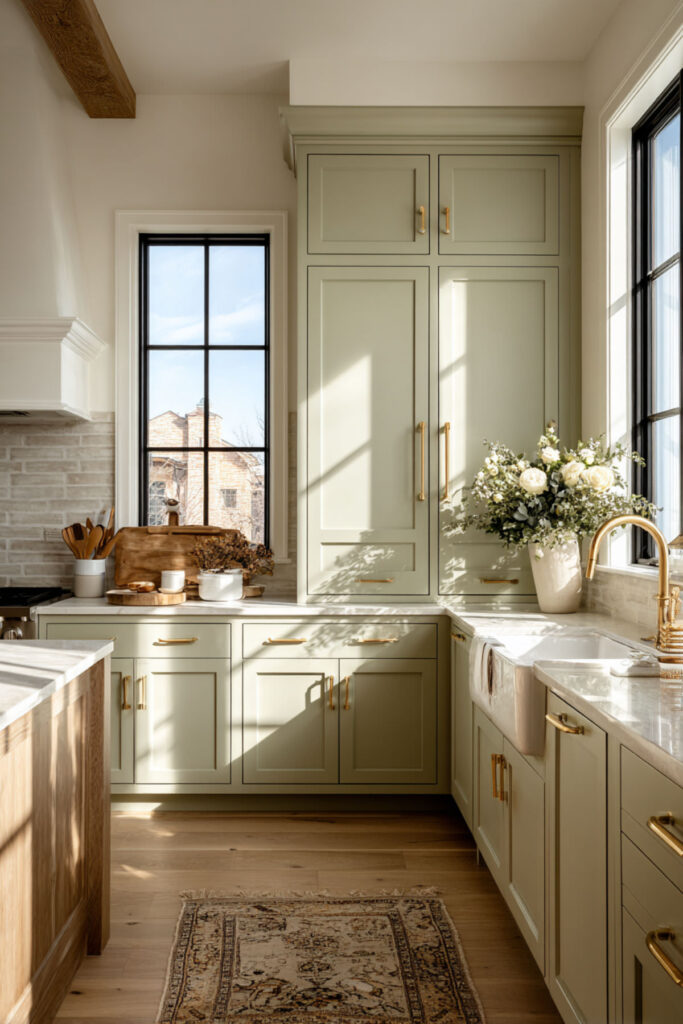
I highly recommend green lower cabinets cream upper in a shaker profile — the clean lines of the shaker frame give both colors definition. Choose a green that speaks to you (sage for softness, olive for depth, fern for freshness) and a cream with warm undertones that naturally complements the green. Brass hardware on both tones ties the palette together. It’s two tone kitchen cabinets green and cream in their most classic, most enduring form.
Sage Green and Cream Kitchen With Brass Accents
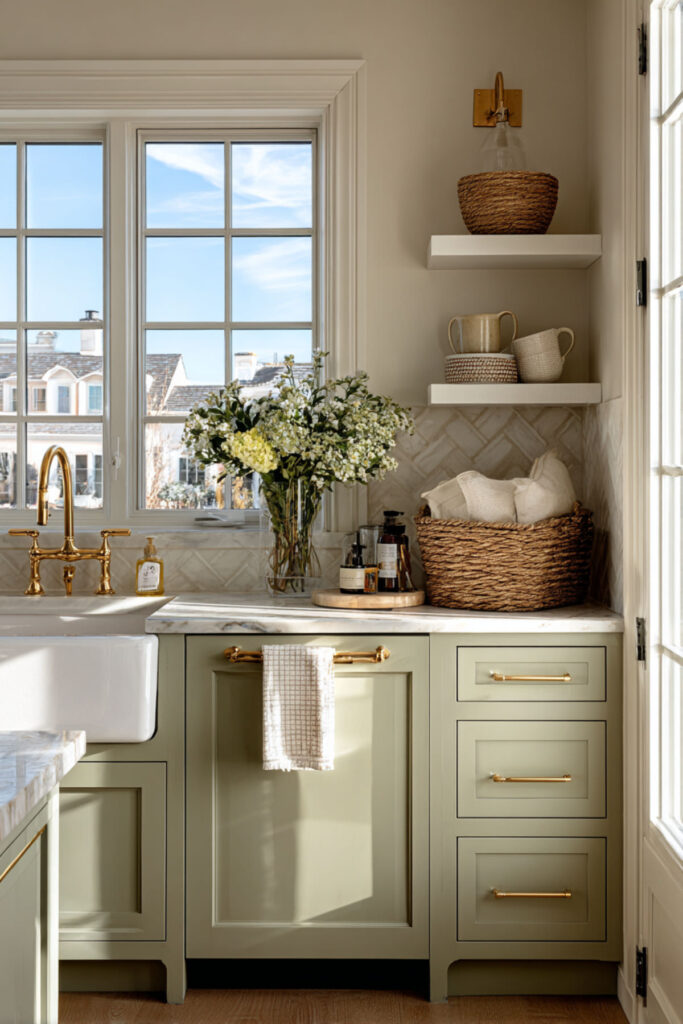
Sage green and cream is the gentlest version of this palette — soft, airy, and almost meditative. The sage sits right between gray and green, which means it reads as a nature-inspired neutral that pairs effortlessly with warm cream. Add brass hardware and fixtures, and the combination gains a quiet glow that makes the kitchen feel luxurious without trying. The warmth of brass pulls the sage and the cream closer together, creating one cohesive, golden-green story.
I recommend sage green and cream kitchen cabinets with unlacquered brass cup pulls, knobs, and a brass faucet. Over time, the brass develops a patina that makes the whole kitchen feel richer and more personal. A warm marble or cream quartz countertop keeps the surfaces bright. Sage green and cream kitchen cabinets with brass is a three-part combination that feels timeless from the moment it’s installed — the kind of kitchen that never needs updating because it was never chasing a trend to begin with.
Dark Green and Cream Kitchen for Richer Contrast
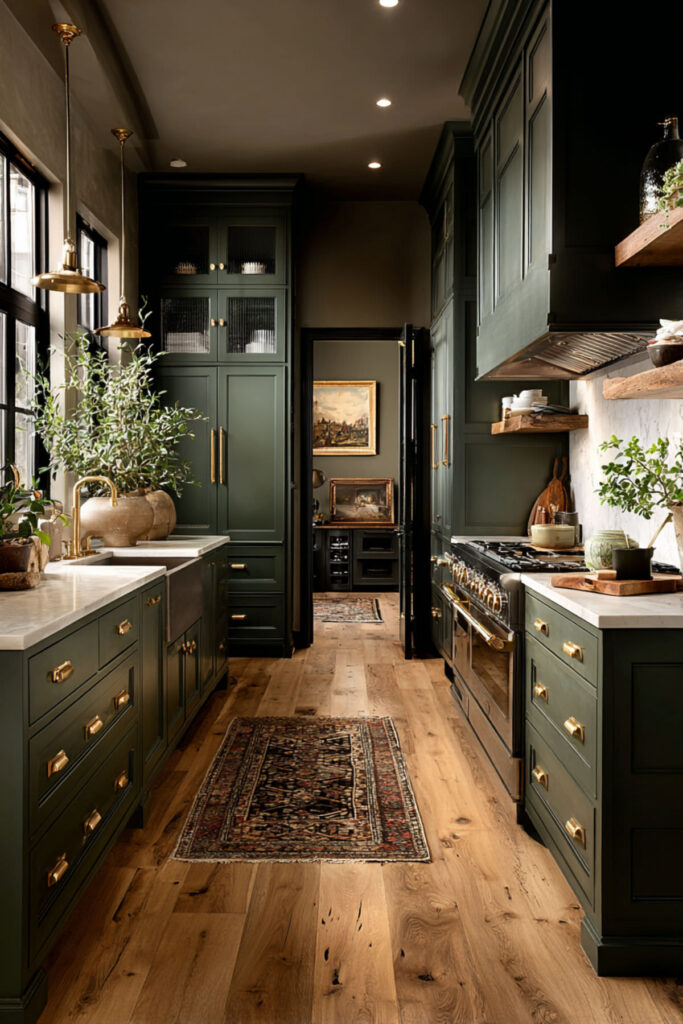
For women who want the green to carry more visual weight, a darker green — forest, hunter, or deep olive — paired with cream creates a bolder contrast that still feels balanced. The dark green brings drama and depth to the lower cabinets or the island, while the cream keeps the rest of the room bright and warm. It’s a combination that reads as more formal and more established than lighter greens, but the cream prevents it from ever feeling heavy.
I recommend dark green and cream kitchen cabinets with the darker tone on the lower cabinets or island and cream on the uppers and walls. A warm marble countertop with green-gray veining bridges the two tones naturally. Brass hardware warms the dark green and keeps it feeling inviting rather than severe. It’s green and cream kitchen ideas with more contrast, more presence, and the kind of confidence that comes from choosing colors you’ll love for decades.
Green Kitchen With Cream Walls and Natural Wood Floors
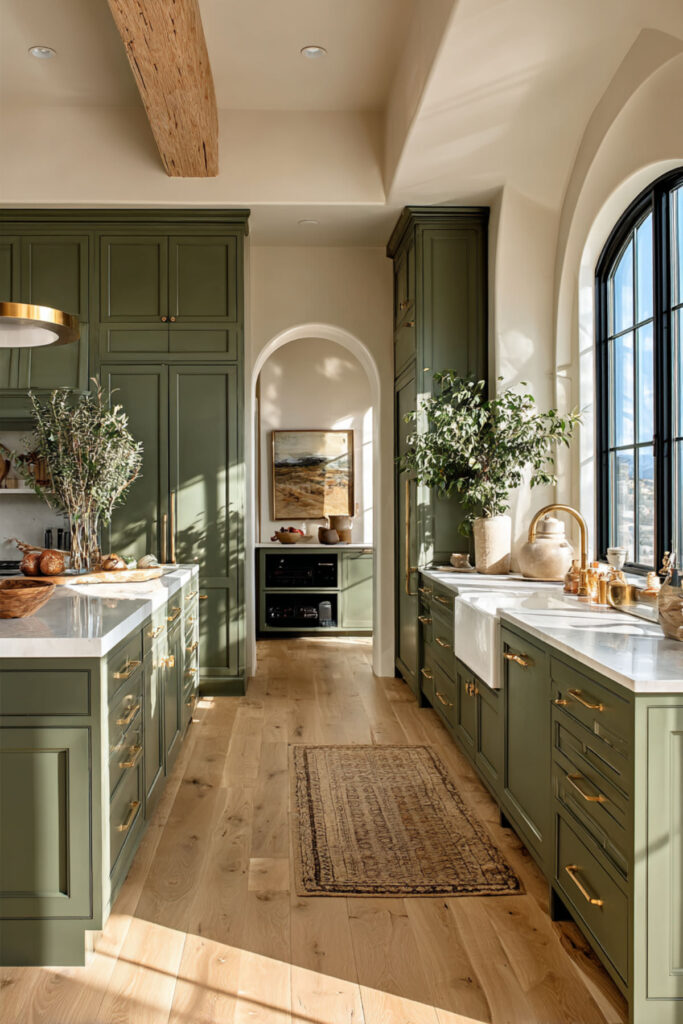
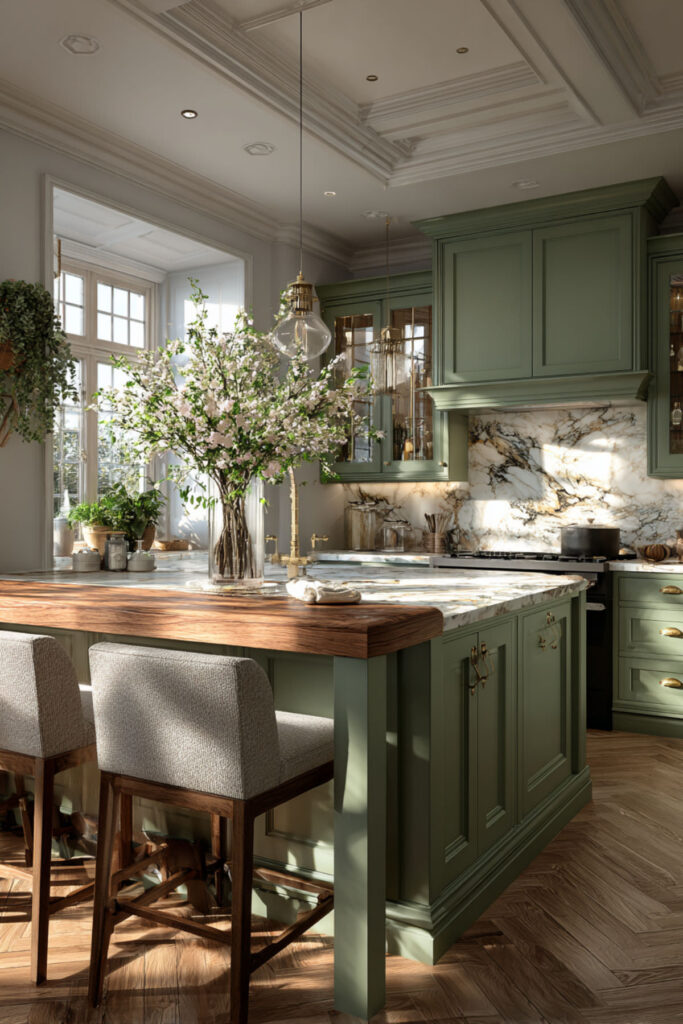
Full green cabinetry — uppers and lowers — set against cream walls and warm natural wood floors creates a kitchen that feels like being inside a garden. The green wraps around you at counter height, the cream walls open up the space above and around, and the warm wood flooring grounds everything with organic texture. It’s three materials that belong together because they all exist in nature: leaf, cloud, earth.
I recommend green kitchen cabinets (any shade — sage, olive, celadon, fern) with warm cream painted walls and wide-plank oak or maple flooring in a natural finish. The cream walls should be a warm off-white with yellow or beige undertones — nothing cool or stark. The combination creates a kitchen that feels wrapped in nature without any decorative effort. Green kitchen cream cabinets reversed — all green, all calm, all balanced.
Cream and Green Kitchen With a Marble Countertop Bridge
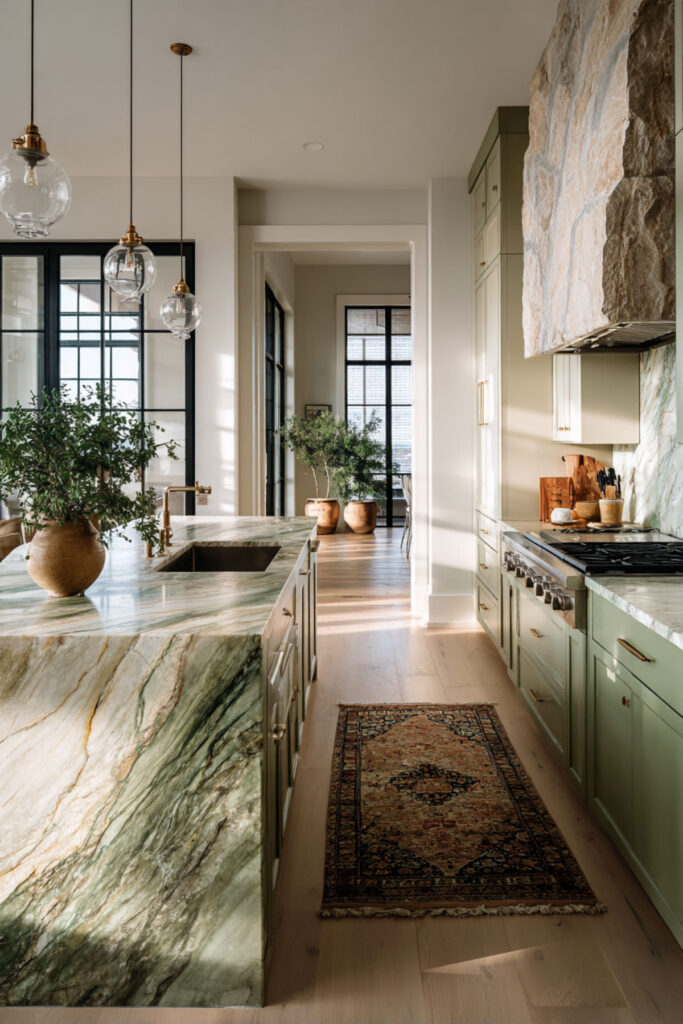
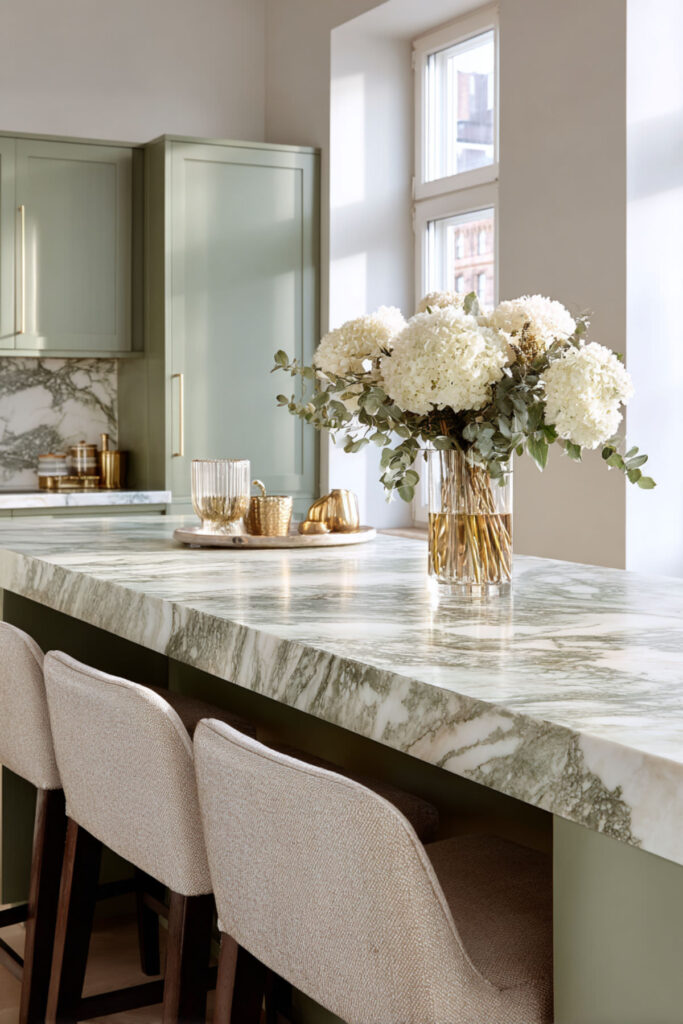
Marble is the material that bridges green and cream most beautifully, because natural marble often contains both tones in its veining — soft greens, warm creams, golden threads, gray undertones. A marble countertop between green lower cabinets and cream upper cabinets creates a continuous visual story from bottom to top, with the stone acting as the natural connector between the two colors.
I recommend a Calacatta or warm-veined marble countertop (look for stone with golden and greenish undertones) with green lowers and cream uppers. The marble’s natural variation means no two installations look the same — your countertop will be individually beautiful. It’s a cream and green kitchen where the stone does the design work of blending the two tones, and every morning the light hits the veining differently. Natural balance, literally set in stone.
Light Green and Cream Kitchen for Bright, Airy Spaces
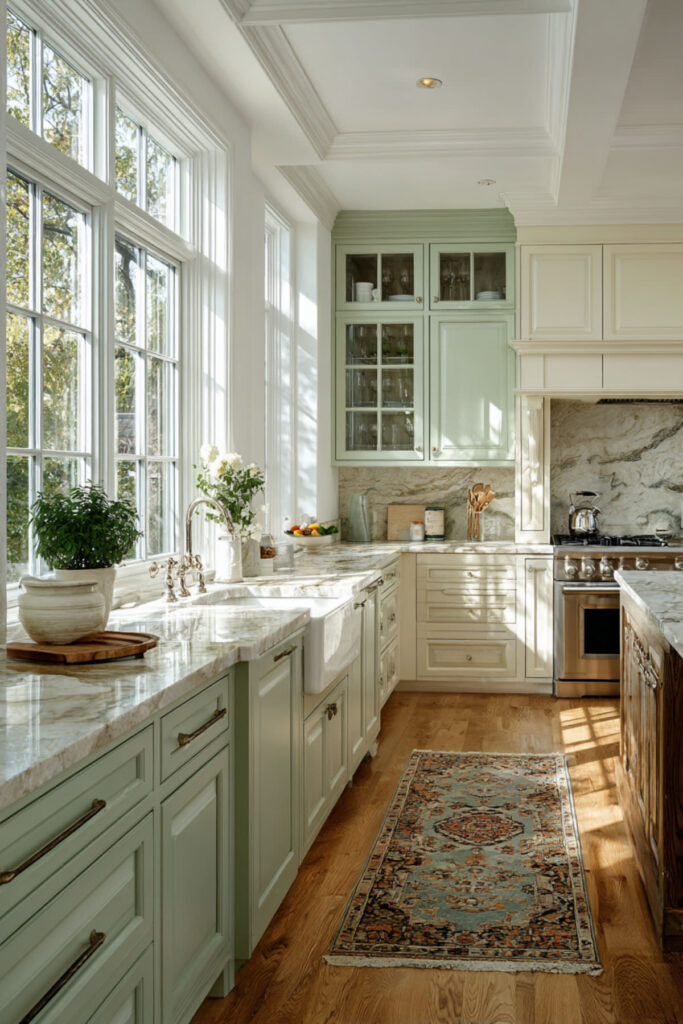
A lighter green — almost celadon, almost mint, but warmer — paired with cream creates the airiest version of this palette. The light green reflects light rather than absorbing it, so the kitchen feels spacious and bright. The cream warms the green’s cooler edges and keeps the room from feeling washed out. It’s the perfect green and cream combination for small kitchens, north-facing kitchens, or any space where you want maximum brightness with genuine color.
I recommend a light green and cream kitchen with pale green lower cabinets and cream uppers, or all-cream cabinets with light green walls. A white countertop keeps the palette crisp, and warm wood accents (a cutting board, a wood stool, floating shelves) add organic warmth. Light sage cabinets kitchen paired with cream — soft, bright, and impossibly inviting. Pale green kitchen units that feel like a permanent spring morning.
Green and Cream Kitchen With Open Wood Shelving
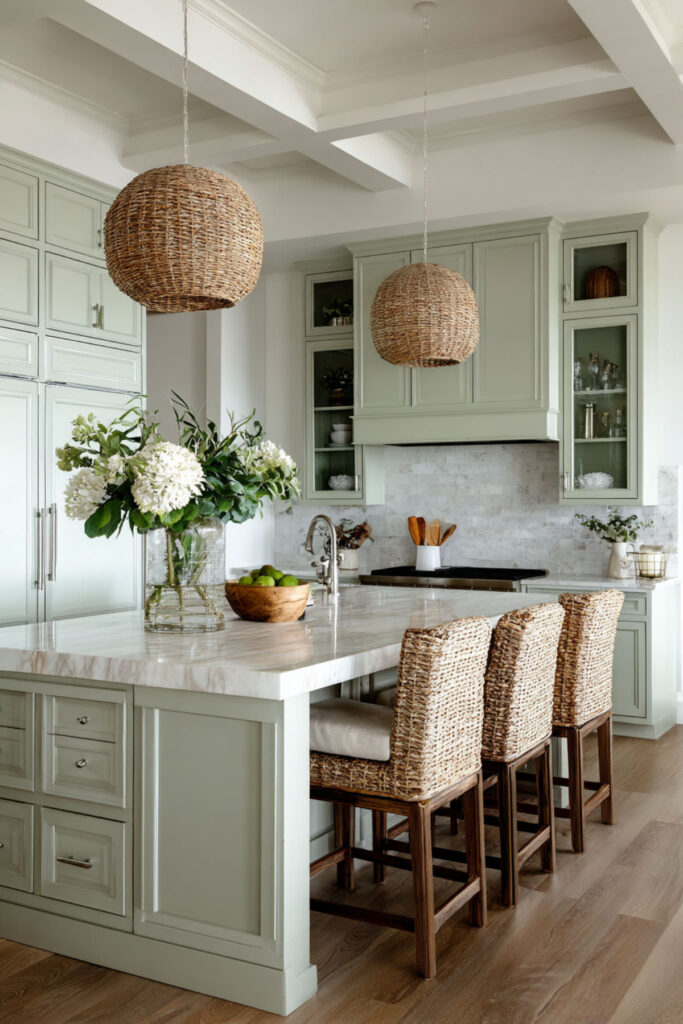
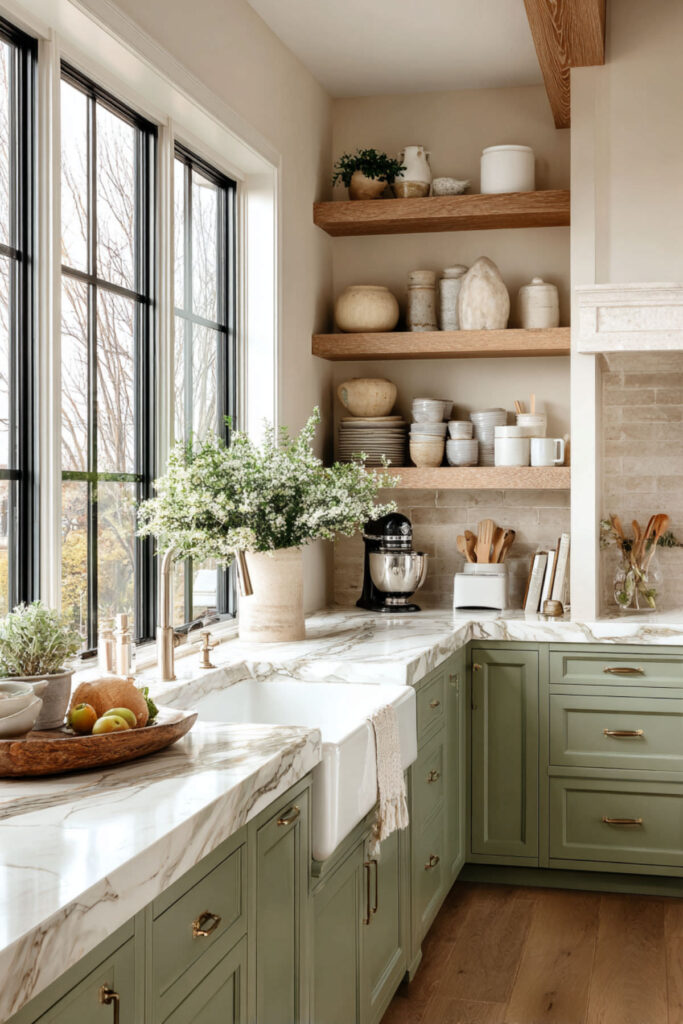
Warm wood open shelves in a green and cream kitchen add a third material that belongs in the palette as naturally as the first two. The golden grain of oak or walnut against green and cream introduces texture and organic warmth at eye level — right where you interact with the kitchen most. And the open shelving makes the room feel more accessible and personal than all-closed cabinetry.
I recommend natural wood floating shelves replacing some or all of the cream upper cabinets, mounted against the green-painted wall. Style them with a simple mix of white ceramics, clear glass jars, and a few warm objects — a cutting board, a small plant, a brass candle holder. The shelves break up the two-tone palette with warmth and dimension. Green and cream kitchen ideas with an organic layer that makes the room feel lived-in and loved.
Celadon Kitchen With Cream and Linen Textures
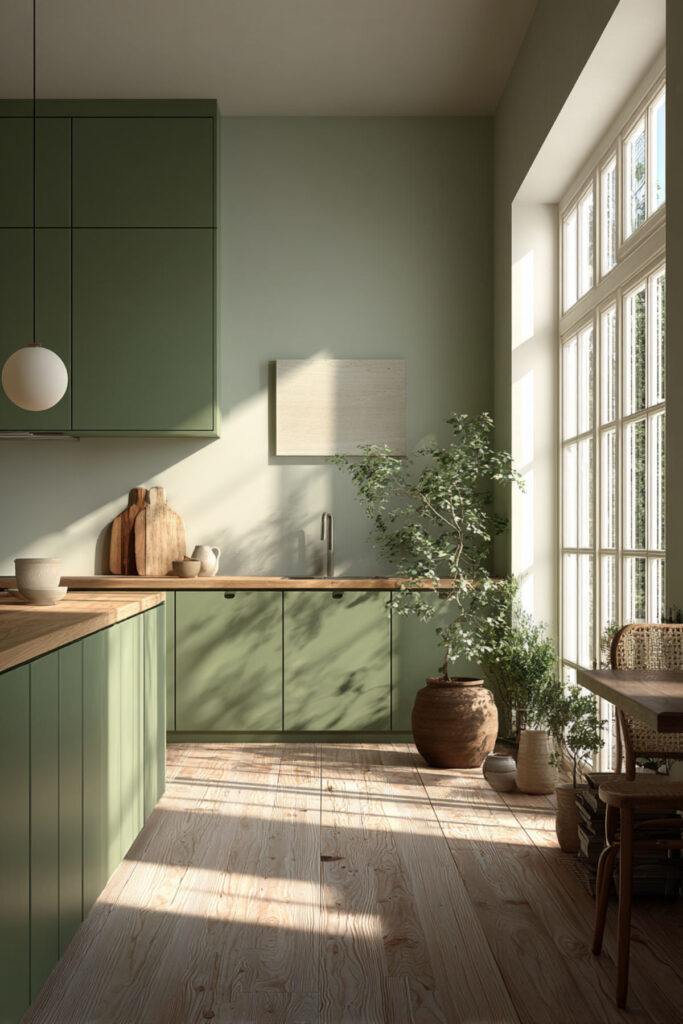
Celadon — a soft, slightly blue-toned green that originated in Chinese ceramics centuries ago — is one of the most serene greens you can put in a kitchen. Paired with cream and layered with linen textures (curtains, napkins, a table runner), a celadon kitchen feels like a room designed for calm. The slightly cool green, the warm cream, and the soft fabric create a sensory palette that’s gentle from every angle.
I recommend celadon kitchen cabinets in a matte finish with cream walls and linen curtains in a warm oat or flax tone at the windows. A cream stone countertop and warm wood flooring complete the base. The linen adds softness that hard surfaces can’t provide — it absorbs sound, filters light, and makes the room feel more intimate. Celadon kitchen is a choice that says: this room values peace over everything. And there’s nothing more timeless than that.
Green and Off-White Kitchen for Subtle Warmth
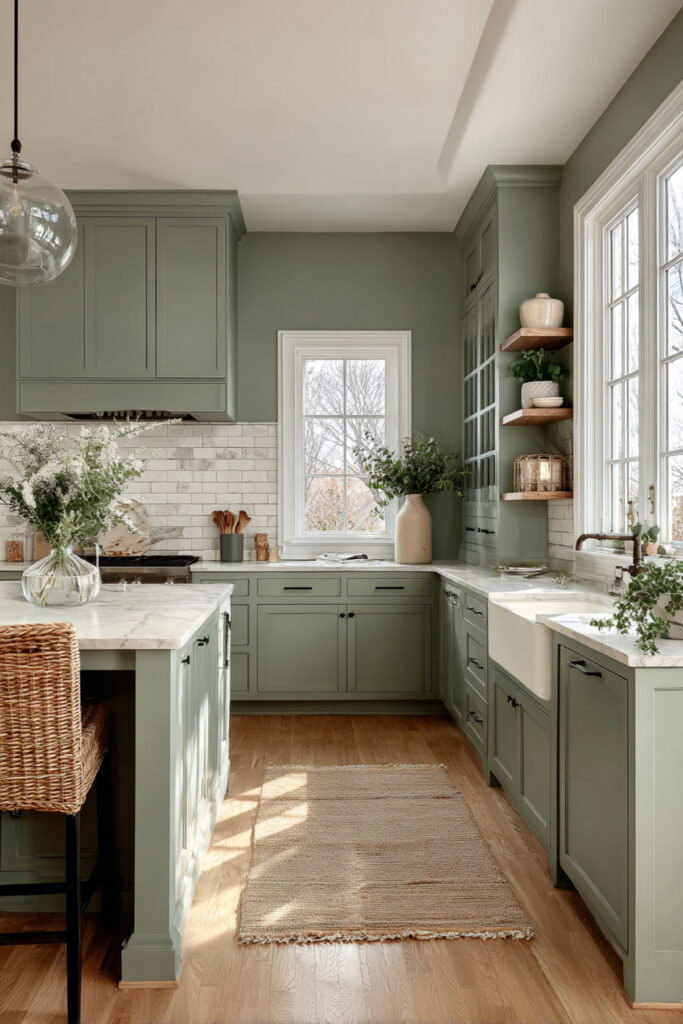
Off-white — not pure white, not cream, but that in-between tone with just a hint of warmth — is a beautiful alternative to cream for women who want the pairing to feel slightly brighter. Green and off-white creates a cleaner contrast than green and cream, but it’s still warm enough to avoid the clinical feel that pure white can bring. It’s the most modern interpretation of this classic pairing.
I recommend a green and off white kitchen with green cabinets paired with off-white walls and a white quartz countertop. Choose an off-white with a warm undertone (something like Benjamin Moore Swiss Coffee or Sherwin Williams Alabaster) so it reads as warm, not gray. The result is a kitchen that’s brighter than a cream version but still carries that essential warmth. Green and cream kitchen ideas with the brightness turned up just one notch.
Two-Tone Green and Cream Island
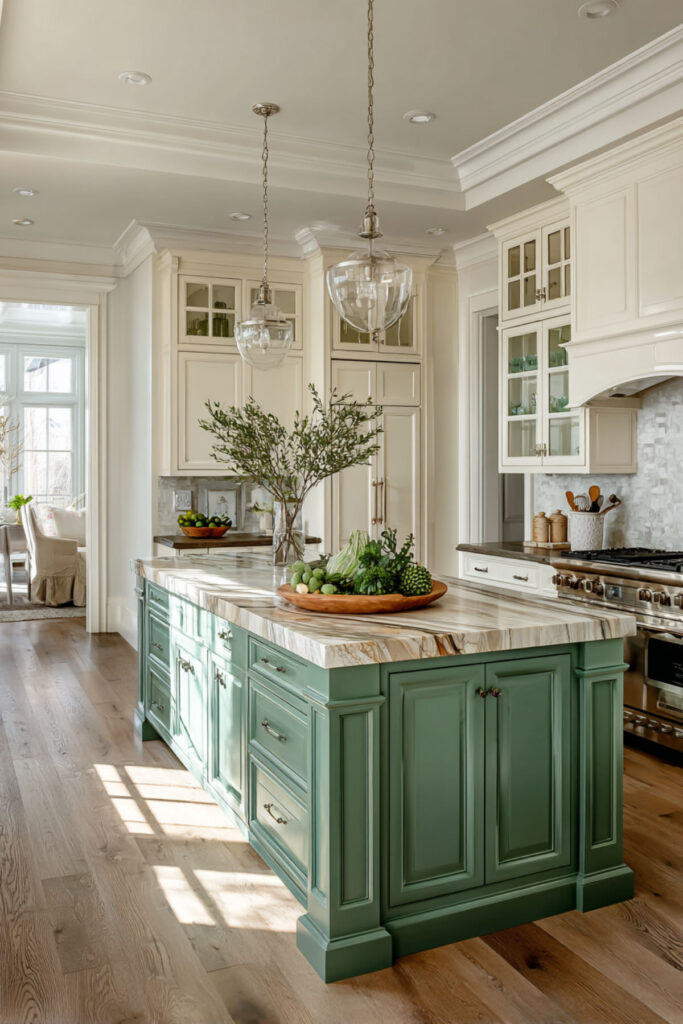
A two-tone island — green on the base, cream on the countertop, or green on one face and cream on the other — adds visual interest to the most prominent piece in the kitchen. The two-tone island becomes a furniture-like element that anchors the room with both color and structure, and the green-cream contrast gives it more visual weight than a single-color island would have.
I recommend a green painted island base with a thick cream marble or quartz top — the contrast between the warm green below and the bright cream above gives the island presence and definition. Brass hardware and comfortable stools in a natural material (wood, woven rattan) complete the setup. It’s two tone kitchen cabinets green and cream applied to the single most-used piece in the kitchen — where the color combination has the most impact and the most visibility.
Fern Green Kitchen With Cream Tile Backsplash
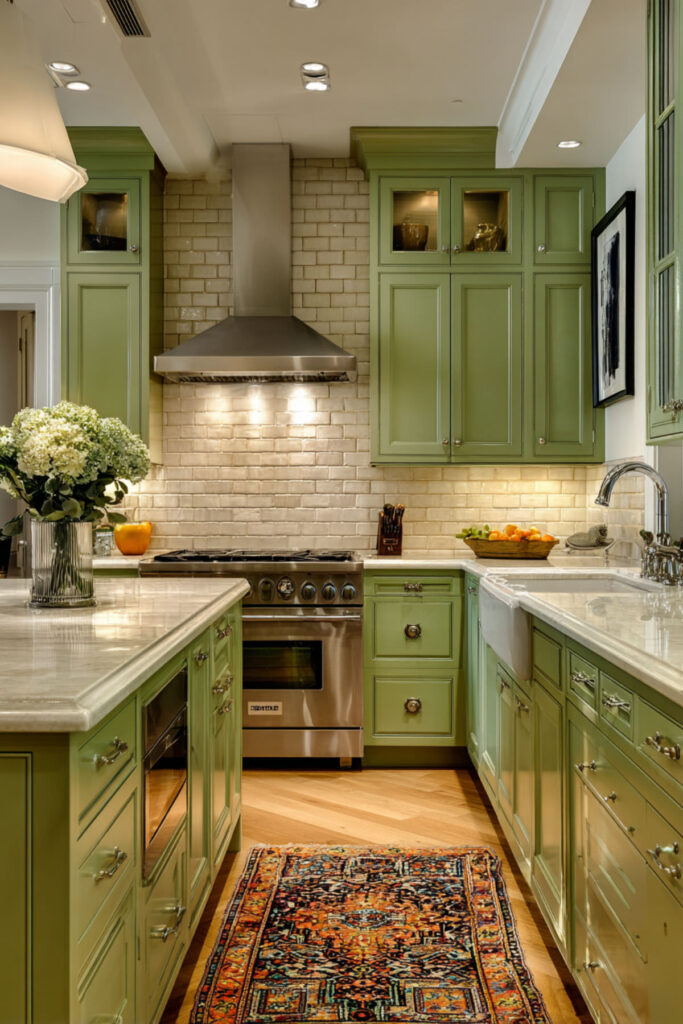
Fern green — a brighter, more vivid green than sage or olive — brings energy and freshness to a kitchen in a way that muted greens don’t. Paired with a cream tile backsplash (subway, zellige, or handmade), fern green cabinets make the kitchen feel alive and vibrant while the cream tile keeps the overall mood warm and grounded. It’s the version of this palette for women who want their green to be unmistakably green.
I recommend fern green kitchen cabinets with a cream handmade or zellige tile backsplash and a warm cream countertop. The backsplash tiles add texture that complements the bold green, and the cream grout keeps the tile surface warm. Brass hardware connects the two tones with a golden accent. Fern green kitchen is the most confident version of this palette — still balanced, still timeless, but with a freshness that makes the kitchen feel like the first warm day of spring.
Green and Ivory Kitchen Cabinets for a Heritage Feel
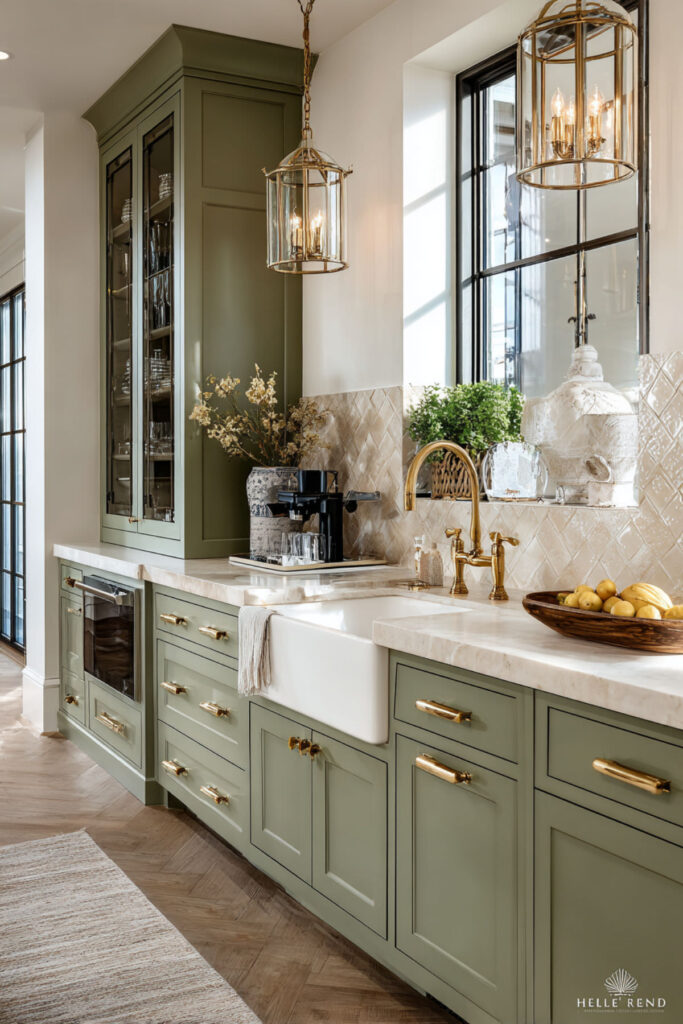
Ivory — a slightly yellowed cream with a historic quality — paired with green creates a kitchen that feels like it belongs in a beautiful old house. The warmth of ivory is richer than standard cream, and it gives the green a heritage context — like the cabinets have been this combination for generations. It’s a subtle difference from cream, but it shifts the mood from “modern neutral” to “classic character.”
I recommend green and ivory kitchen cabinets with the green on the lower cabinets and ivory on the uppers. Choose an ivory with a warm, golden undertone — it should feel rich, not yellow. A cream or warm-veined marble countertop and antique brass hardware complete the heritage feel. Green and ivory kitchen cabinets create a kitchen that feels like it has history even if the house was built last year. That’s the magic of the right warm white.
Green Kitchen With a Cream Range Hood
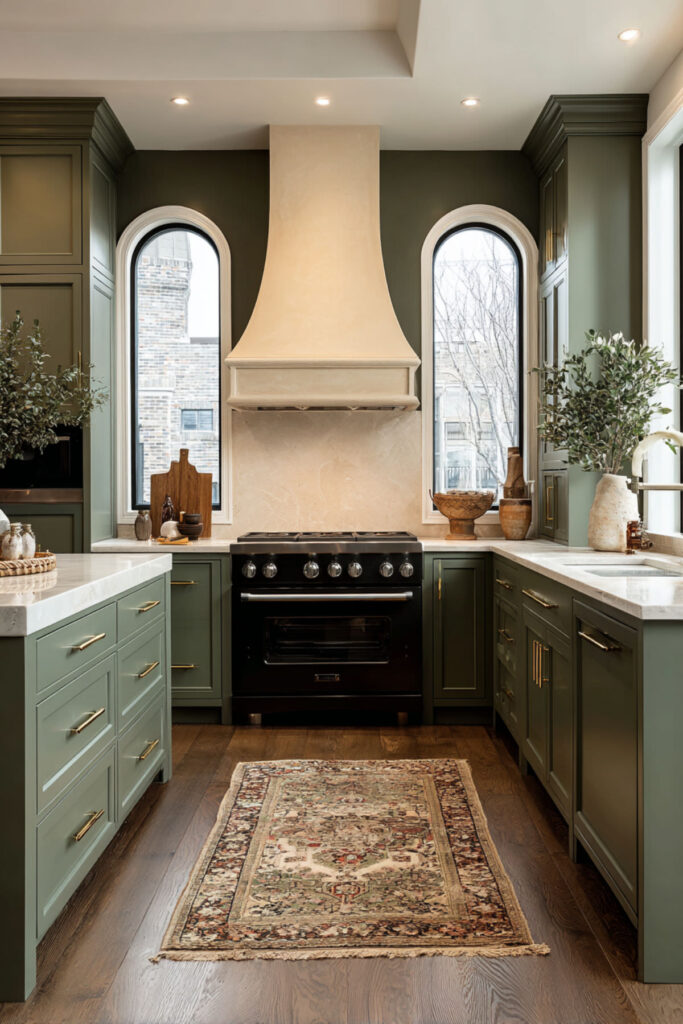
A cream-painted or cream-plastered range hood against green cabinetry creates a focal point on the stove wall that’s both functional and beautiful. The cream hood stands out against the green, drawing the eye to the cooking zone, while its warm tone keeps the contrast gentle rather than jarring. It’s a design detail that makes the stove wall feel architectural and considered.
I recommend a custom range hood in cream plaster, cream paint, or a cream-paneled cabinet-style hood, flanked by green cabinets on both sides. A warm tile or marble backsplash behind the range connects the green cabinets to the cream hood. Brass sconces or a small shelf on either side of the hood add functional warmth. The cream hood gives the stove wall a centerpiece that’s soft, warm, and structured — anchoring the green with one bright, beautiful moment.
Cream and Green Kitchen With Warm Brass Throughout
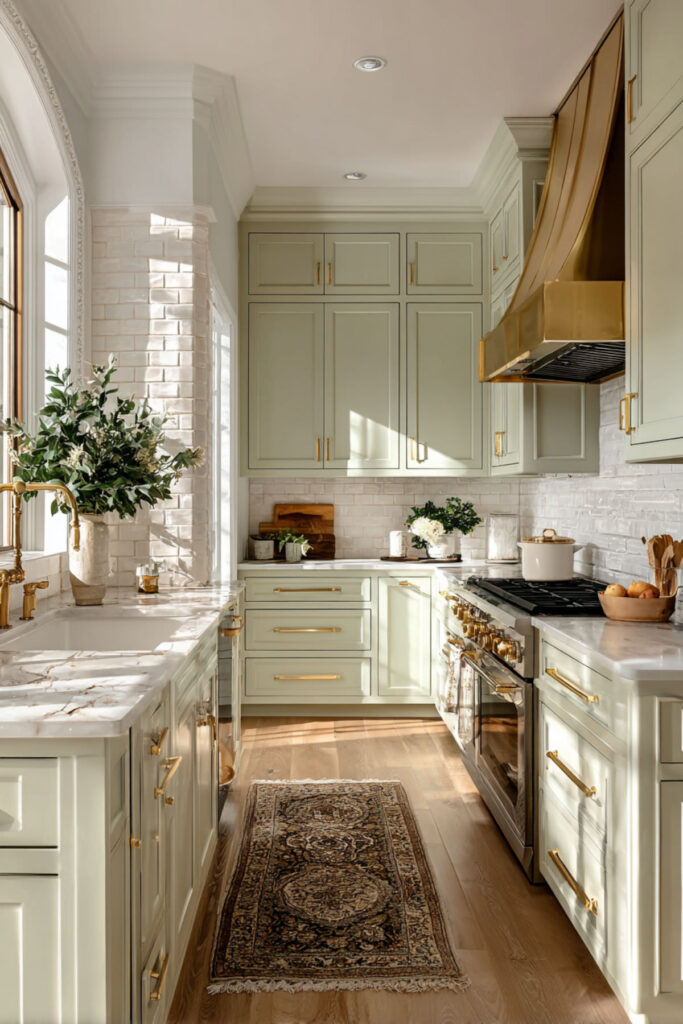
Brass is the metallic that was made for green and cream — it shares warm undertones with both colors, creating a golden thread that ties the entire palette together. Without brass, green and cream can occasionally feel slightly disconnected. With brass — on hardware, fixtures, lighting, and small accents — the kitchen reads as one cohesive, warm, considered design. The brass is the bridge between the two tones.
I strongly recommend unlacquered brass everywhere in a cream and green kitchen: cup pulls and knobs on both cabinet colors, a brass bridge faucet, brass pendant lights, and a few brass accessories (a tray, a candle holder). The patina that develops over time deepens the warm quality of the entire room. Cream and green kitchen cabinets with brass is a three-part palette that feels complete from every angle — nothing missing, nothing extra. Just right.
Green and Cream Kitchen With Minimal Counter Styling
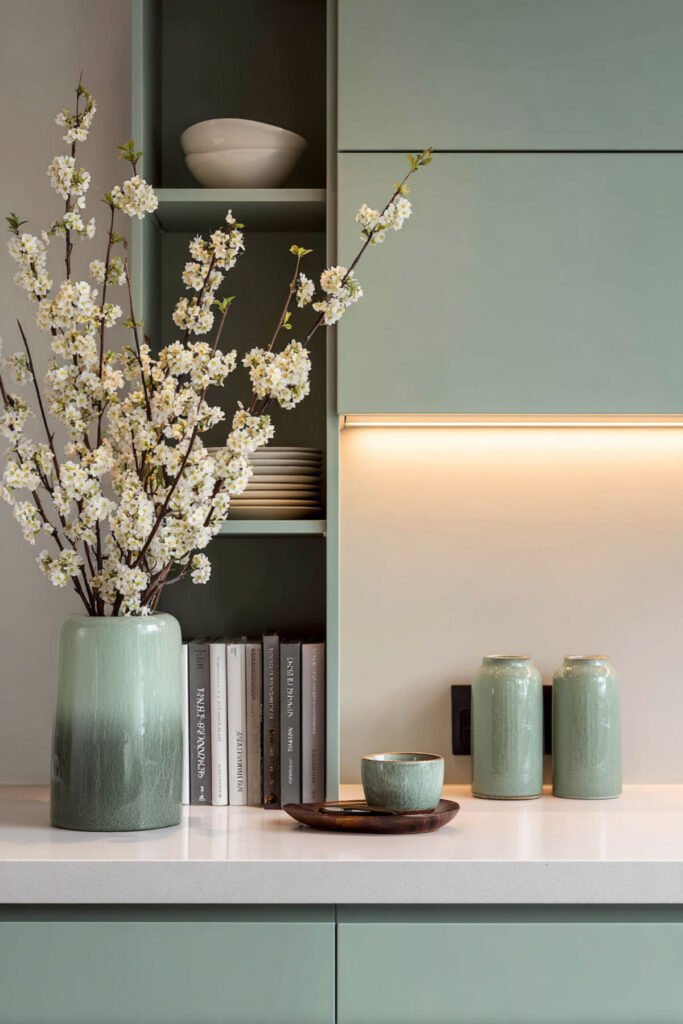
In a kitchen designed around timeless natural balance, the countertop should be as calm as the color palette. Minimal styling — two or three carefully chosen objects rather than a cluttered display — lets the green and cream surfaces do the talking. A single vase, a cutting board, and your morning coffee setup. The clear counter makes the colors more visible, the room more spacious, and the whole kitchen more peaceful.
I recommend keeping your green and cream kitchen countertop down to three items at most: a wood cutting board propped against the backsplash, a ceramic vase with a single stem, and your daily coffee or tea setup. Everything else goes behind cabinet doors. The counter itself — whether cream marble, warm quartz, or butcher block — becomes a visible, beautiful surface that the green cabinets frame from below. Less styling, more balance. That’s timeless in action.
Green and Cream Kitchen With Soft Linen Curtains
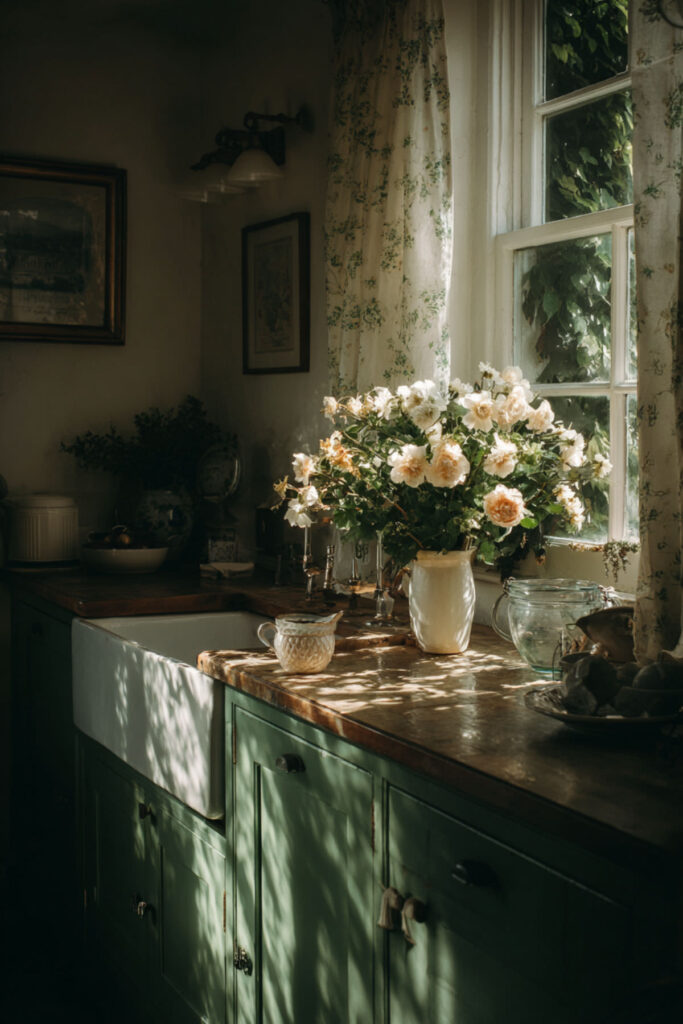
Linen curtains at the kitchen window add a textile layer that soft ens the hard surfaces of countertops, tile, and cabinetry. In a green and cream kitchen, cream linen curtains filter light warmly, frame the window with softness, and introduce a material that’s organic and imperfect in the most beautiful way. The slight drape and natural texture of linen make the kitchen feel more like a living space than a workstation.
I recommend washed linen curtains in a warm cream or natural flax tone, hung just above the window frame on a simple brass or wood rod. The curtains should be slightly longer than the window for a relaxed, floor-length drape. Against green cabinets and cream walls, the linen adds one more natural material to the palette — joining wood, stone, and paint in a room that’s built entirely from things that feel good to the touch.
Green and Cream Kitchen With a Single Beautiful Pendant
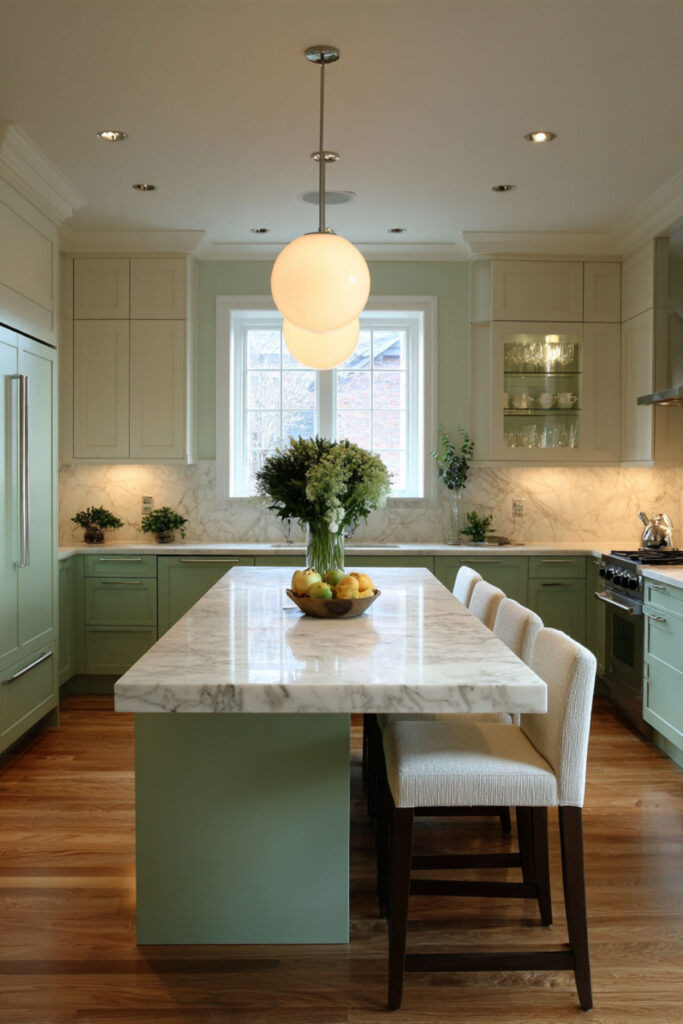
In a kitchen where the color palette is this balanced and this calm, one beautiful pendant light over the island or dining table is all the focal point you need. The pendant becomes the room’s crown — a single object that draws the eye up and completes the vertical composition from floor (wood), to counter (marble), to cabinet (green and cream), to ceiling (light). One fixture. One moment. And it’s enough.
I recommend an oversized pendant in a warm material — aged brass, woven rattan, or hand-blown glass — hung centered over the island or table. The pendant should be proportional to the island (large enough to feel substantial, not so large it overwhelms). In a green and cream kitchen, the warm pendant adds one more layer of organic warmth from above. The kitchen feels complete. Balanced from floor to ceiling. Green and cream and light.
The Green and Cream Kitchen That Outlasts Everything
And here’s the final idea — the one that underlies this entire list. The reason green and cream works isn’t because it’s trending. It’s because it’s rooted in nature itself — the colors of leaves and blossoms, forest floor and sunlight, garden and sky. These are colors that existed long before kitchens did, and they’ll exist long after every design trend has come and gone. When you choose green and cream for your kitchen, you’re not making a style decision. You’re making a permanent decision. And permanent, in a world of seasonal trends and constantly rotating Pinterest boards, is the most radical design choice you can make.
I recommend choosing the green and cream tones that genuinely make you happy — not the ones that are most popular right now, but the ones that you’d want to see every single morning for the next twenty years. That’s the test. If you’d still love it in twenty years, it’s the right green. If you’d still love it in twenty years, it’s the right cream. And if the combination makes your kitchen feel balanced, grounded, and full of quiet natural beauty today — it’ll still feel that way tomorrow, and the day after that, and for every day that follows. That’s not just timeless design. That’s home.
Balance That Lasts
That’s 18 green and cream kitchen ideas for women who want their kitchen to feel balanced, natural, and built to last — not for a season, but for a lifetime. Green and cream doesn’t follow trends because it doesn’t need to. It just sits there, calm and beautiful, being exactly what a kitchen is supposed to be: a warm, grounded, endlessly inviting room at the heart of your home. Keep this saved so your next update feels aligned.
Pin your favorites, save them for when the timing feels right, and browse the rest of our site for more ideas to bring timeless natural balance into every room. Here’s to kitchens that outlast everything. Explore these French blue kitchen ideas that balance softness with structure for a beautifully composed cooking space.
Your kitchen vision can keep expanding with more inspiration.
More ideas are ready whenever you are.