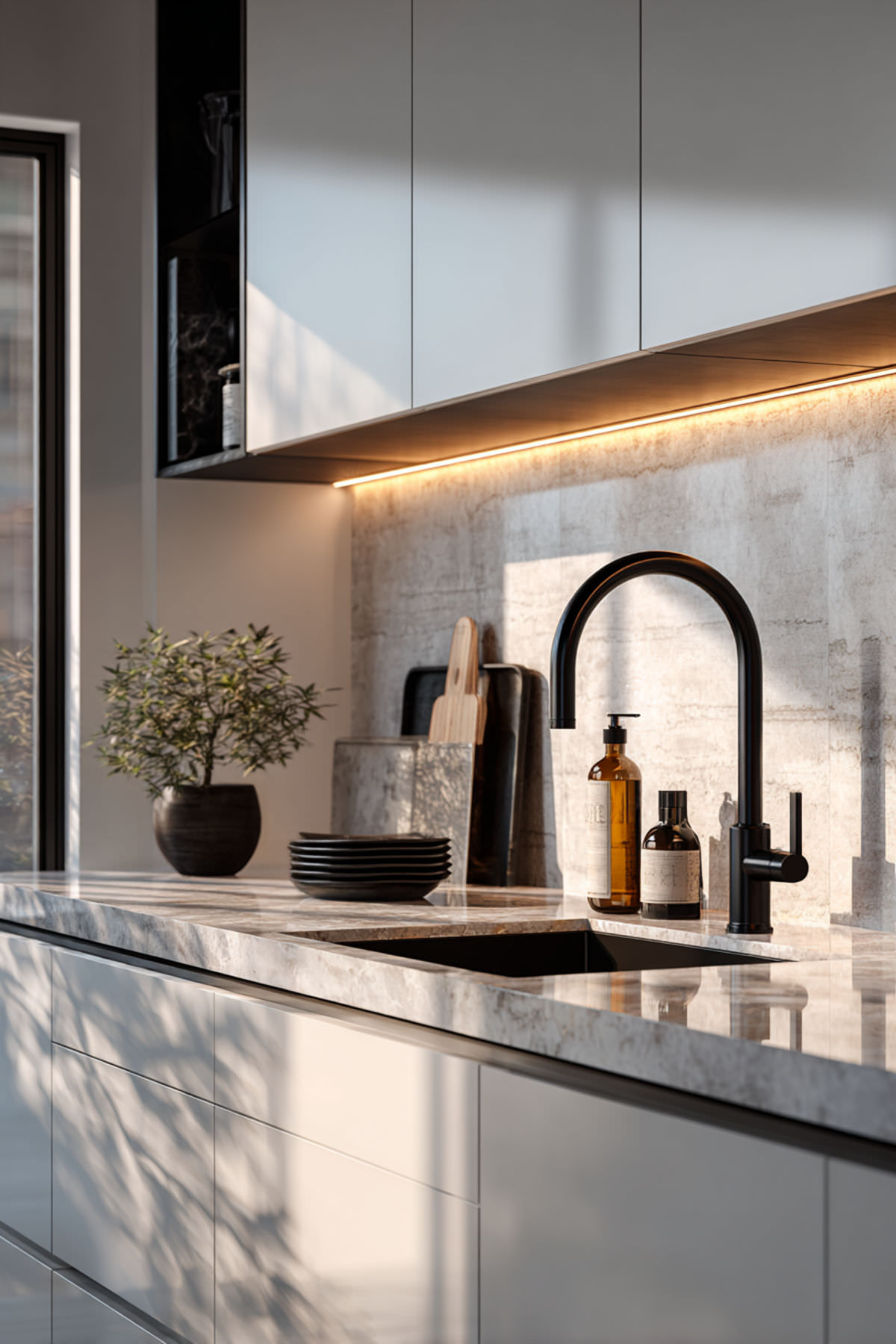
There’s a fine line between a kitchen with personality and a kitchen that feels like it’s yelling at you. Pattern can get busy fast. Color can overwhelm if it’s not controlled. But green tile? Green tile walks that line perfectly. It adds depth, visual interest, and a sense of story to a kitchen without ever tipping into chaos — because green is nature’s neutral, and nature never clashes with itself.
A green tile backsplash, floor, or accent wall is one of the smartest ways to inject character into a kitchen while keeping everything feeling grounded and cohesive. Whether it’s the hand-pressed imperfections of a zellige, the geometry of a hexagon, the rhythm of a herringbone, or the simplicity of a classic subway, green tile gives the room texture and soul. Designers have been noting that handmade tiles and extended backsplashes in earthy, nature-inspired greens are among the most talked-about kitchen trends for 2026.
I’ve put together 18 green tile kitchen ideas designed for women who want a kitchen that says something — without saying too much. You’ll find product recommendations throughout. Pin the ones that stop you mid-scroll, and browse the rest of the site for more ideas that balance beauty with calm. The kitchen ideas in this article are meant for inspiration, not scientific accuracy, and may include imagined examples.
Sage Green Subway Tile Kitchen With White Cabinets
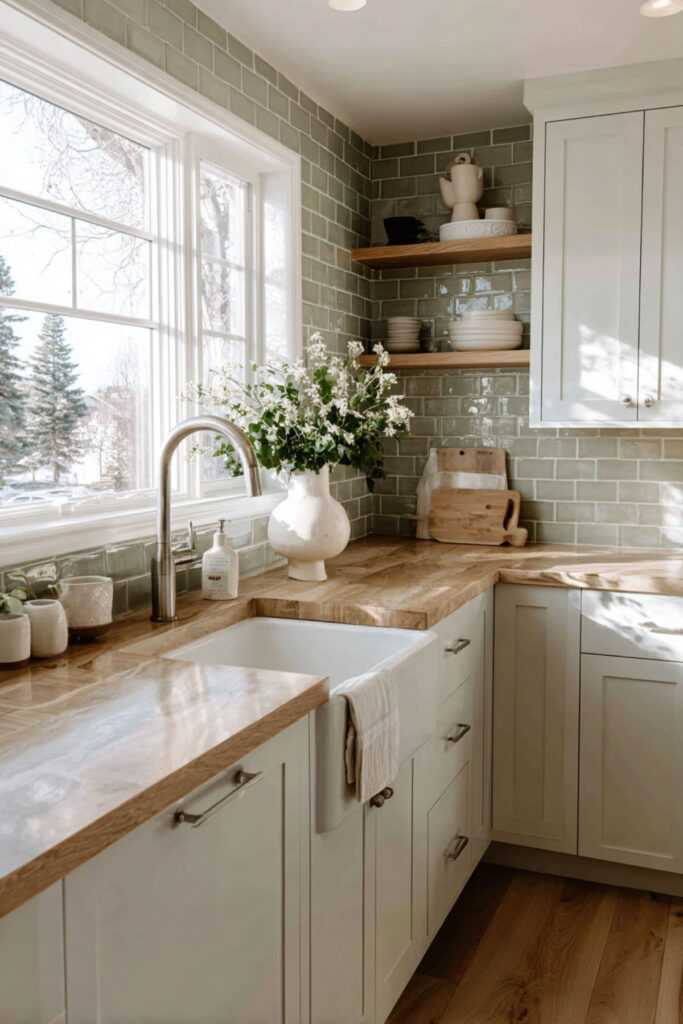
Let’s start with the combination that proves you don’t need to be bold to have character. A sage green subway tile kitchen with white cabinets creates this soft, clean backdrop that adds just enough color to keep the room from reading as plain. The sage tile has that quiet, barely-there quality — it catches light gently and reads as warm green in the morning, almost grey in the evening. I really recommend a glossy sage subway tile in a standard 3×6 format, laid in a classic brick pattern. The sheen adds a subtle light-reflecting quality that keeps the backsplash alive throughout the day. Against white shaker cabinets and brass hardware, this green tile white kitchen combination is character at its most controlled — interesting but never overwhelming.
Green Zellige Tile Kitchen Backsplash for Handmade Warmth
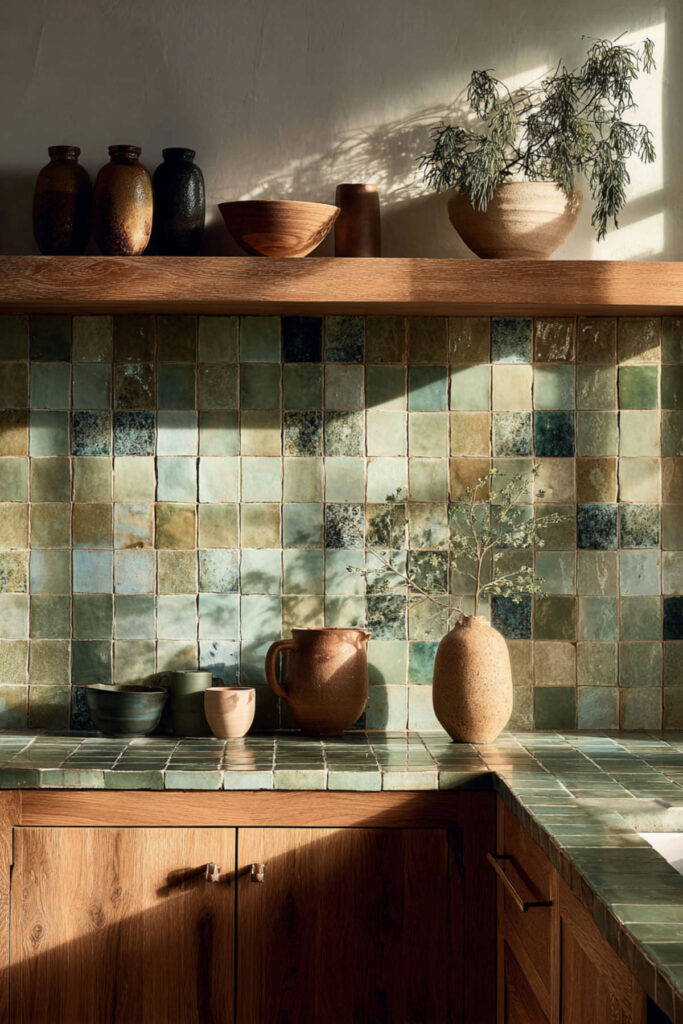
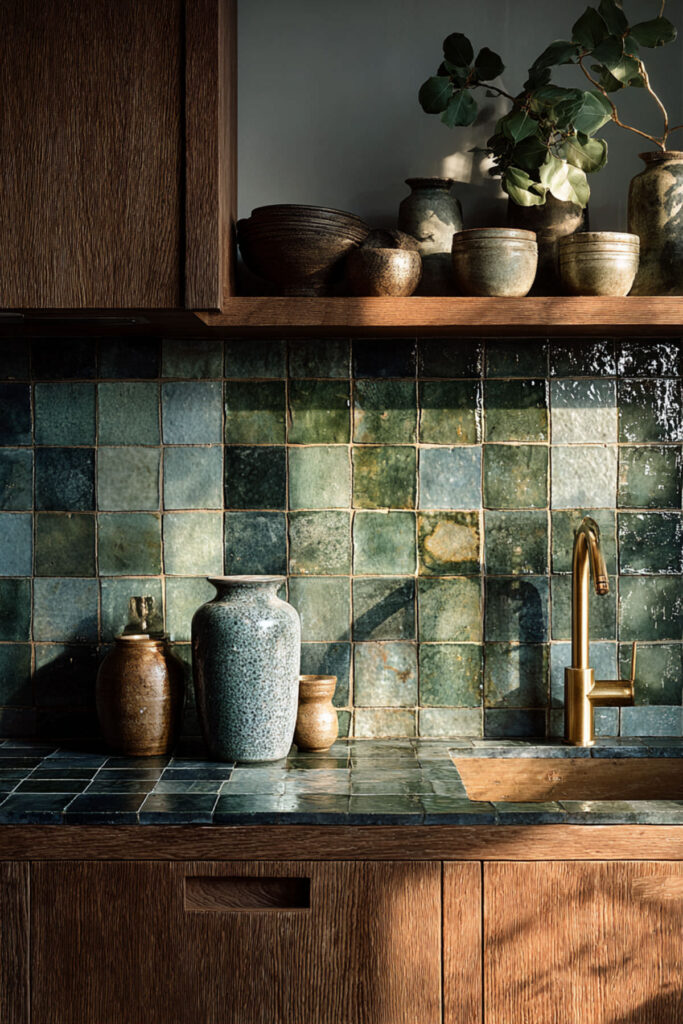
If you want a tile that’s a conversation starter, zellige is it. A green zellige tile kitchen backsplash has this unmistakable handmade quality — each tile is slightly different in color, thickness, and glaze, creating a surface that shimmers and shifts with the light. No two zellige backsplashes look the same, which is exactly the point. The imperfections are the beauty. I came across this trending backsplash material recently, with designers calling zellige one of the most sought-after tile choices for 2026 kitchens. I recommend a sage or olive green zellige in a 4×4 square format. The larger format shows off the glaze variation beautifully. Pair with cream cabinets and brass hardware, and the backsplash becomes the most-complimented detail in the entire kitchen. This green zellige tile kitchen look has soul — you can feel the hands that made it.
Dark Green Subway Tile Kitchen for Moody Depth
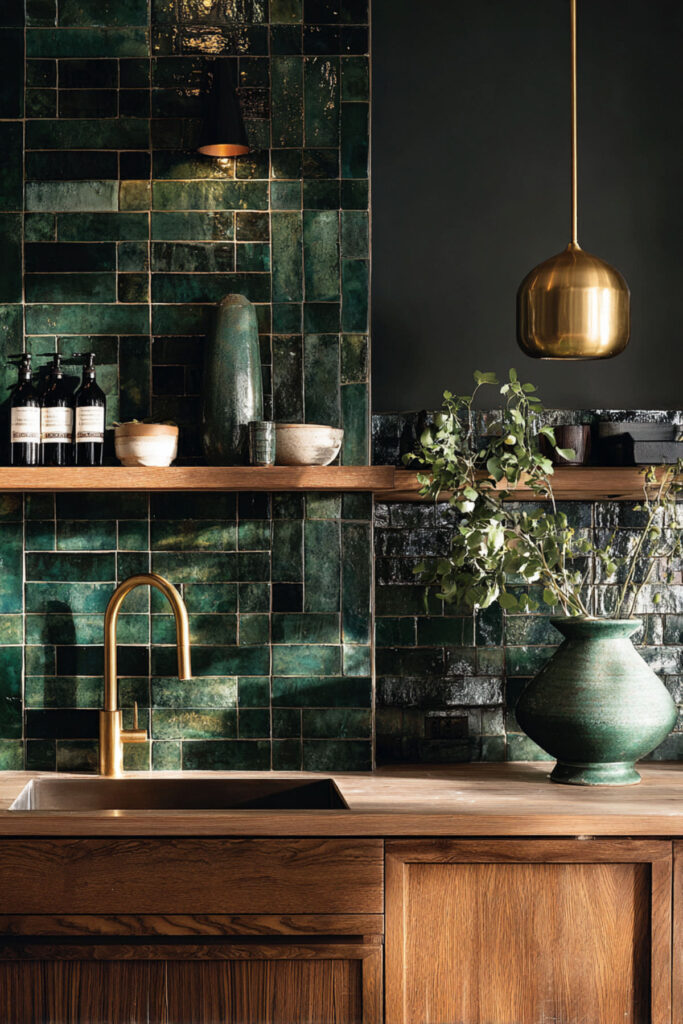
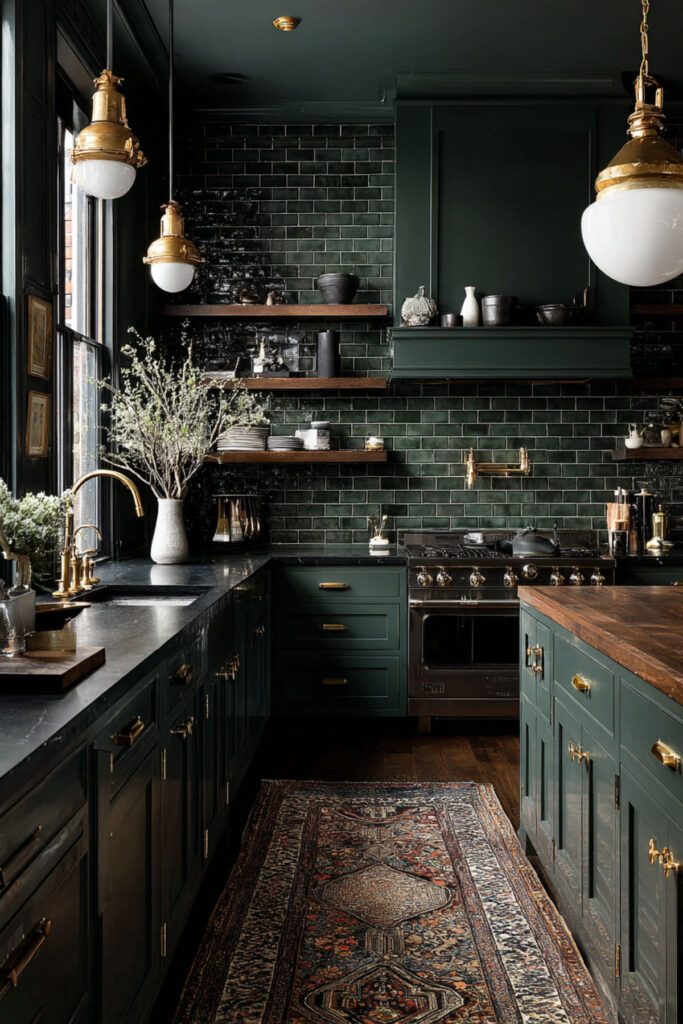
Dark green subway tile creates a backsplash that feels rich, moody, and full of depth — like a room in an old library or a window looking into a dense forest. A dark green subway tile kitchen works best against lighter cabinets — cream, warm white, or natural wood — where the contrast between the deep tile and the light surroundings creates drama without heaviness. I recommend a glossy dark green subway tile in a stacked vertical layout instead of the traditional brick pattern. The vertical orientation draws the eye upward and feels more contemporary. Against white cabinets and warm brass hardware, the dark green becomes a feature wall that sets the mood for the entire room. This dark green kitchen aesthetic is bold, but it’s also deeply calming — moody in the best way.
Emerald Green Tile Kitchen for a Jewel-Toned Statement
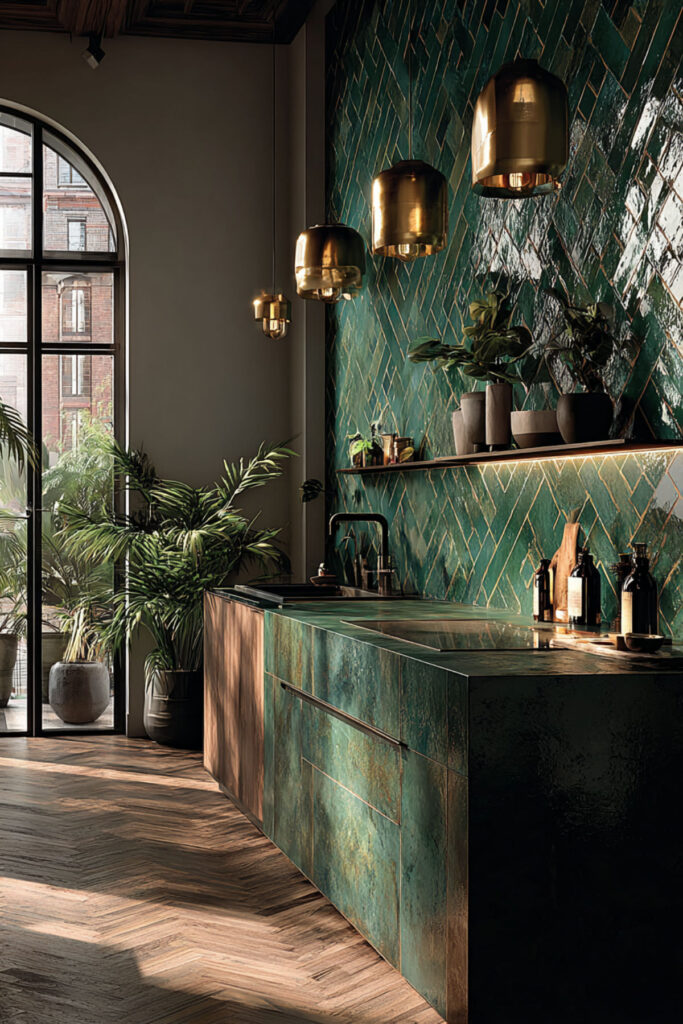
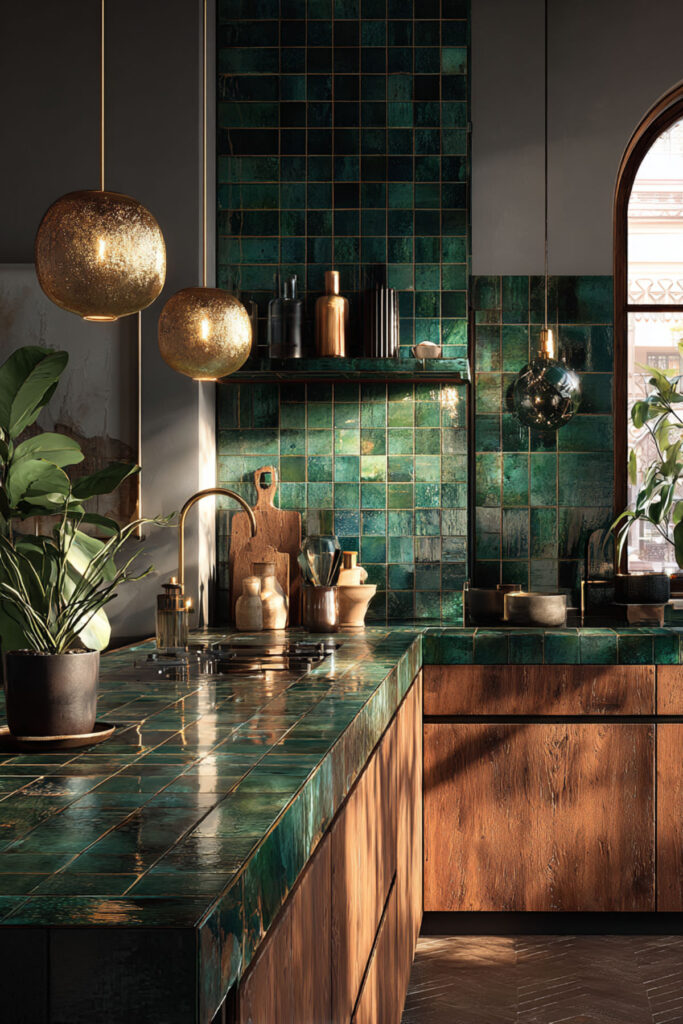
Emerald green is the most saturated, most luxurious shade in the green family — and in tile form, it’s absolutely stunning. An emerald green tile kitchen backsplash creates a focal point that feels rich, sophisticated, and unapologetically beautiful. It’s a color you associate with expensive things: velvet, gemstones, old-growth forests. I recommend emerald green tiles as a feature section — behind the range only, for instance — rather than wall-to-wall. The concentrated pop of jewel tone against neutral surroundings makes the emerald more striking, not less. Pair with white cabinets, a marble counter, and brass fixtures. The kitchen starts to feel like those stunning kitchens in Art Deco apartments along the Upper West Side — dramatic, elegant, and full of personality.
Green Herringbone Kitchen Tile for Subtle Movement
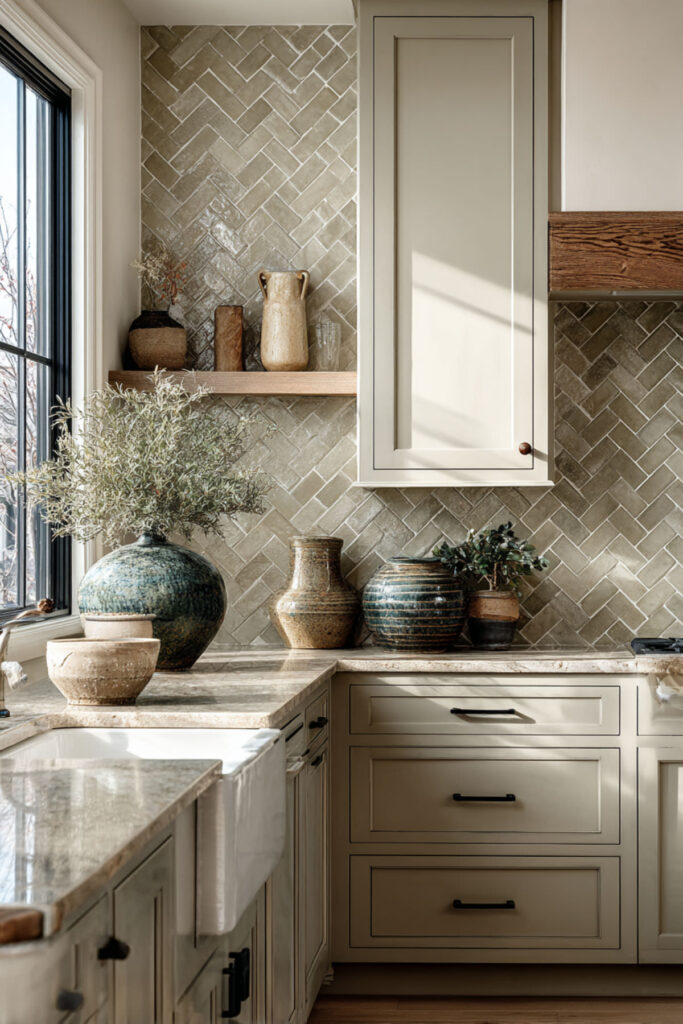
Herringbone is one of those patterns that adds movement and energy to a wall without adding chaos. The angled lines create a visual rhythm that the eye follows naturally — it’s dynamic but controlled. A green herringbone kitchen tile in a muted sage or soft olive creates a backsplash that feels alive with pattern while still reading as calm. I recommend a slim format tile — something like 2×6 inches — in a muted green for the herringbone layout. The narrow shape makes the pattern feel more delicate and refined. Against white or cream cabinets, the herringbone adds just the right amount of visual interest to keep the kitchen from feeling flat. This is character through pattern rather than bold color — subtle but impossible to ignore once you see it.
Green Fish Scale Tile Kitchen for Organic Shape
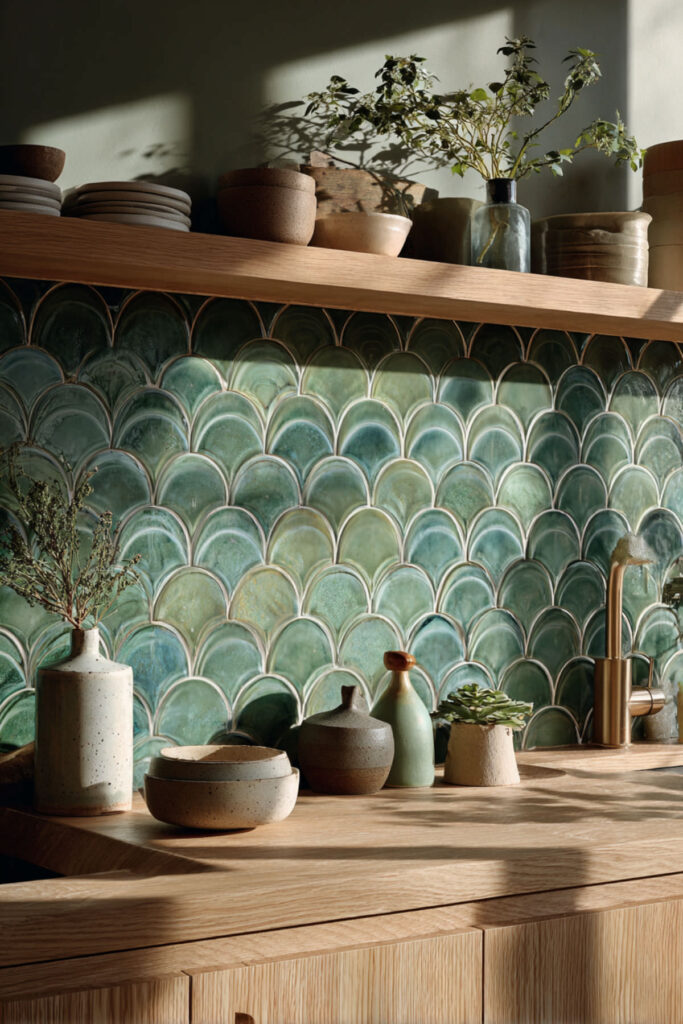
Fish scale tiles — those gorgeous scalloped shapes that overlap like petals or, well, fish scales — bring an organic, almost Art Nouveau quality to a kitchen. A green fish scale tile kitchen backsplash in sage, celadon, or soft mint creates this beautiful wave of color and shape that feels like water or foliage caught in tile form. The shape is the statement, so the color can stay soft. I recommend a matte sage green fish scale tile behind the range area as a feature moment. The scalloped shape creates beautiful shadow play throughout the day. Keep the rest of the kitchen clean and simple — white counters, light cabinets, minimal accessories — and let the fish scale tile be the personality of the room. It’s the kind of detail that makes people lean in closer, which is the best kind of design.
Green Hexagon Tile Kitchen for Geometric Interest
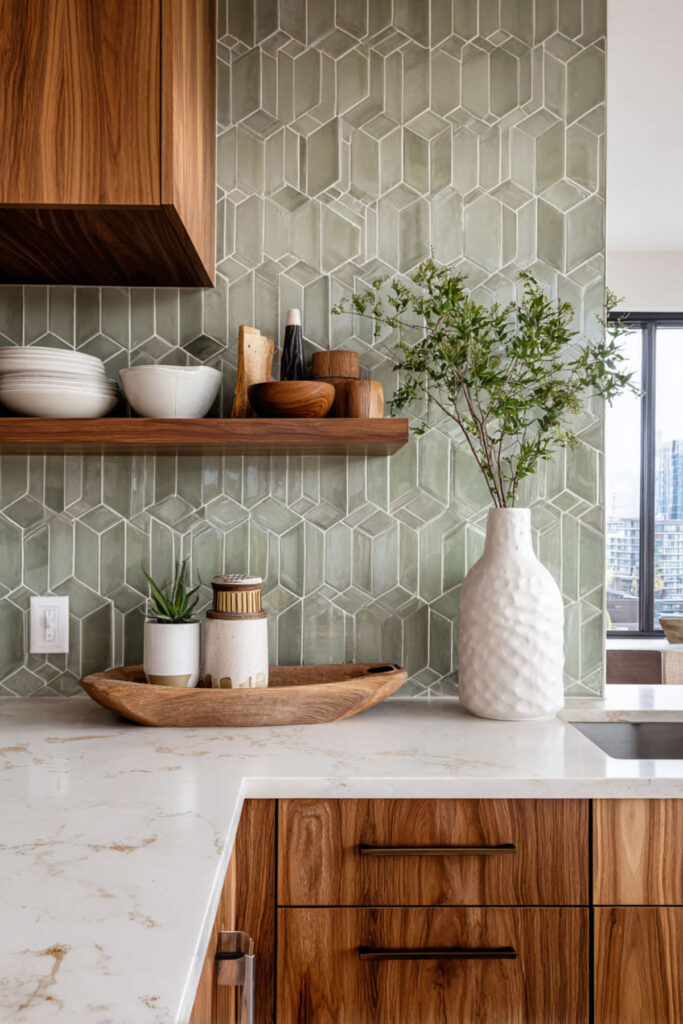
Hexagon tiles bring a geometric quality that feels modern and grounded at the same time. A green hexagon tile kitchen backsplash — in sage, olive, or a mix of green tones — creates this honeycomb-like pattern that reads as both natural and architectural. The six-sided shape is inherently balanced, which keeps the pattern from ever feeling busy. I recommend a mix of two or three green-toned hexagon tiles — say, a light sage, a muted olive, and a warm cream — laid together in a random pattern. The tonal variation creates depth and movement while the consistent shape keeps things cohesive. It’s the kind of backsplash that makes a kitchen feel designed rather than decorated.
Green Tile Backsplash With Wood Cabinets
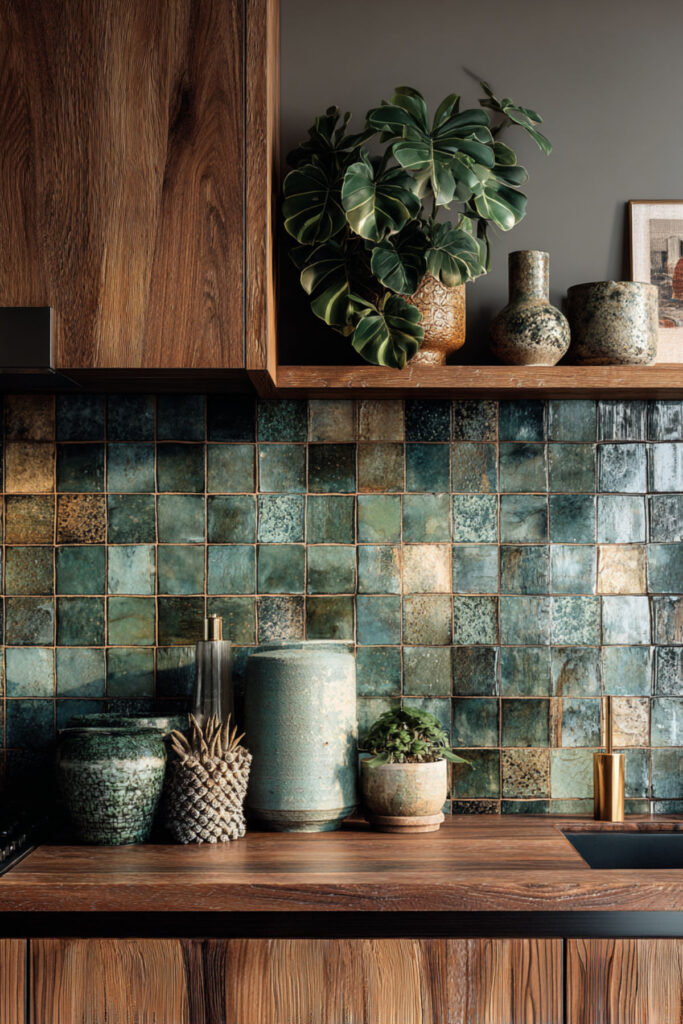
Green tile and natural wood is a combination that feels like walking through a garden — earthy, warm, and effortlessly organic. A green tile backsplash kitchen with wood cabinets creates this gorgeous dialogue between the glazed, man-made surface and the raw, natural grain. The wood warms the green, the green freshens the wood, and together they make a kitchen that feels connected to the natural world. I recommend a sage or olive zellige tile behind warm oak or walnut cabinets. The variation in the tile glaze echoes the variation in the wood grain, creating a beautiful textural harmony. Add a butcher block counter and simple brass hardware, and the whole room reads as organic design at its most honest. It reminds me of those renovated kitchens in 1920s Craftsman homes in Pasadena — rooted, warm, and full of craft.
Light Green Subway Tile Kitchen for an Airy Feel
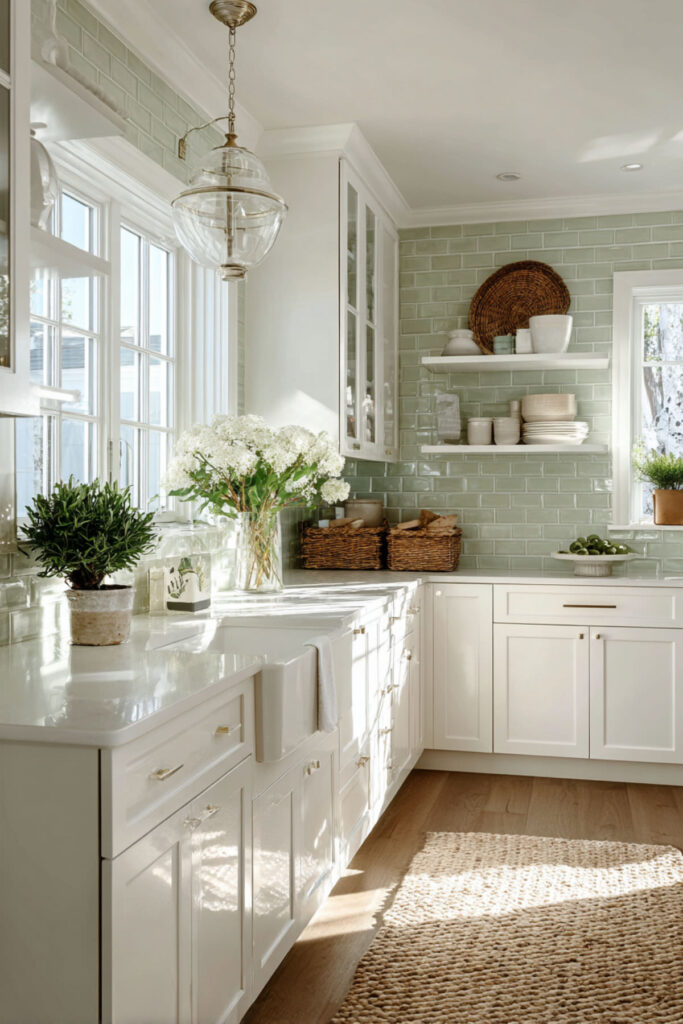
Light green subway tile — almost mint, almost celadon, almost white-green — creates a backsplash that reads as fresh and airy without adding heaviness. A light green subway tile kitchen works beautifully in smaller spaces and north-facing kitchens where darker tiles might close things in. The light green reflects light softly and keeps the room feeling bright while still providing a whisper of color. I recommend a glossy light green subway tile in a classic brick layout. The gloss amplifies the light-reflecting quality, and the classic pattern keeps things timeless. Against white cabinets and polished nickel hardware, this is the gentlest possible version of a green tile kitchen — character through suggestion rather than statement.
Olive Green Zellige Tile Backsplash for Earthy Richness
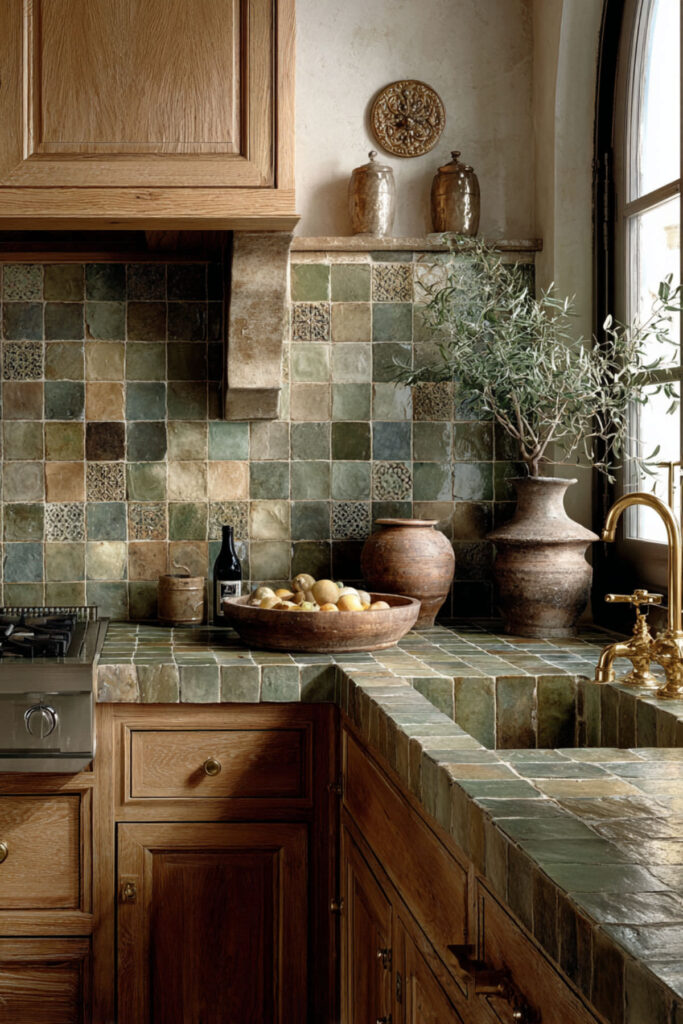
Olive green zellige takes everything we said about zellige and deepens it. The olive tone is richer, moodier, and more layered than sage — it reads almost brown in low light and almost forest green in bright light. An olive green zellige tile backsplash creates a surface that feels like it’s been there for a hundred years, even when it’s brand new. I recommend olive zellige behind a cream or off-white kitchen — the contrast between the warm, dark tile and the light cabinets is striking but never harsh. The handmade quality of the zellige softens the contrast further. Add aged brass hardware and a walnut cutting board on the counter, and the whole kitchen feels collected, grounded, and full of earthy green tile character that you can’t get from paint alone.
Green Glass Tile Backsplash Kitchen for a Luminous Effect
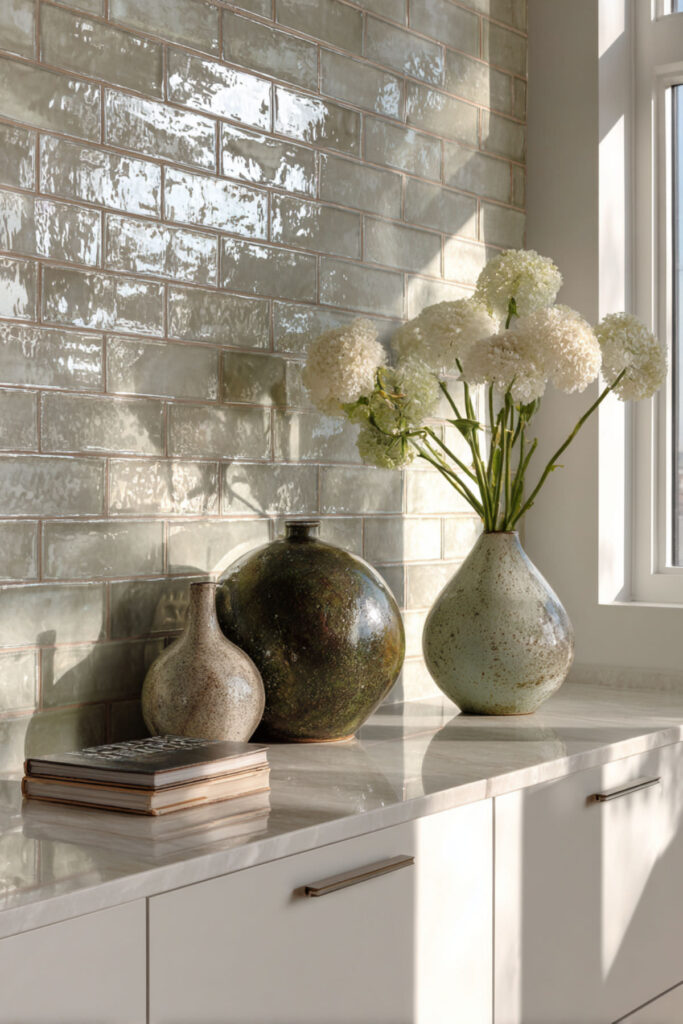
Glass tile in green has a quality that ceramic and stone can’t quite replicate: it glows. The translucent material catches and holds light, creating a backsplash that seems to shimmer from within. A green glass tile backsplash kitchen — in sea green, sage, or jade — adds this luminous, almost watery quality that makes the whole room feel alive. I recommend a small-format green glass tile — 2×2 or 3×3 — in a sea glass or soft jade tone. The smaller tiles create more grout lines, which adds texture and breaks up the light into hundreds of tiny reflections. Against white cabinets and a clean marble counter, the glass tile becomes a shimmering accent that draws the eye without demanding it.
Green Tile Floor Kitchen for Grounding Color Underfoot
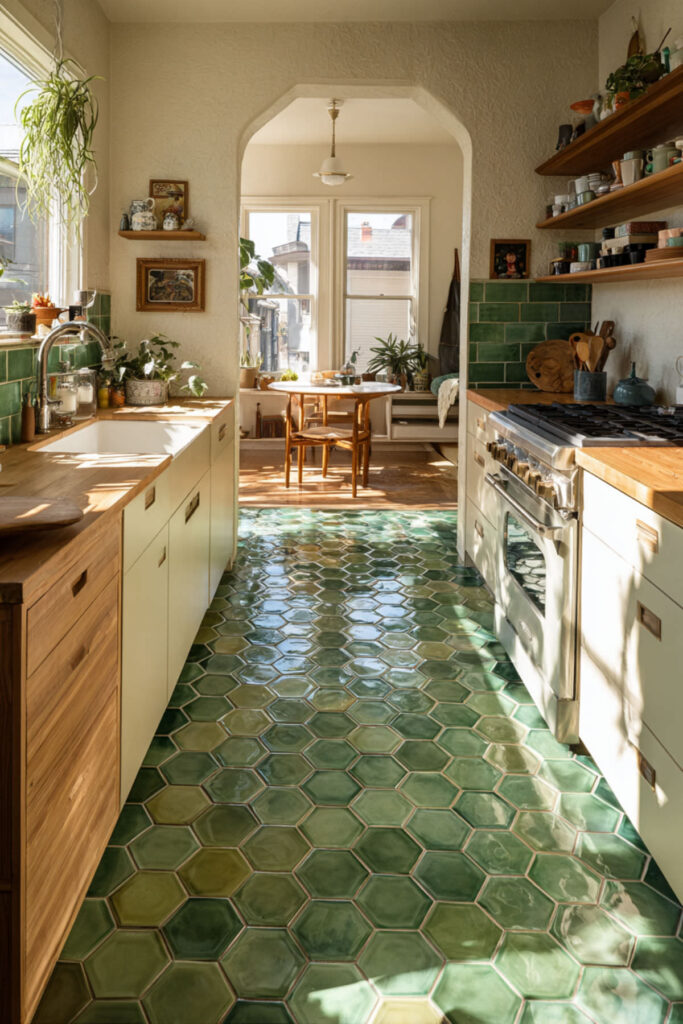
While most green tile lives on the backsplash, putting it on the floor is a bold, unexpected move that pays off beautifully. A green tile floor kitchen — in dark green, olive, or a muted sage — creates a grounding foundation that anchors the room from below. When the floor carries the color, the walls and cabinets can stay neutral, which keeps the room feeling balanced. I recommend a matte green encaustic or cement tile in a subtle pattern — geometric, Moroccan-inspired, or a simple checkerboard with cream. The matte finish prevents the floor from feeling slippery or glassy, and the pattern adds interest underfoot without competing with the upper half of the kitchen. This green floor tile kitchen approach is the kind of move that gives a kitchen serious character — the rare detail that people notice and never forget.
Green Tile Kitchen Island for a Tiled Focal Point
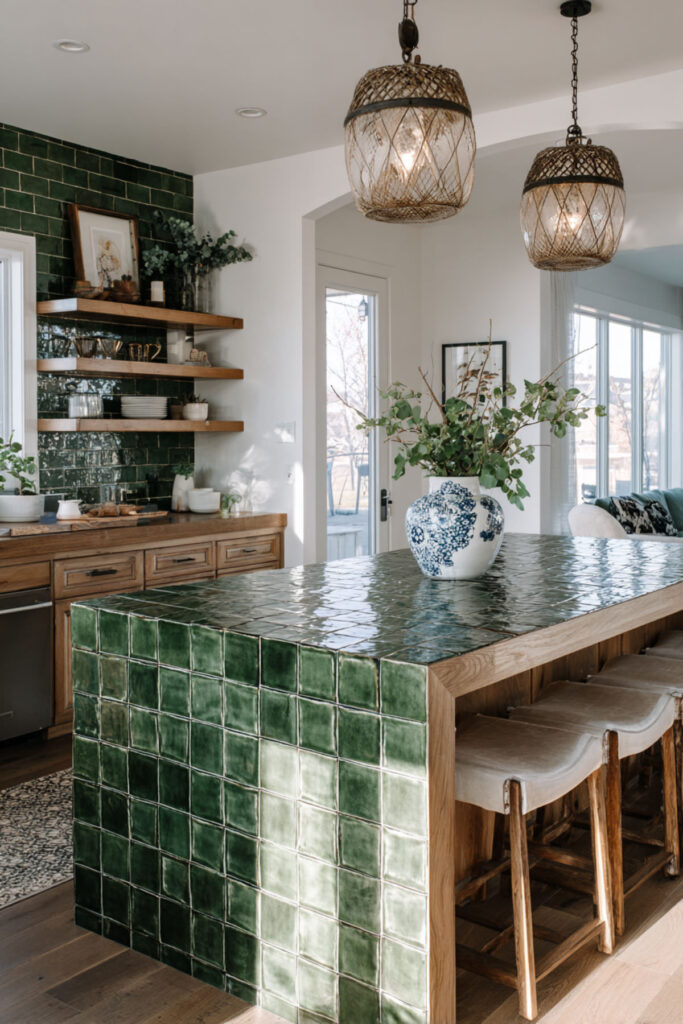
Here’s an idea that blurs the line between tile and furniture: a green tile kitchen island with a tiled face. Instead of painted panels or wood on the island front, handmade green tile creates a surface that turns the island into a sculptural, textured centerpiece. It’s unexpected, it’s gorgeous, and it gives the kitchen a one-of-a-kind quality that no two homes share. I recommend a sage or dark green zellige tile applied to the front face of the island, with a marble or butcher block counter on top. The combination of the textured tile base and the smooth counter creates a contrast that’s both visual and tactile. This green tile kitchen island detail is for the woman who wants her kitchen to feel like no one else’s — and that’s the most powerful kind of character there is.
Sage Kitchen Tiles With a Cream and Brass Palette
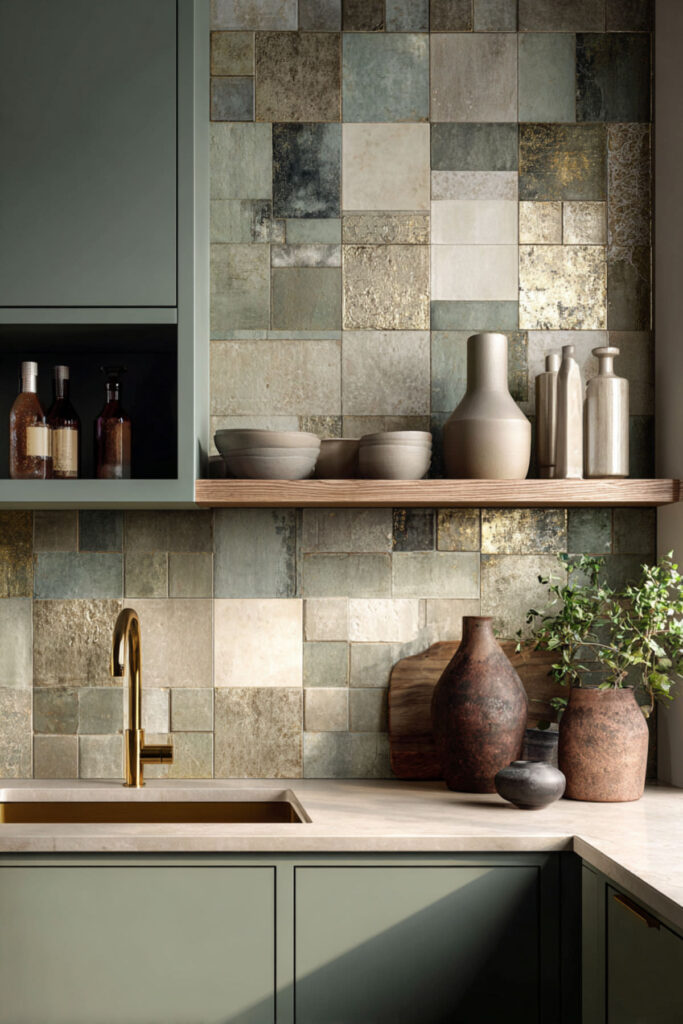
Sage green tiles, cream cabinets, and brass hardware — this is the trifecta that keeps appearing because it’s simply perfect. The sage tile adds color, the cream softens it, and the brass warms the whole thing up. It’s a palette that feels intentional and balanced, like every element was chosen to support the others. I recommend sage subway or square tiles paired with warm cream shaker cabinets and unlacquered brass knobs. A cream quartz counter with soft veining bridges the tile and the cabinets. This sage kitchen tiles approach is character without risk — a combination so naturally harmonious that it’s nearly impossible to get wrong.
Peel and Stick Kitchen Tile Backsplash in Green for Renters
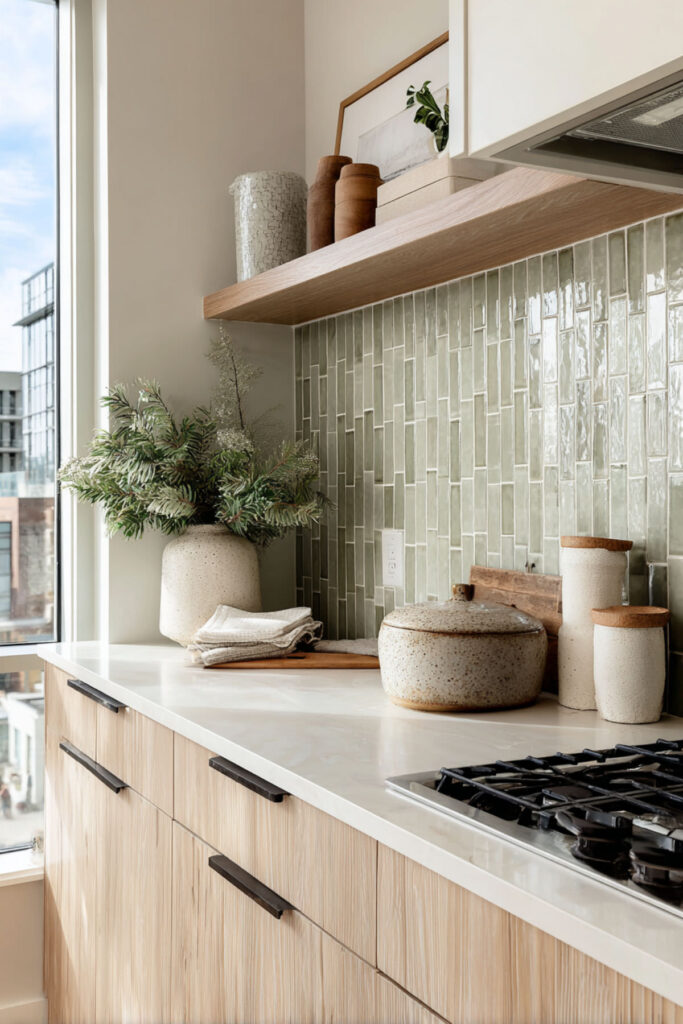
For women who love the idea of green tile but aren’t in a position to do a permanent installation — renters, budget-conscious renovators, or just the commitment-cautious — peel and stick green tile backsplash options have come a remarkably long way. The best ones look genuinely convincing, with texture, dimension, and color that reads as real from a normal viewing distance. I recommend a peel and stick tile in a sage or olive subway format with a raised, textured surface. Avoid anything too glossy or too flat — texture is what sells the illusion. It’s the kind of upgrade you can do in a weekend afternoon, and it transforms a plain kitchen wall into something with real personality. This apartment kitchen backsplash approach is temporary character — but character nonetheless.
Retro Green Kitchen Tile for Mid-Century Charm
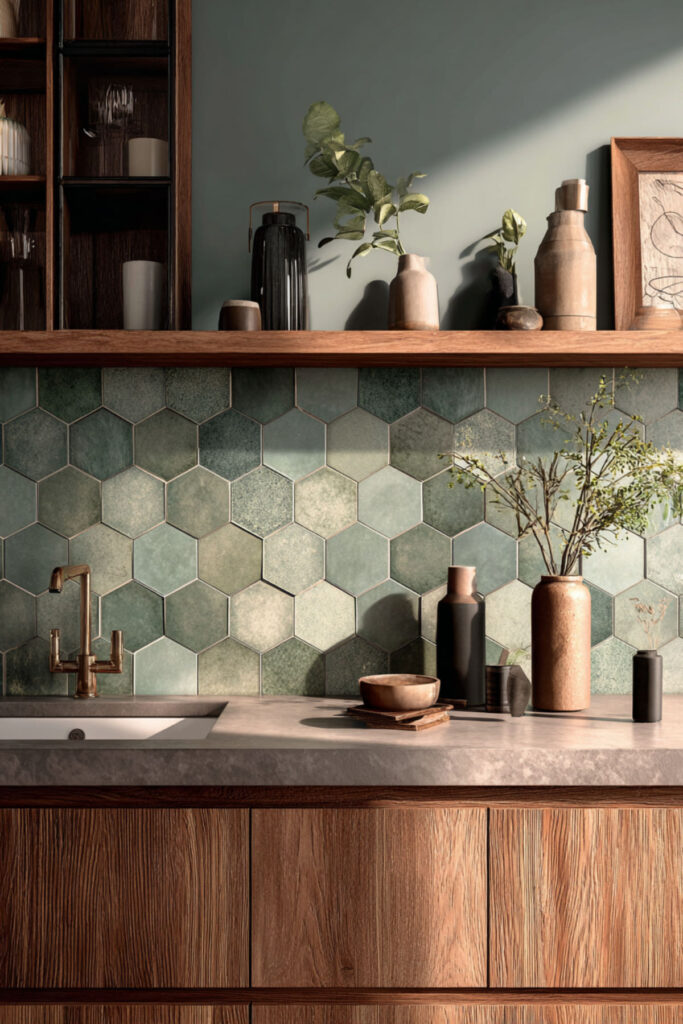
Green tile has a rich retro history — those gorgeous mid-century kitchens from the 1950s and 60s were full of green ceramic tile in mint, avocado, and jade. A retro green kitchen tile backsplash nods to that era while keeping things modern enough to feel current. Think square tiles in mint green with a glossy finish, chrome hardware, and maybe a few vintage-inspired accessories. I recommend a glossy 4×4 mint or jade green tile in a grid pattern. The square format and high gloss are distinctly retro, while the clean installation and modern cabinets keep it from looking dated. This vintage green kitchen approach is perfect for the woman who loves character with a sense of humor — a kitchen that’s playful, warm, and absolutely full of life.
Green Marble Tile Kitchen for Natural Veining
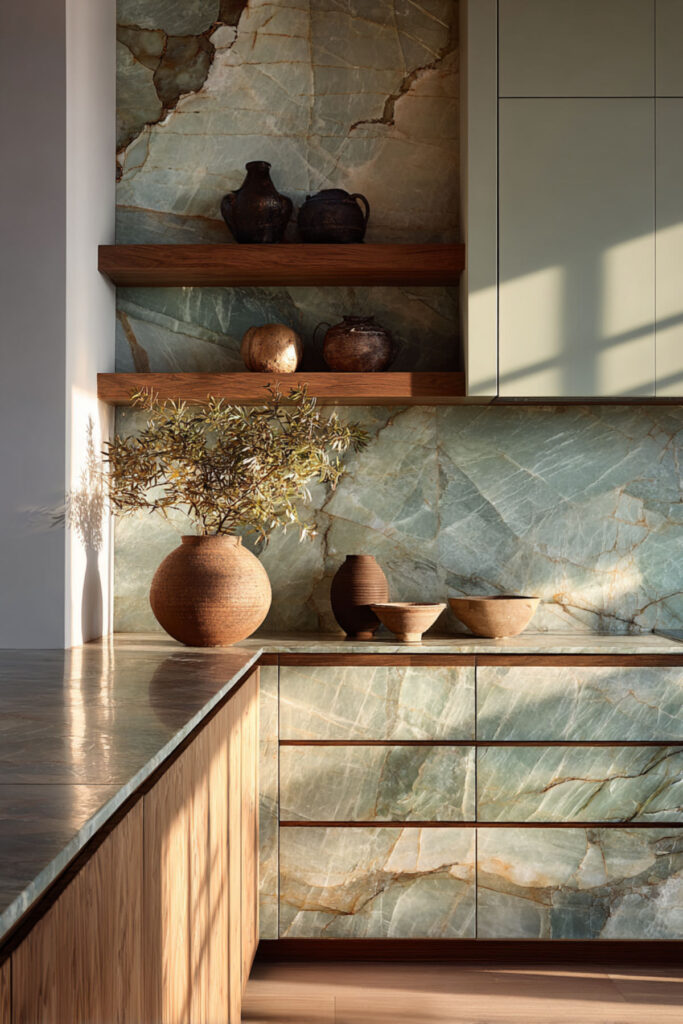
Green marble — Guatemala Verde, Ming Green, or a pale jade marble — brings something that no ceramic or porcelain can: natural veining. A green marble tile kitchen backsplash has this incredible organic depth where the stone’s natural patterns create movement that feels geological rather than decorative. Each tile is different, which means the backsplash has a living, shifting quality. I recommend small-format green marble tiles — 2×4 or 3×6 — in a polished finish for the backsplash behind the range. The polish brings out the color and veining, and the small format creates a mosaic-like effect that’s rich without being overwhelming. Against white cabinets, the green marble reads as a work of art — character that literally came from the earth.
Full-Height Green Tile Backsplash for Maximum Impact
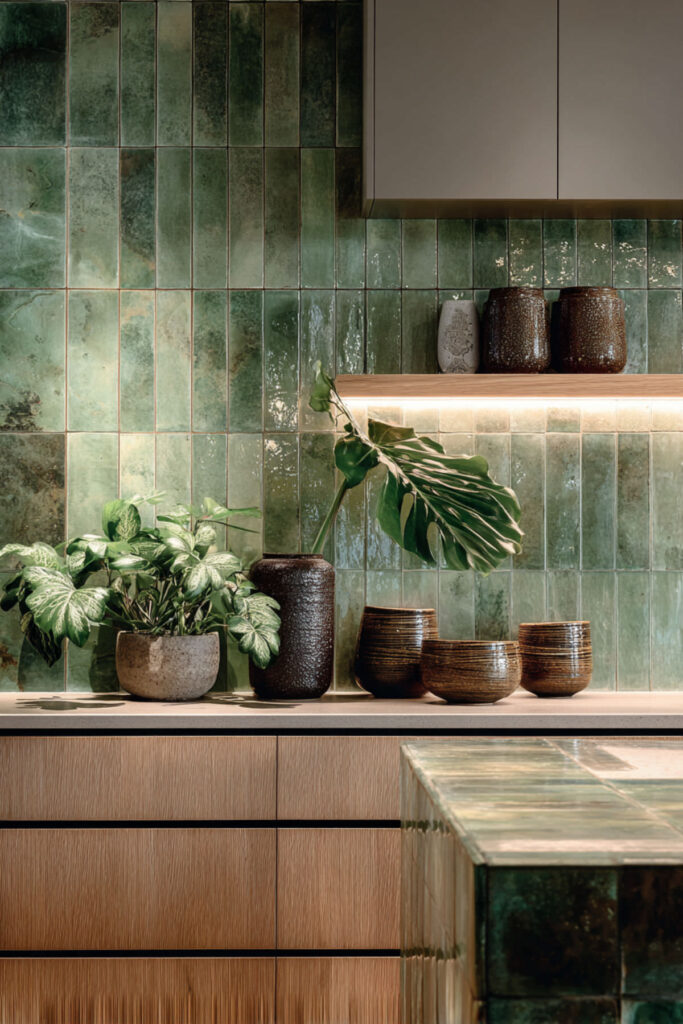
Let’s close with the most dramatic version of the green tile kitchen: a full-height backsplash that runs from counter to ceiling. Instead of stopping at the bottom of the upper cabinets, the tile keeps going — wrapping the entire wall in green. The effect is immersive and architectural, like stepping into a tiled room rather than just a tiled strip. Designers have flagged full-height installations as one of the biggest backsplash trends for 2026. I recommend a sage or muted olive tile — something calm enough to handle the full wall treatment — in either a zellige or a simple matte subway. Running green tile to the ceiling creates a statement that’s bold but controlled — maximum impact with minimum chaos. That’s the entire philosophy of a green tile kitchen in one wall. Would you take the tile all the way up? I think for women who want character that makes a real impression, it’s the most powerful move on this list.
Character Lives in the Details — Keep Looking
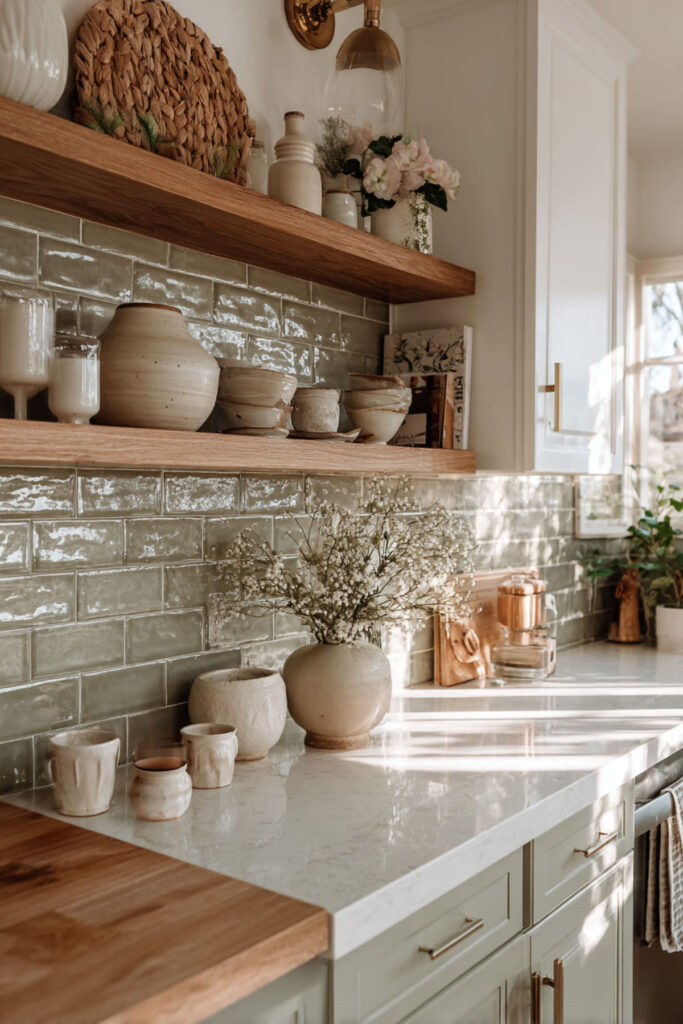
Eighteen ideas, and every one of them proves the same thing: character doesn’t require chaos. A single tile shape, a well-chosen shade of green, and a balanced palette are enough to give a kitchen personality that lasts — the kind of personality that makes you smile every time you walk in the room, even on the most ordinary Tuesday evening. Don’t miss these sage green kitchen island ideas that keep snack time organized while still feeling calm and beautifully styled.
There’s plenty more kitchen inspiration across the rest of the site — backsplash ideas, cabinet combinations, and design approaches that feel both beautiful and completely livable. Save the pins that made you stop scrolling.
Share them with a friend who’s been staring at a blank kitchen wall, wondering what to do with it. And trust this: the right green tile doesn’t add noise. It adds music. Keep these ideas saved for when you want a fresh kitchen vibe.
Keep discovering new ways to bring your kitchen to life.