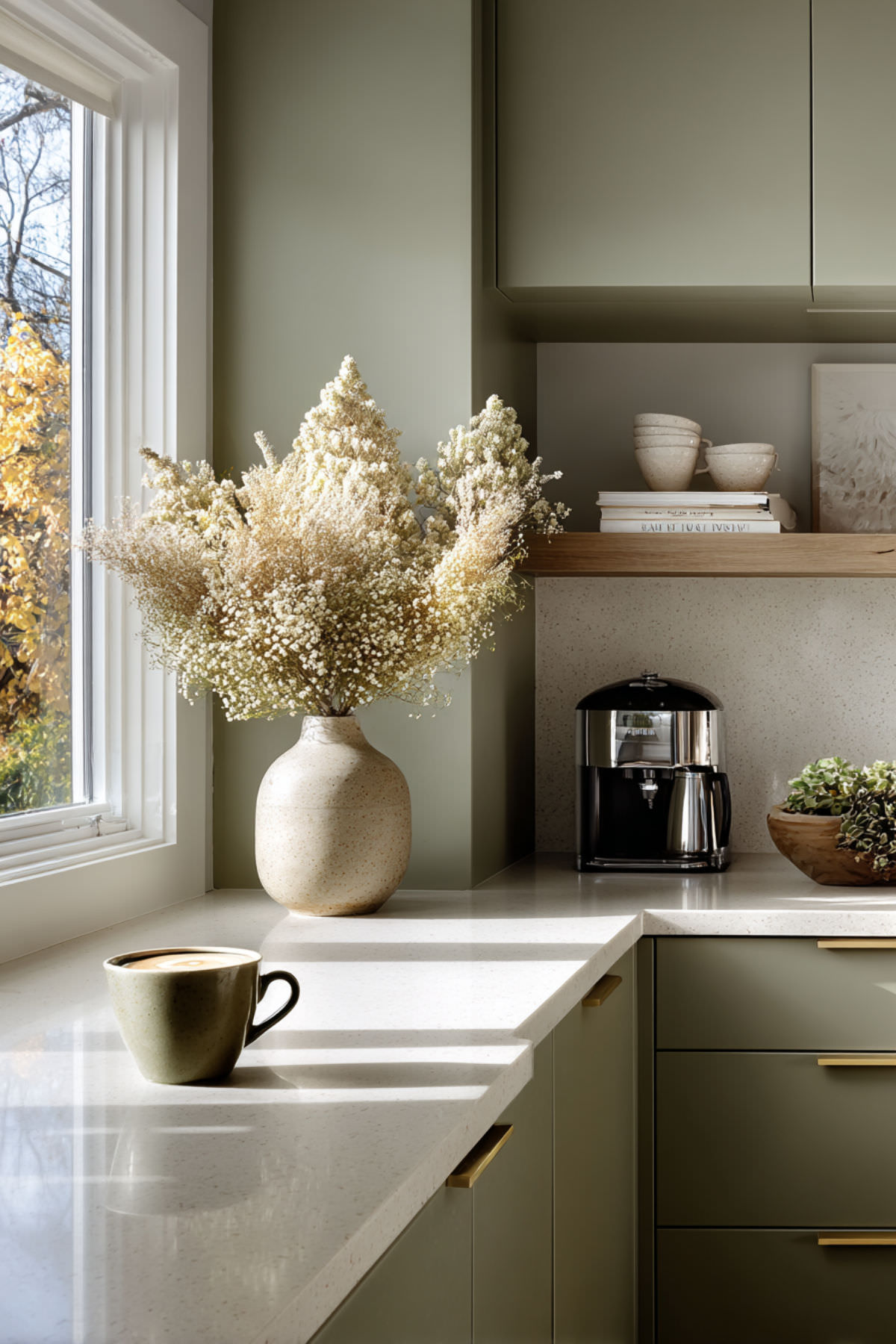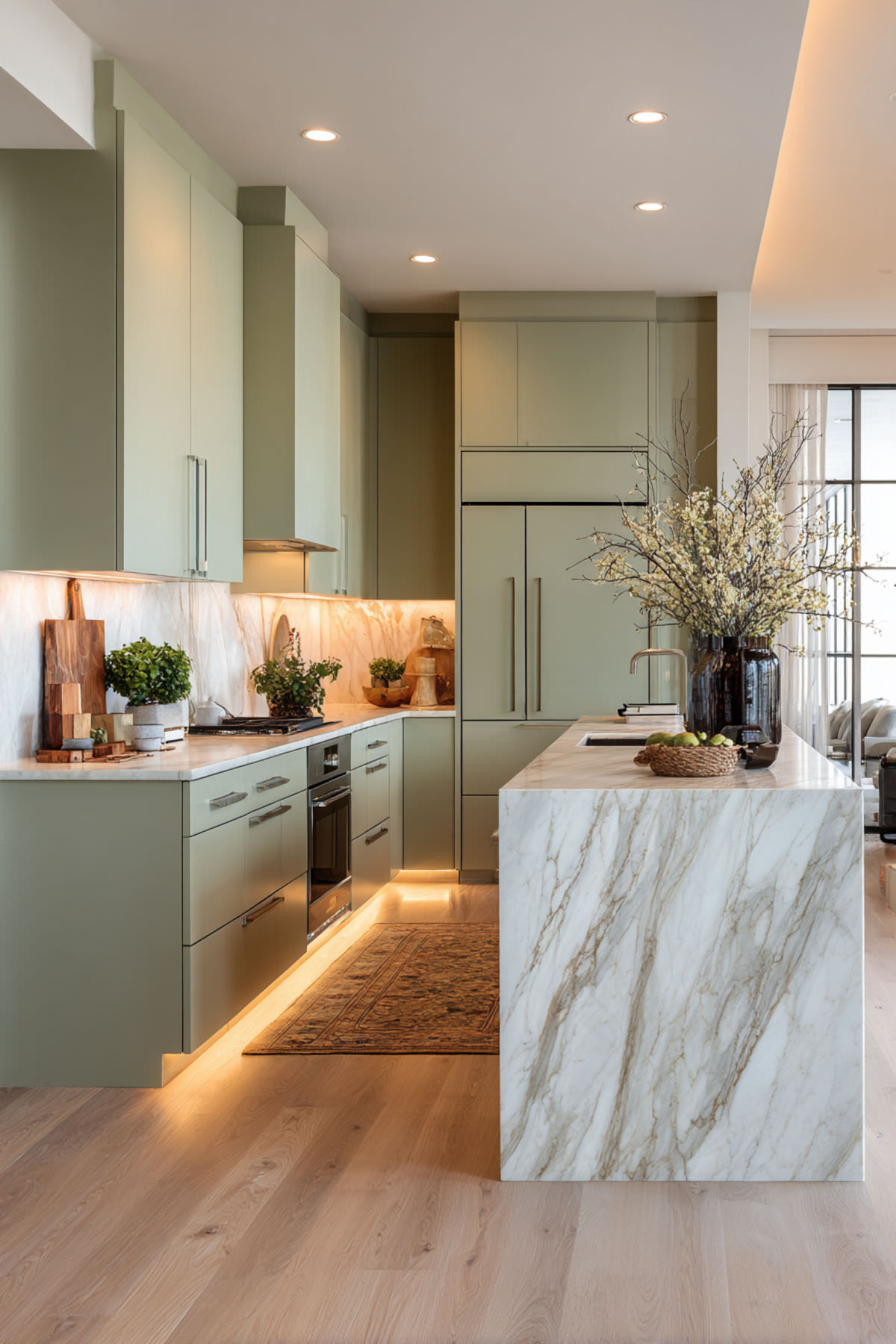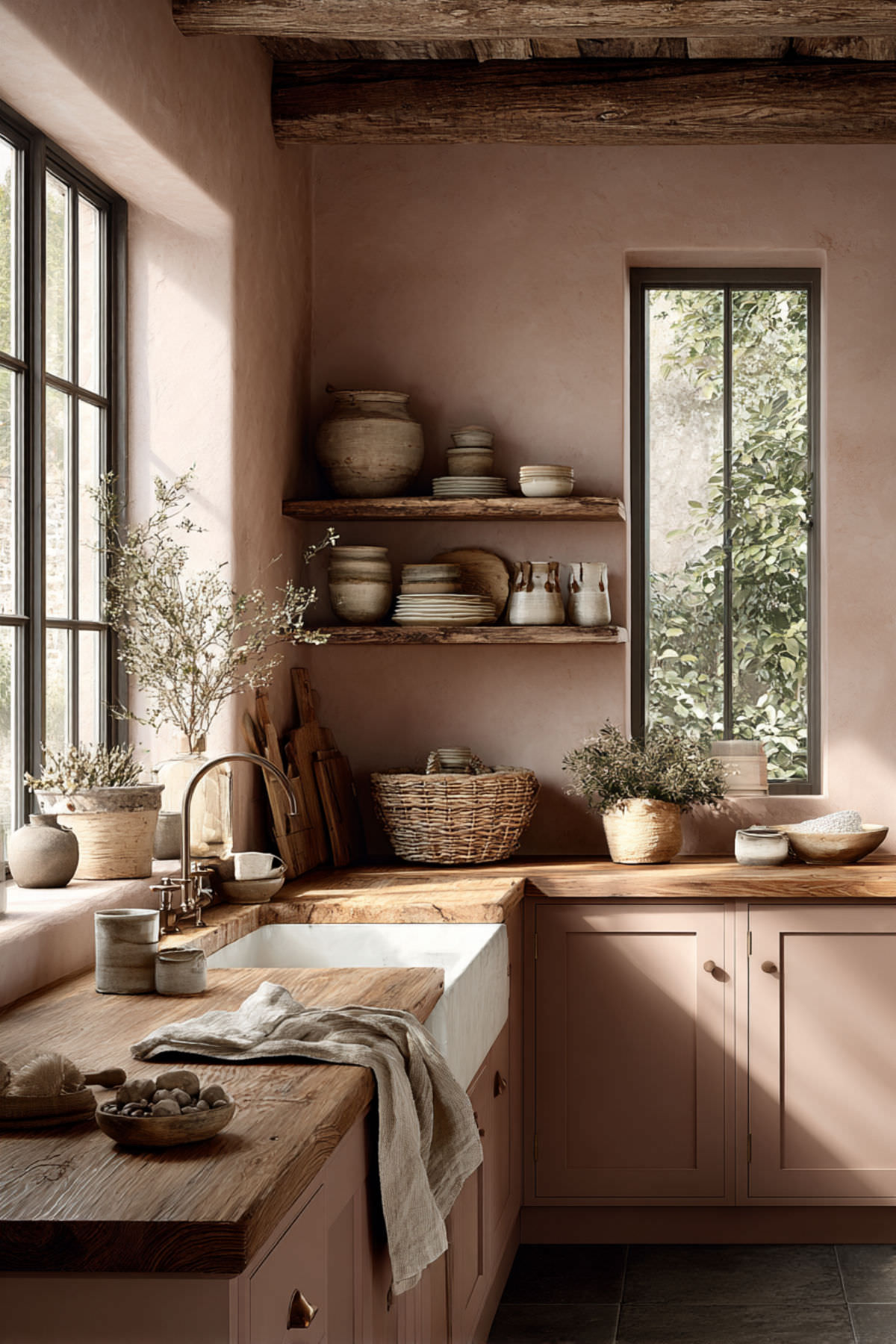
There’s a specific feeling when sage green meets natural wood in a kitchen — it’s the same feeling as walking barefoot on a warm wooden floor, or holding a handmade ceramic mug that’s just the right weight in your hands. It’s organic. Grounded. Real. Nothing synthetic, nothing trying too hard, just materials and colors that belong together because nature said so.
A sage green and wood kitchen is the design equivalent of an exhale. The sage brings the calm — that muted, grey-green tone that sits somewhere between a color and a neutral. The wood brings the warmth — visible grain, honey tones, the kind of texture you want to touch. Together, they create a kitchen that feels alive without being busy, beautiful without being fussy. Designers keep naming this combination as one of the most harmonious and enduring for 2026.
I’ve put together 16 sage green and wood kitchen ideas for women who want a kitchen that feels as honest and rooted as they do. You’ll find some really lovely product recommendations throughout, so keep an eye out. Pin the ones that speak to you, and wander through the rest of the site for more ideas that feel like home. This content is intended to spark creativity in kitchen design and does not constitute scientific advice; certain examples may be fictional.
Sage Green Kitchen Cabinets With a White Oak Island
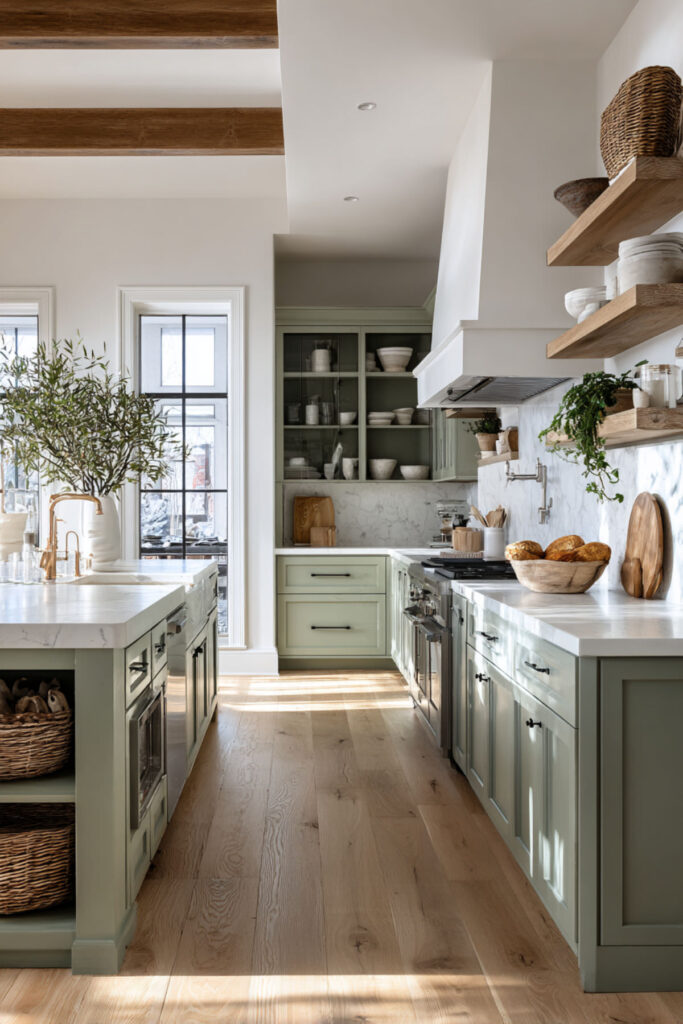
Let’s start with the combination that anchors every organic kitchen: sage green cabinets on the perimeter and a natural white oak island in the center. The sage wraps the room in calm, and the oak island brings all the warmth. The contrast between the painted surface and the raw, visible grain of the wood is what makes this pairing feel layered and intentional — like two natural elements that found each other. I really recommend a white oak island with a clear matte finish that lets the natural grain show through. The golden tones of the oak against the muted sage create this gorgeous temperature balance that feels like sunlight on leaves. Add brushed brass hardware across both the sage cabinets and the oak island for cohesion. This sage green and wood kitchen combination is organic design at its purest.
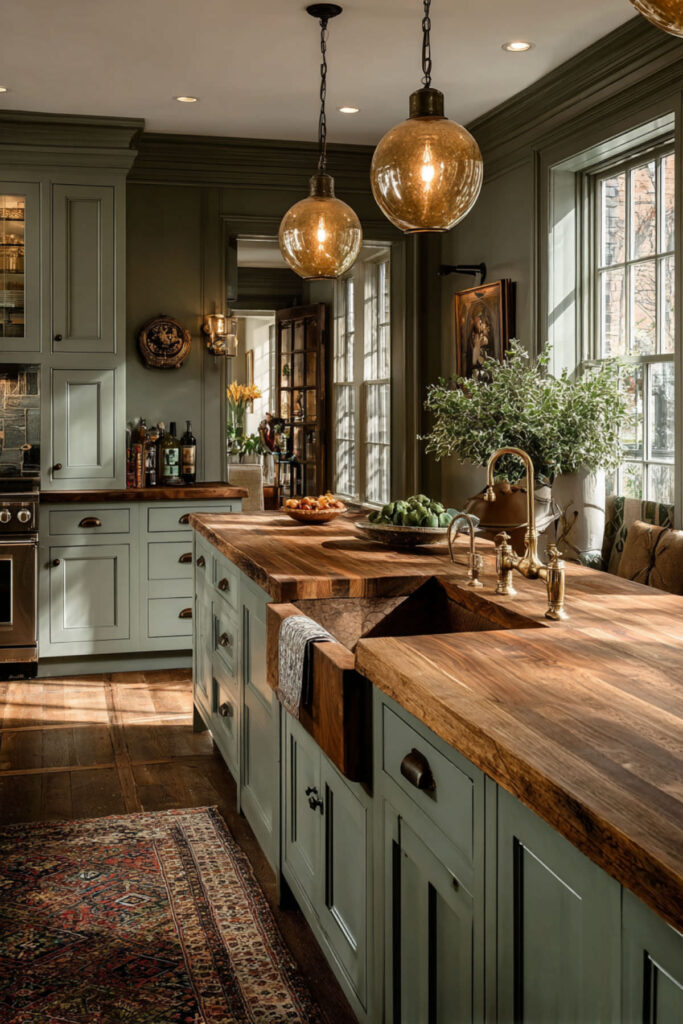
Sage Green Kitchen With Butcher Block Countertops
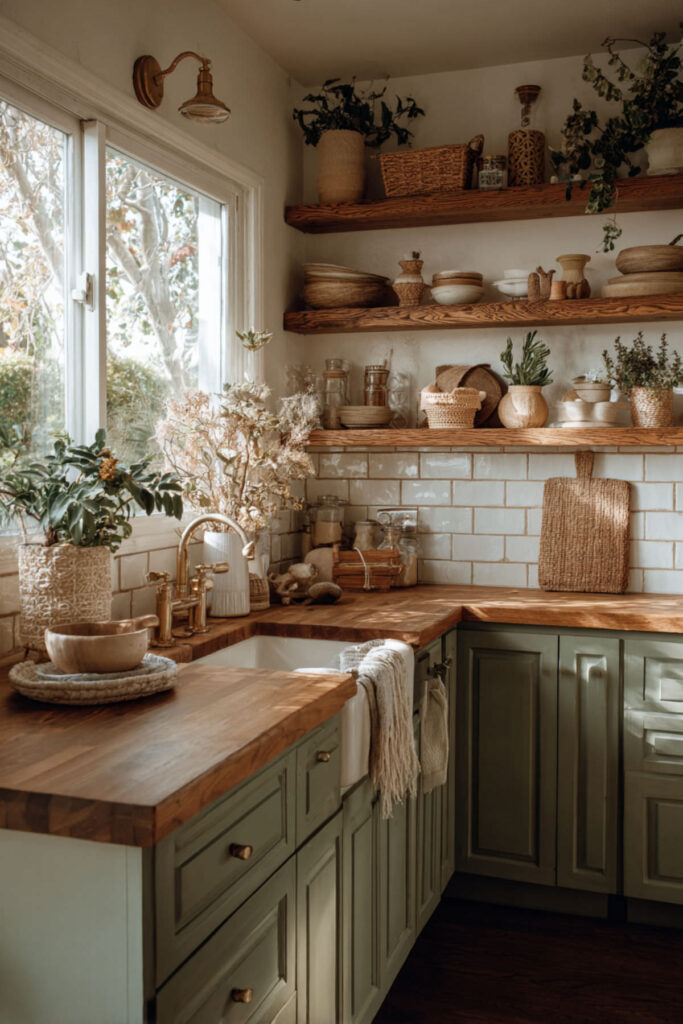
Butcher block countertops and sage green cabinets is one of those combinations that feels like it was designed by someone who gardens, cooks from scratch, and never rushes. The warmth of the wood softens the coolness of the sage, and the result is a kitchen that’s earthy, honest, and completely inviting. Sage green kitchen cabinets with butcher block is the organic kitchen in its most practical form — beautiful surfaces that actually beg to be used. I recommend a thick-cut maple butcher block, at least an inch and a half. Oil it with a food-safe wood oil regularly, and it develops a gorgeous golden patina that deepens over time. It reminds me of those charming kitchens you’d find in a renovated Craftsman bungalow in Portland — where everything looks better with a little age. The wood counter with green cabinets is the workhorse of organic kitchen design.
Open Wood Shelves Kitchen With Sage Green Lowers
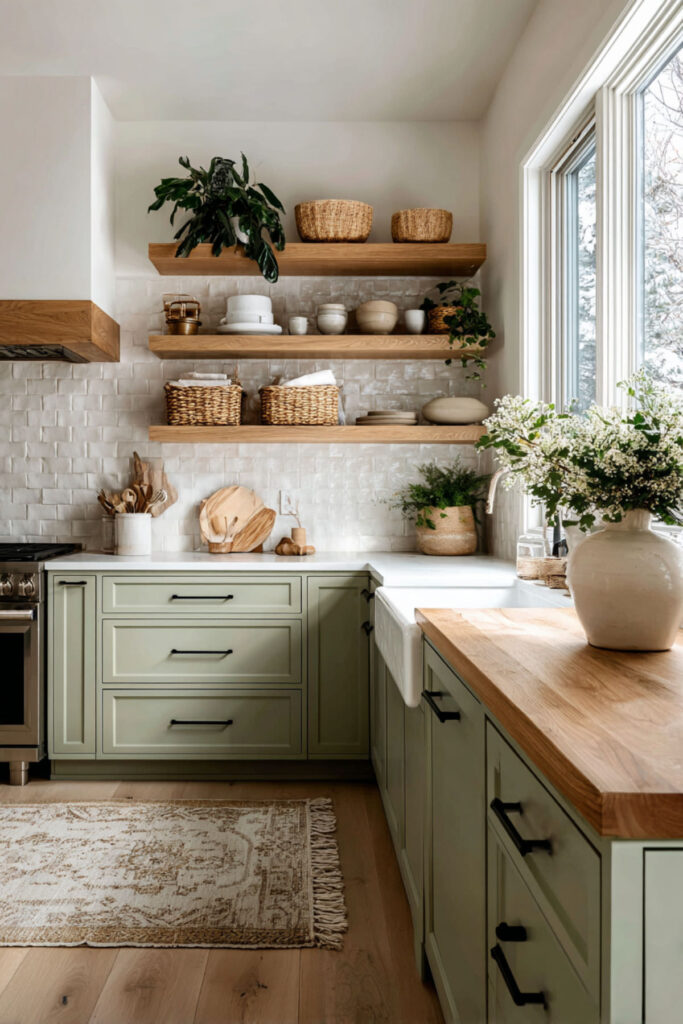
Replacing upper cabinets with open wood shelves is one of the most impactful moves in organic design. Open wood shelves on a sage green kitchen create this beautiful rhythm of painted and natural surfaces, and they invite you to display the things you actually love — stoneware bowls, wooden boards, ceramic crocks, a few glass jars filled with dried goods. The kitchen starts to feel less like a room of closed storage and more like a living, breathing space. I recommend natural oak floating shelves with simple black iron brackets. Style them in groups of three: a stack of plates, a small plant, a cookbook propped upright. Keep breathing room between the items — the negative space is part of the design. This open shelving approach paired with sage green lowers is the kind of kitchen that makes you slow down and appreciate the little things.
Sage Green and Walnut Kitchen for Rich Contrast
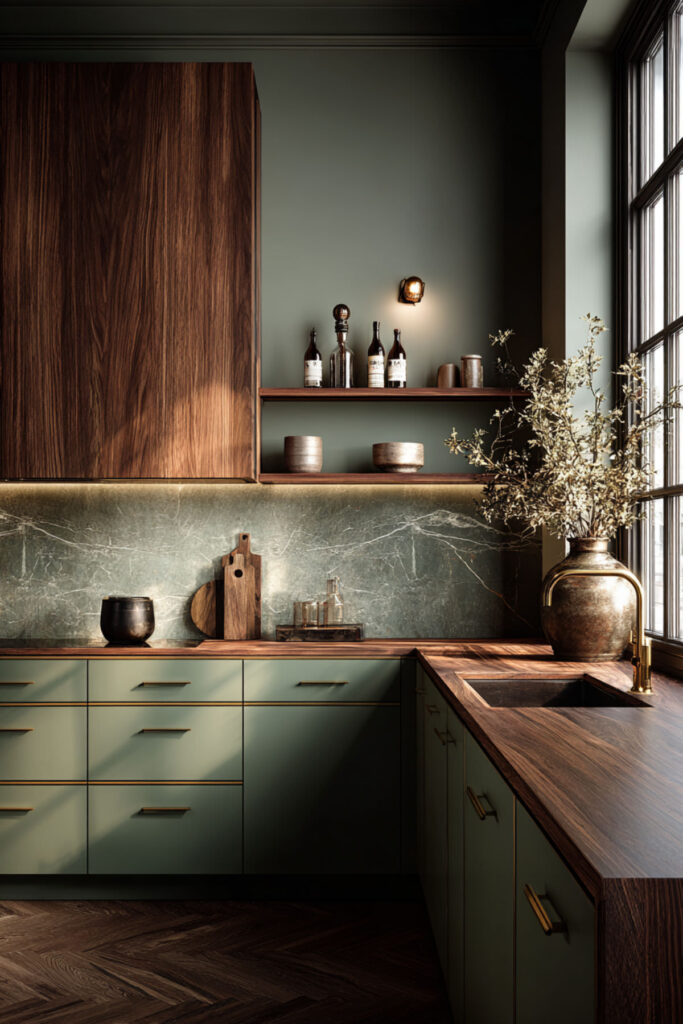
If oak feels too light for your taste, walnut brings a darker, richer contrast that pairs stunningly with sage. A sage green and walnut kitchen creates a palette that’s deeper and moodier — the dark grain of the walnut against the muted sage reads as sophisticated and grounded, like a kitchen in a cabin designed by someone with impeccable taste. The walnut adds drama that lighter woods can’t quite reach. I recommend a walnut island with a natural matte finish — the deep, chocolatey grain becomes the focal point of the room. Add warm brass pendant lights overhead and simple brass hardware on the sage cabinets. The combination of the three — sage, walnut, brass — feels like it belongs in a design portfolio. It’s organic design with an elevated edge.
Green Japandi Kitchen: Sage Meets Minimalism
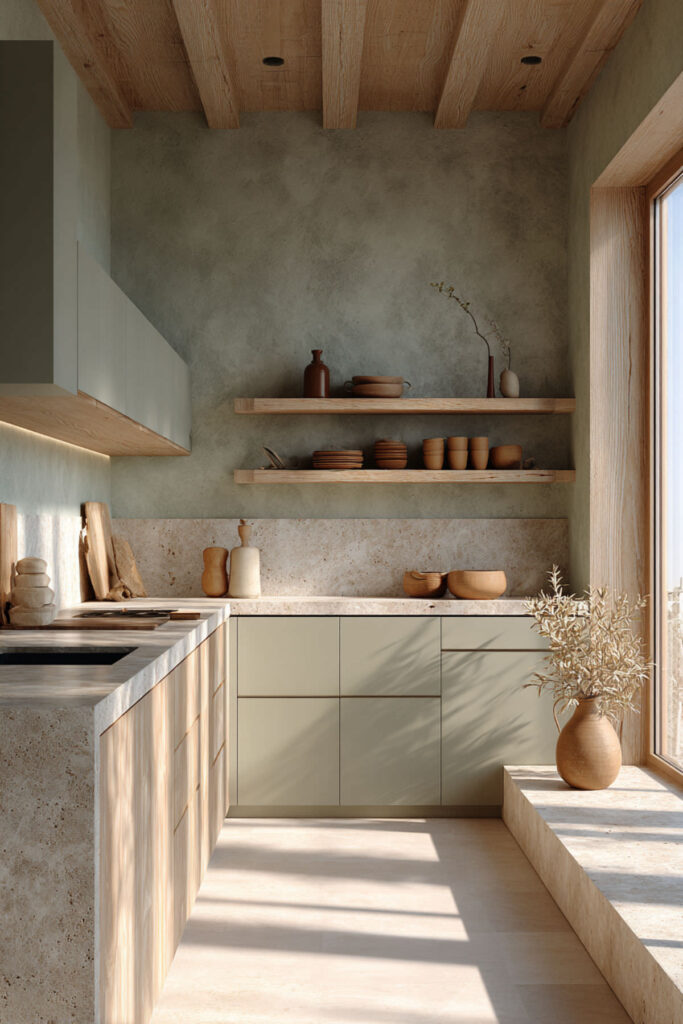
Japandi — that gorgeous blend of Japanese minimalism and Scandinavian warmth — is organic design stripped to its essence. A green Japandi kitchen uses sage green cabinets with clean lines, light wood accents, and nothing extra. No clutter, no ornamentation, just color, material, and space. The sage feels like nature, the wood feels like craft, and the simplicity feels like intention. I came across this trending approach recently and I think it’s one of the most beautiful expressions of organic living in kitchen form. I recommend flat-panel sage cabinets with integrated pulls (no visible hardware) and light ash or white oak accents — a wooden cutting board, a single ceramic vase, perhaps a small wooden stool. The whole kitchen is styled with five things or fewer. That restraint is the entire point, and in a Japandi kitchen design, it looks absolutely stunning.
Green Farmhouse Kitchen With Reclaimed Wood Accents
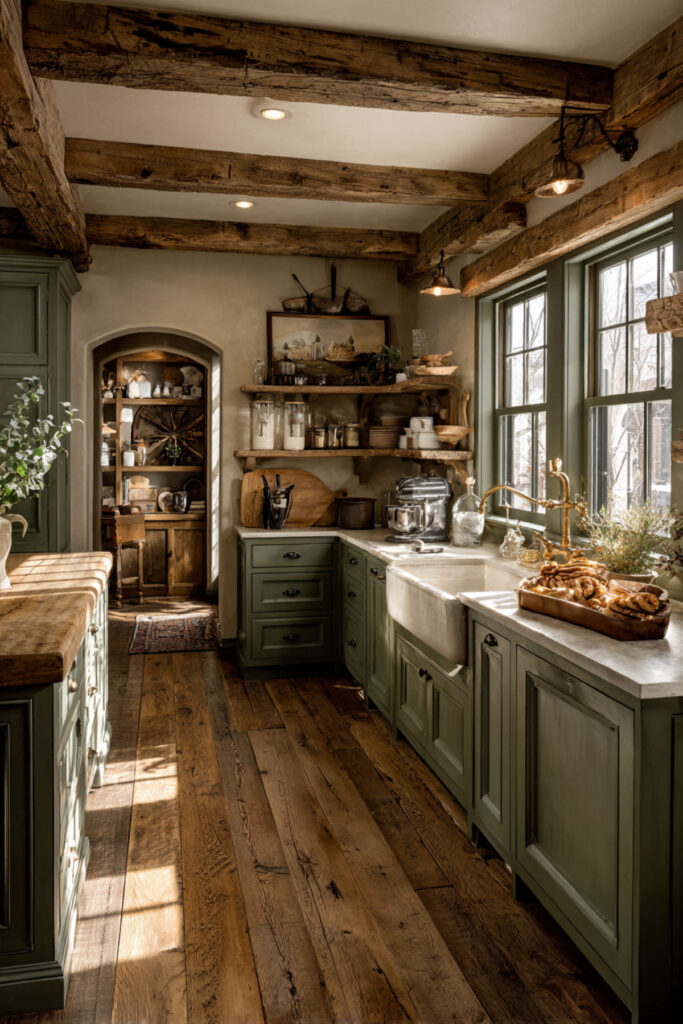
Farmhouse and organic overlap in one important way: both love materials with history. A green farmhouse kitchen with reclaimed wood accents — a reclaimed beam above the range, a salvaged wood island, or reclaimed oak shelving — brings texture and character that new materials can’t replicate. The imperfections are the point. The knots, the weathering, the variation in color — they tell a story that makes the kitchen feel rooted and real. I recommend a reclaimed wood accent beam above the range or reclaimed oak open shelves flanking the window. Against sage green cabinets, the aged wood looks even more beautiful because the soft green provides a calm backdrop that lets the wood’s character shine. Add an apron-front farmhouse sink in white and aged brass hardware, and the whole room has this warm, collected quality that defines simple rustic kitchen design.
Sage Green Kitchen Tiles Backsplash With Wood Counters
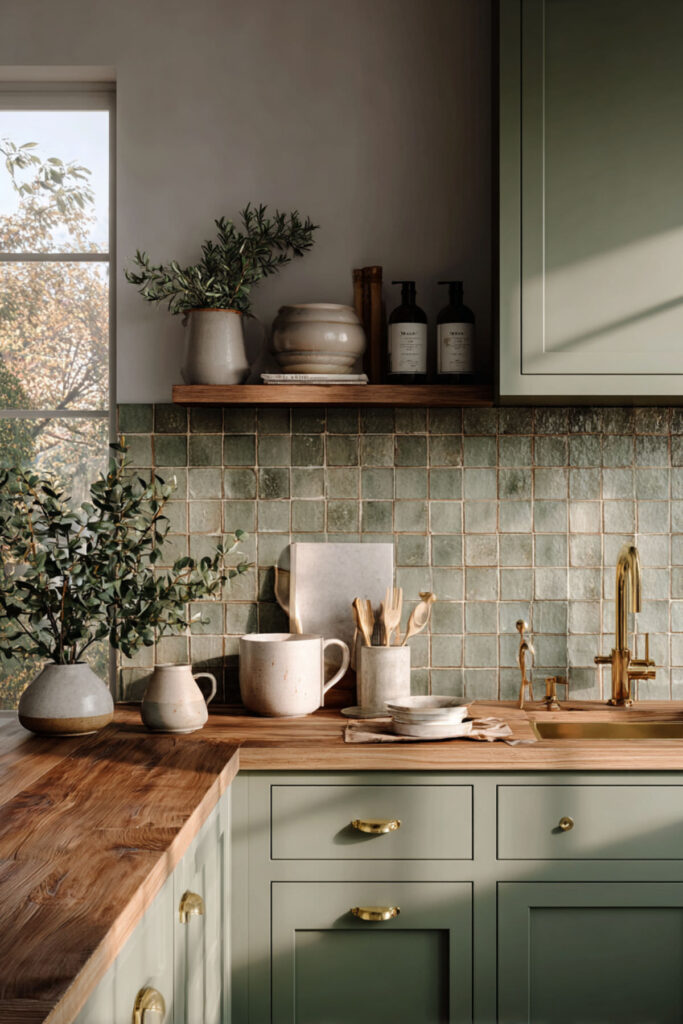
Using sage green in the backsplash instead of (or in addition to) the cabinets adds a layer of texture that paint alone can’t achieve. Sage green kitchen tiles — handmade zellige, subway, or small-format square tiles — behind a wood countertop create this gorgeous interplay between the glazed surface and the raw grain. The tile catches light, the wood absorbs it, and together they produce a visual depth that makes the kitchen feel alive. I recommend handmade zellige tiles in a soft sage. The slight variation in each tile’s color and texture gives the backsplash a living quality that flat paint can’t match. Paired with a maple or oak butcher block counter below, the effect is organic, textured, and genuinely beautiful. This green backsplash with wood counter pairing is one of the most pinnable ideas in the organic kitchen space.
White and Sage Green Kitchen With Wood Accents
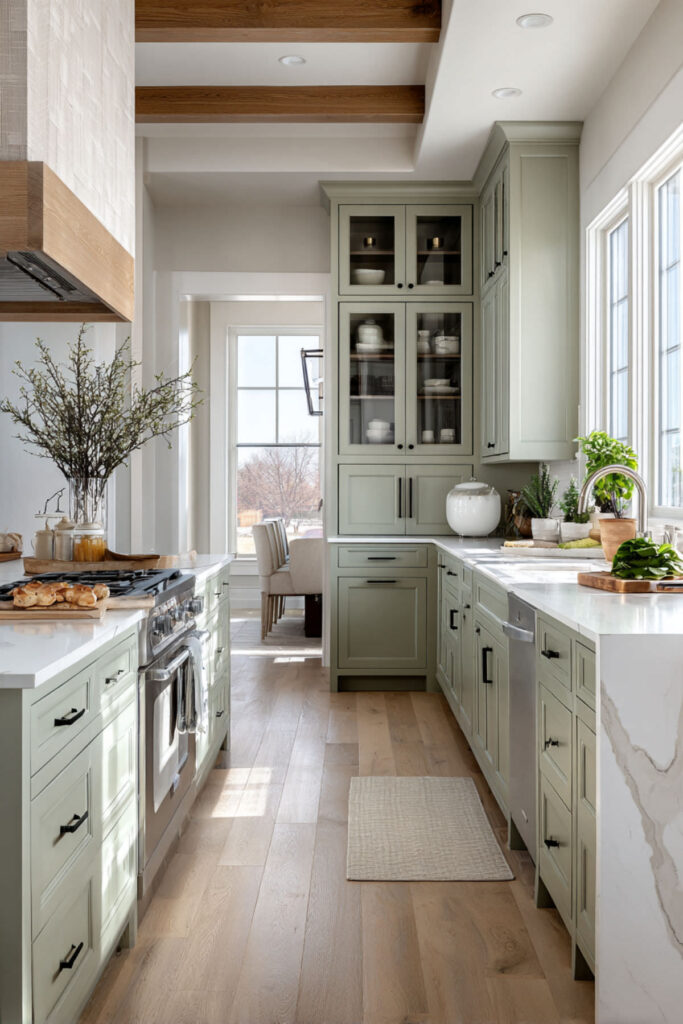
For women who want the sage-and-wood story but prefer a lighter, more airy base, a white and sage green kitchen with wood accents hits the sweet spot. Cream or warm white cabinets on the perimeter, sage green on the island, and wood showing up as floating shelves, a cutting board collection, or the island top. The white keeps everything bright, the sage adds personality, and the wood brings warmth. I recommend a warm white — something with cream undertones — on the uppers and sage on the lower perimeter or island. Add two natural oak floating shelves above the sink and style them with white ceramics and a small green plant. This sage green white and wood kitchen approach is organic design at its most versatile — light enough for small kitchens, warm enough for large ones, and beautiful in any layout.
Green Kitchen Island With Wood Countertop
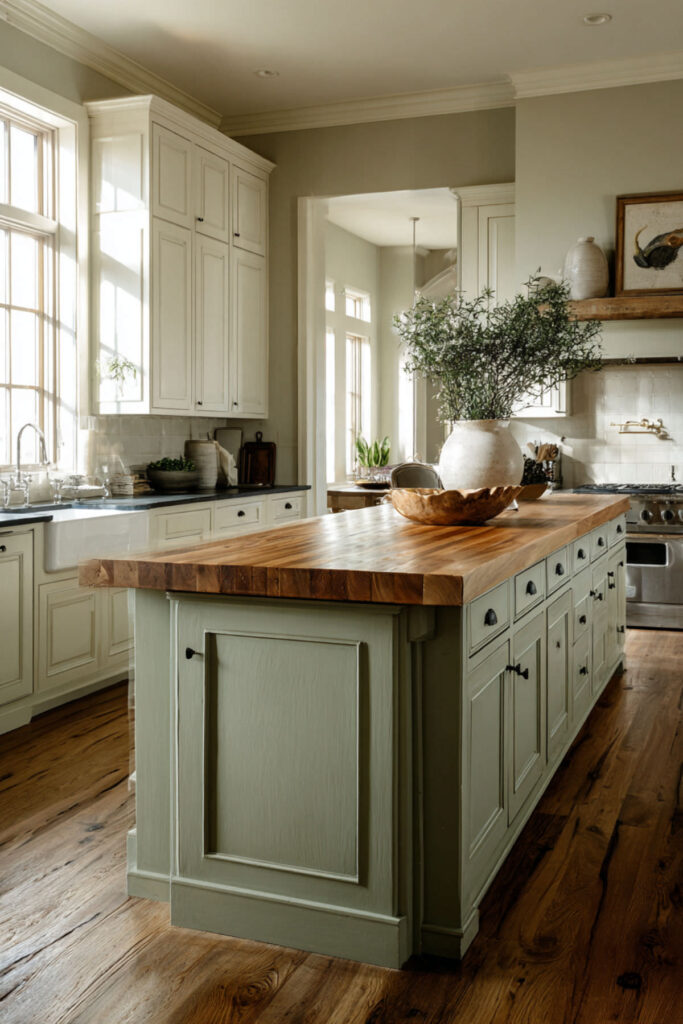
The island is the natural center of any kitchen, and when it’s sage green with a live-edge or thick-cut wood top, it becomes a piece of organic sculpture. A green kitchen island with a wood countertop turns the most functional surface in the room into the most beautiful one. The combination of the painted base and the raw top creates this dialogue between the made and the natural that defines organic design. I recommend a live-edge walnut or oak slab for the island top if your budget allows — the natural edge becomes a design element in itself, and no two slabs are alike. If live-edge feels too rustic, a thick-cut standard butcher block achieves the same warmth with cleaner lines. Either way, the sage base with the wood top is a showstopper.
Sage Green Cottage Kitchen With Pine Details
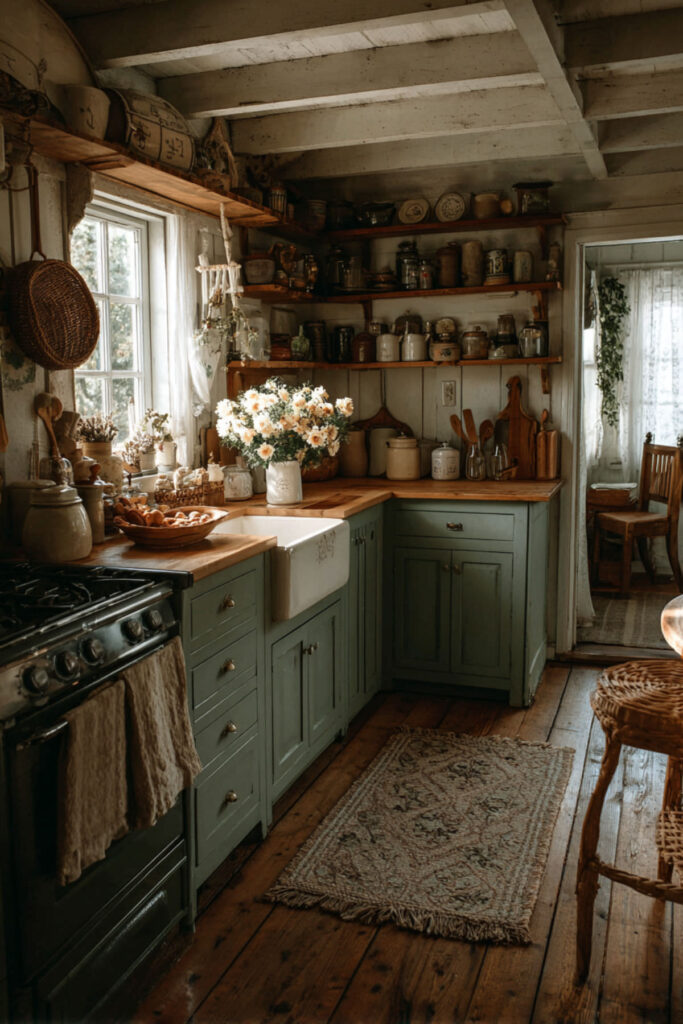
Pine and sage green have a specific charm together — lighter, more cheerful, and with a cottage quality that feels like a kitchen in the English countryside. A green cottage kitchen with pine — pine shelving, a pine table pulled close to the island, pine ceiling beams — creates a palette that’s bright, warm, and deeply inviting. The honey-gold tone of pine against sage reads as sunny and optimistic. I recommend knotty pine open shelves above sage lower cabinets. The knots add character and keep things from looking too polished. Style the shelves with a mix of white ironstone, glass jars, and a few sprigs of dried herbs. A deep farmhouse sink and simple chrome hardware complete the look. This green and pine kitchen is cottage core at its warmest — authentic, charming, and entirely unpretentious.
Two Tone Kitchen: Sage Green Lowers and Wood Uppers
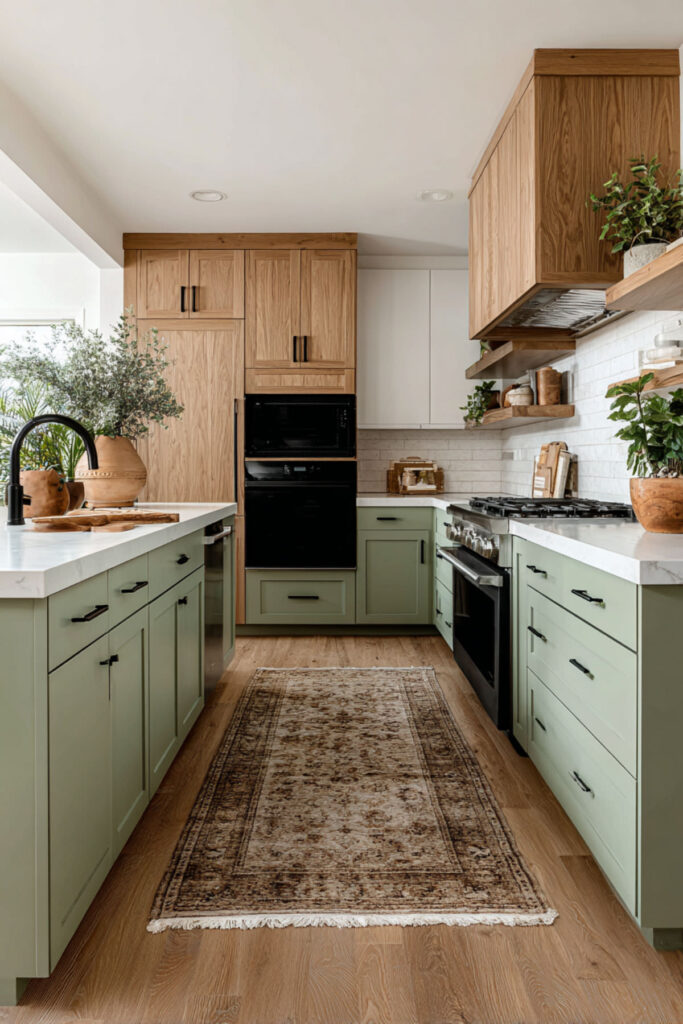
Here’s a two-tone approach that’s entirely organic: sage green on the lower cabinets and natural wood on the uppers. Instead of paint-on-paint two-tone, this version uses material contrast — the painted sage below, the raw grain of wood above. The effect is stunning. The green grounds the base of the room, the wood warms the upper half, and together they create a kitchen that feels like it was built from the landscape rather than a showroom. I recommend light oak or birch for the upper cabinets with a simple slab or shaker door. The natural wood grain provides all the visual interest you need — no hardware required (push-to-open mechanisms work beautifully here). This green and white two tone kitchen variation — where the “white” is replaced by natural wood — is one of the most original takes on two-tone design for organic-minded women.
Modern Scandinavian Kitchen in Sage and Light Wood
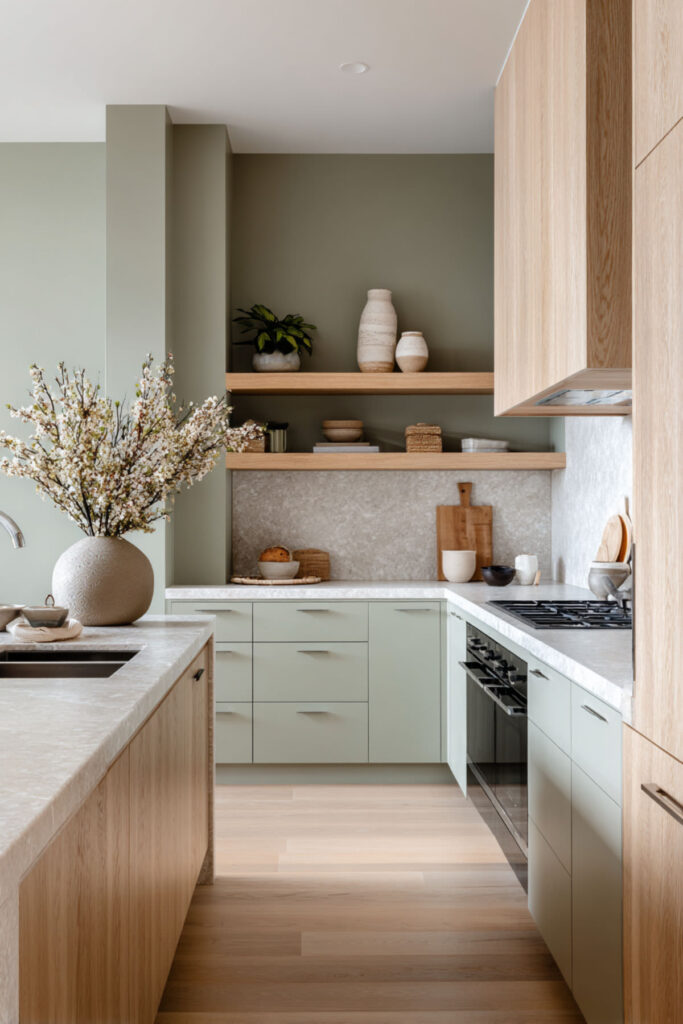
Scandinavian design and organic design share the same values: simplicity, natural materials, light, and function. A modern Scandinavian kitchen in sage and light wood — light ash or birch cabinets mixed with sage green accents, clean lines, and lots of white space — creates a kitchen that feels clean and calm without being cold. The sage adds just enough color to keep things interesting, and the light wood provides all the warmth you need. I recommend a light birch or ash island with sage green perimeter cabinets, or the reverse. White quartz counters keep things bright. A few simple accessories — a wooden bowl, a ceramic vase, a linen tea towel — and the kitchen is complete. This modern Scandinavian kitchen approach is proof that organic design doesn’t have to mean rustic — it can be clean, modern, and just as beautiful.
Sage Green Kitchen Decor With Natural Wood Accessories
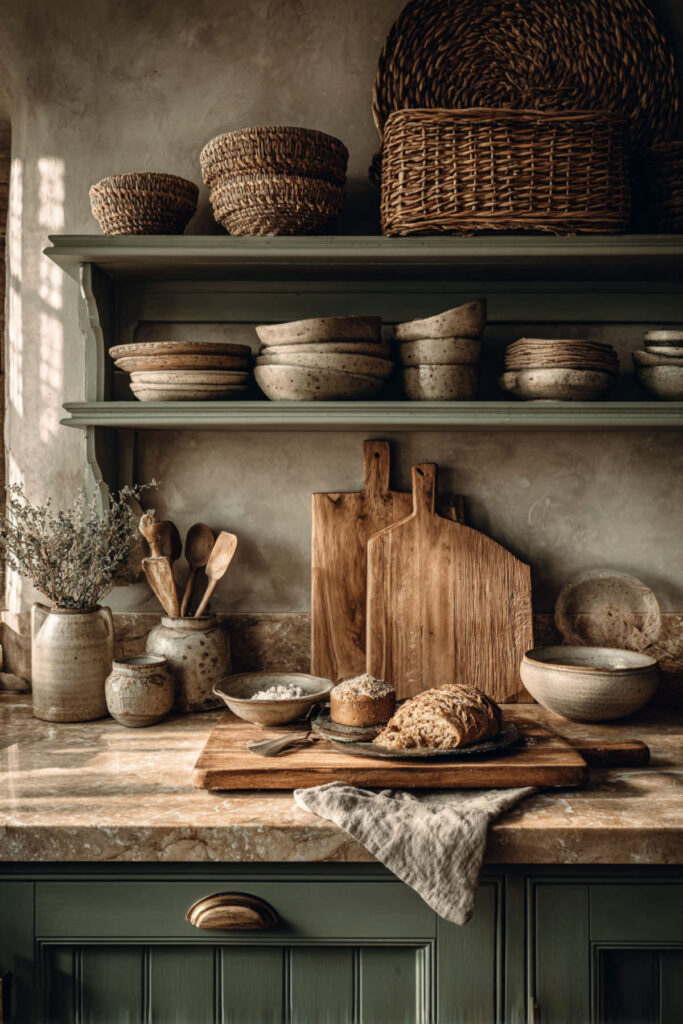
You don’t need a renovation to bring the sage-and-wood combination into your kitchen. Sometimes the right decor pieces do the work. Sage green kitchen decor — linen tea towels, stoneware mugs, a ceramic crock in a muted green — paired with natural wood accessories — a cutting board, a wooden tray, a set of olive wood utensils — can shift the entire color story of a neutral kitchen. I recommend a wooden serving tray in warm oak to anchor your countertop styling. Place a sage ceramic mug, a small plant, and a wooden honey dipper on it — that’s a styled moment that takes thirty seconds and makes the counter look intentional. These sage green decorating ideas with natural wood accessories prove that organic design lives in the details as much as the cabinets.
Sage Green and Oak Kitchen With Brass Hardware
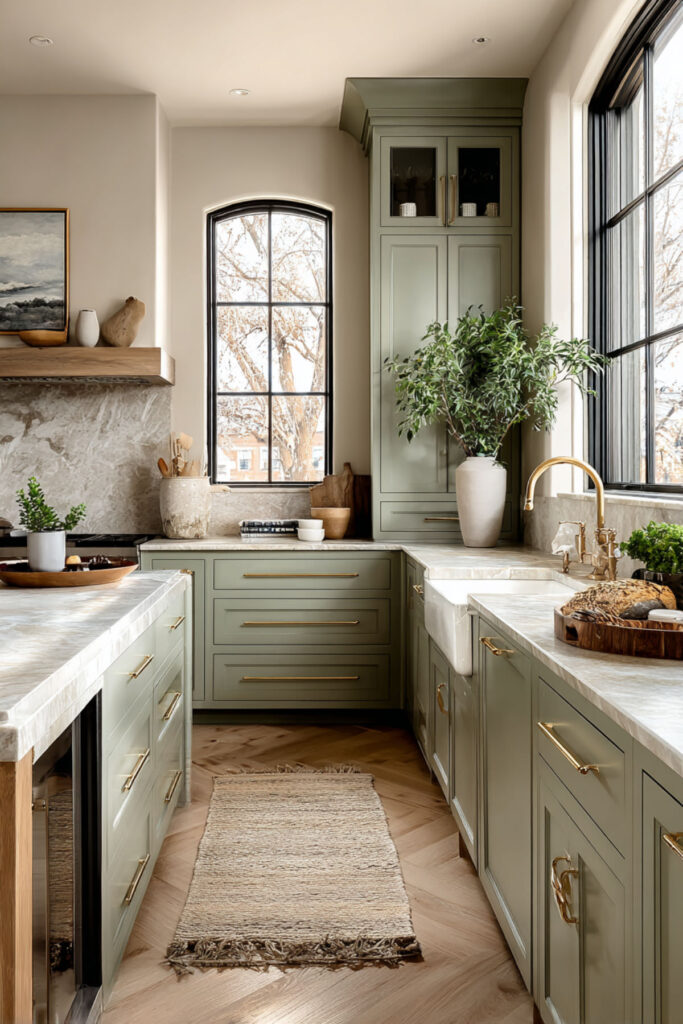
Oak and sage and brass is the organic design trifecta. The sage provides the calm, the oak provides the warmth, and the brass provides the glow. A sage green and oak kitchen with brass hardware creates a palette that feels like golden hour captured in a room — warm, soft, and endlessly flattering. Every surface catches light differently, and the result is a kitchen with real depth and dimension. I recommend unlacquered brass hardware throughout — the patina it develops over time is part of the organic design philosophy. Things that change, that age, that show the marks of use — that’s the whole idea. Pair with a white quartz or marble counter to give the eye a resting place amid the warmth, and this sage green and oak kitchen becomes the kind of room people never want to leave.
Rustic Green Kitchen Cabinets With Exposed Beams
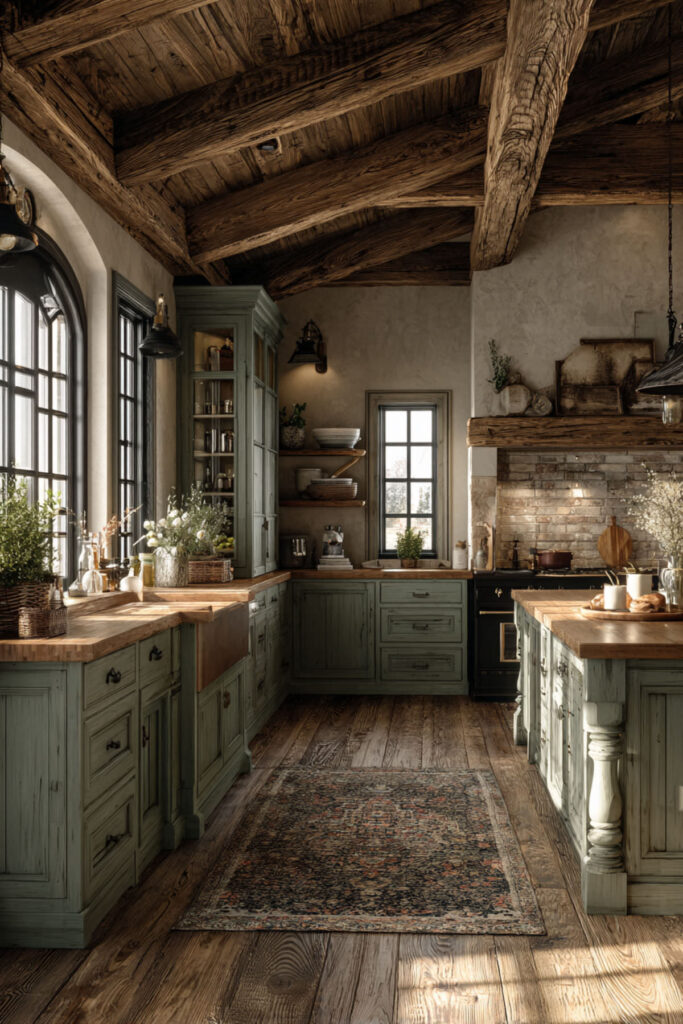
Exposed ceiling beams and sage green cabinets is a combination that grounds a kitchen in the most beautiful way. The beams draw the eye upward and add architectural interest, while the sage cabinets below create a calm, collected base. The contrast between the raw wood overhead and the smooth painted surface below gives the room layers and character. This is what organic design looks like when it’s built into the bones of the house. I recommend leaving the beams as natural as possible — a light stain or clear seal that preserves the wood’s color and texture. Against sage green cabinets, the warmth of the exposed wood makes the whole kitchen feel like a converted barn or a renovated farmhouse in the Hudson Valley — sturdy, warm, and deeply rooted. These rustic green kitchen cabinets with beams create instant character that no amount of styling can replicate.
Full Organic Kitchen: Sage Green, Wood, Stone, and Linen
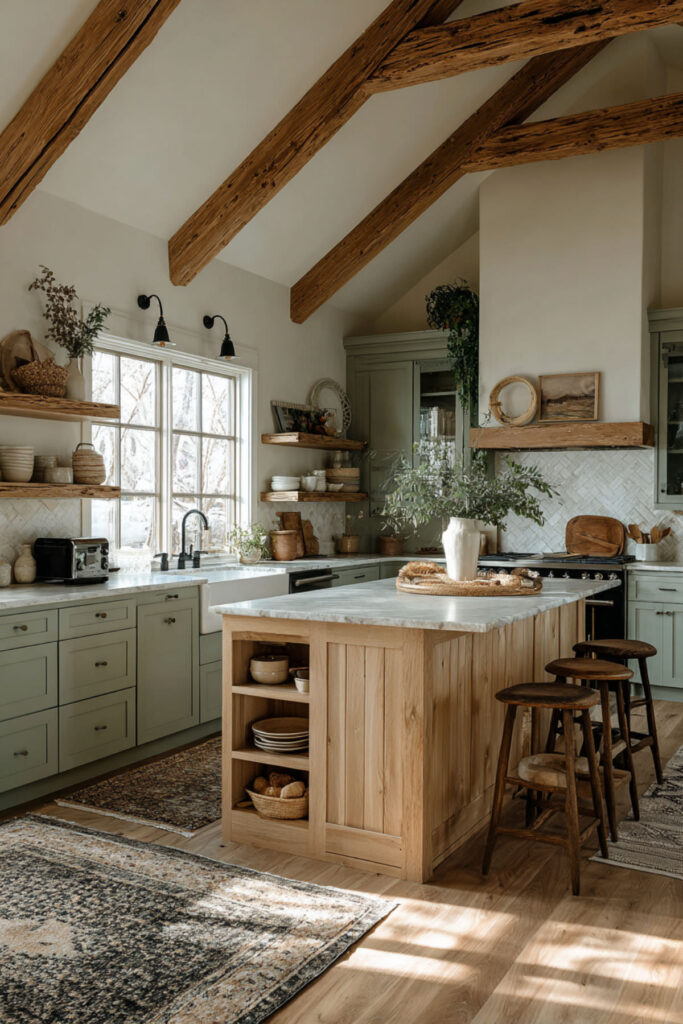
Let’s close with the full vision. An organic kitchen that layers sage green cabinets, natural wood surfaces, stone countertops, and linen textures creates a room where every material comes from the earth and every surface has depth. The sage cabinets, a honed stone counter, oak open shelving, a linen Roman shade on the window, woven counter stools, a ceramic vase with a single branch. Nothing plastic. Nothing shiny. Just warmth, texture, and the quiet beauty of natural things arranged with intention. I recommend honed travertine or limestone for the counters — the natural fossils and color variation make every surface one of a kind. A linen pendant shade overhead adds softness. Would you go fully organic? I think for women who love natural design, this kitchen isn’t just a style choice. It’s a way of living — grounded, honest, and beautiful in the way only real things can be.
More Ways to Root Your Kitchen in Nature
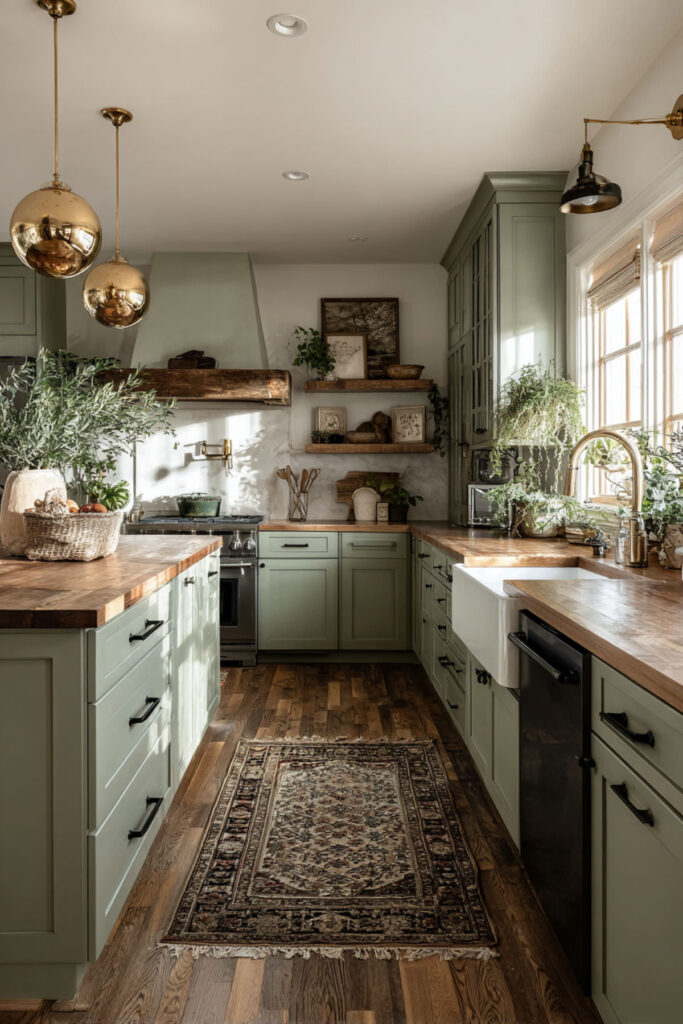
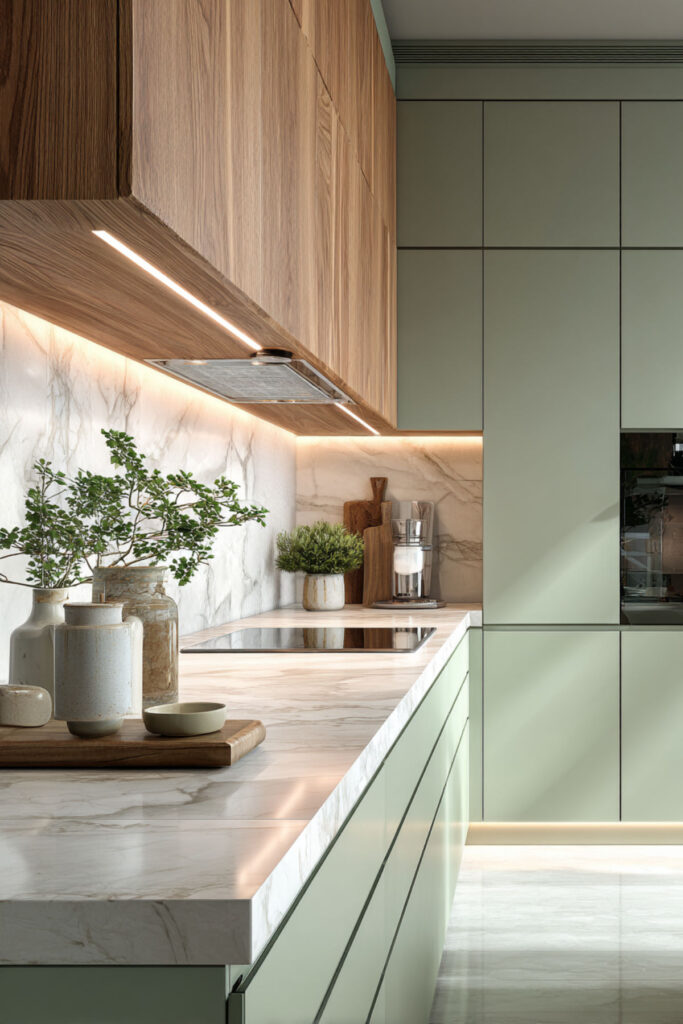
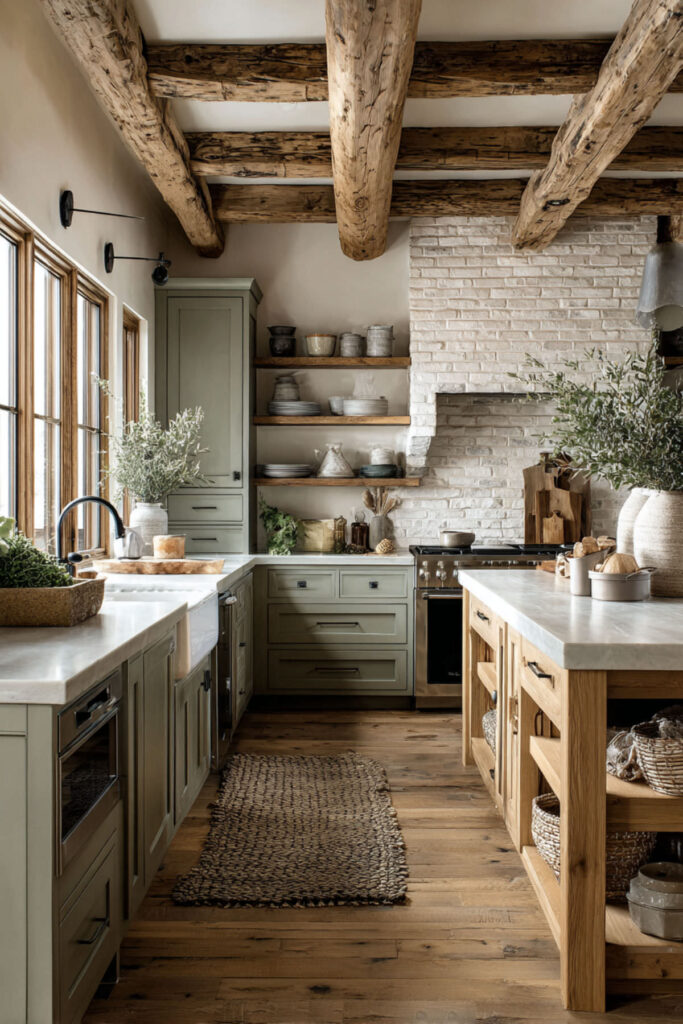
Sixteen ideas, and each one built on the same belief: the most beautiful kitchens are the ones that feel connected to the natural world. Sage green and wood isn’t a trend that comes and goes. It’s a combination as old as gardens and timber, and it looks just as beautiful in a Brooklyn apartment as it does in a farmhouse on forty acres. You’ll love these warm white and wood kitchen ideas that create a soft, inviting space for shared everyday rituals.
There’s plenty more inspiration across the rest of the site — kitchen design ideas, organic living approaches, and styling that feels doable for real life. Save the pins that made something stir. Pin these now for a future kitchen refresh that feels just right.
Share them with someone who gets excited about grain patterns and glaze variations. And remember: organic design isn’t about perfection. It’s about choosing things that are real, that age beautifully, and that make your kitchen feel like the most grounded room in the house.
Take your time exploring more ideas to shape your perfect kitchen.