Some kitchens are designed to impress. Others are designed to gather. A sage green and cream kitchen is the second kind — the kind where a family settles into the rhythm of a Saturday morning, where dinner prep becomes a shared activity instead of a solo chore, and where the room itself seems to say, “Slow down. You’re home.” There’s a reason this palette keeps drawing women back, year after year.
Sage green and cream work together the way few color combinations do — one brings earthy calm, the other brings warm brightness, and neither one competes for attention. Designers continue calling sage one of the most soothing and enduringly popular cabinet colors, noting that it pairs beautifully with warm white countertops, cream subway tiles, and brass or oak accents to create kitchens that feel connected to nature. I’ve gathered 17 sage green and cream kitchen ideas for women who want their kitchen to feel peaceful, welcoming, and built for the nourishing rituals that hold a family together. You’ll find product recommendations throughout. Pin what resonates. Browse the rest of the site for more ideas that make home feel like the best place to be. These kitchen ideas are meant to inspire rather than provide scientific insight, and some scenarios may be illustrative.
Sage Green Lower Cabinets With Cream Uppers for Gentle Two-Tone Balance
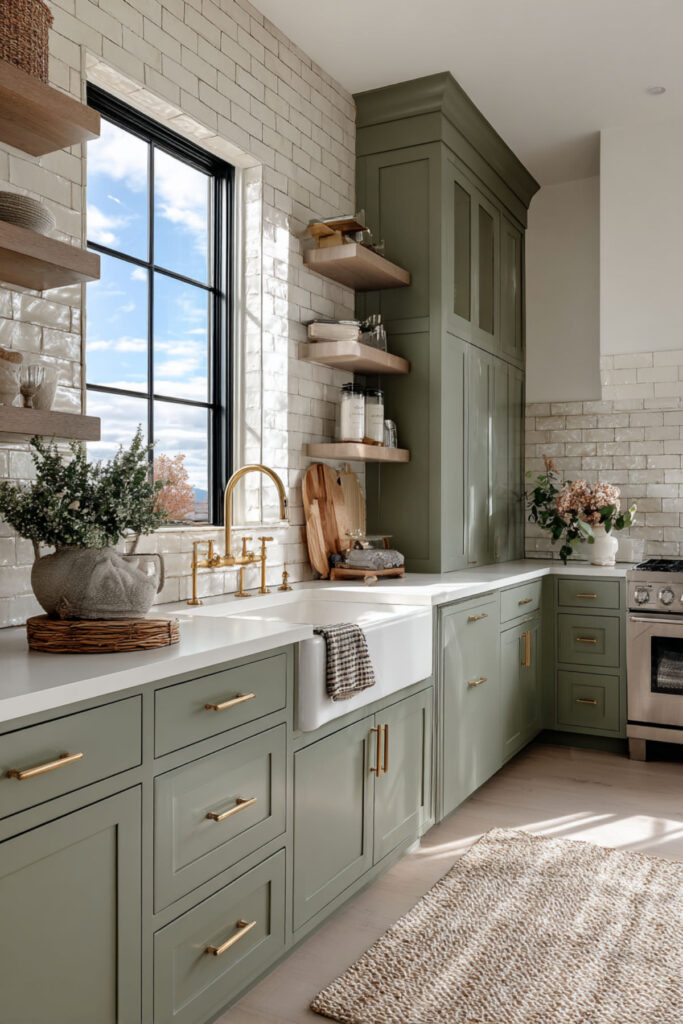
The classic sage and cream two-tone — sage on the lowers, cream on the uppers — is the most naturally balanced version of this palette. The cream keeps the upper half of the room bright and open while the sage grounds everything at the base, where the hands-on work of cooking happens. The two tones create gentle depth without drama, and the effect is a kitchen that feels both spacious and warm. I recommend a warm cream (not stark white — the warmth matters) on the upper cabinets and a soft muted sage on the lowers. Brushed brass hardware across both ties the palette together. A cream subway tile backsplash bridges the transition between the two tones. This sage green two tone kitchen approach is the most universally beautiful, most reliably calming version of the palette — and it works in every style of kitchen.
Sage Green Kitchen Cabinets With Cream Quartz Countertops
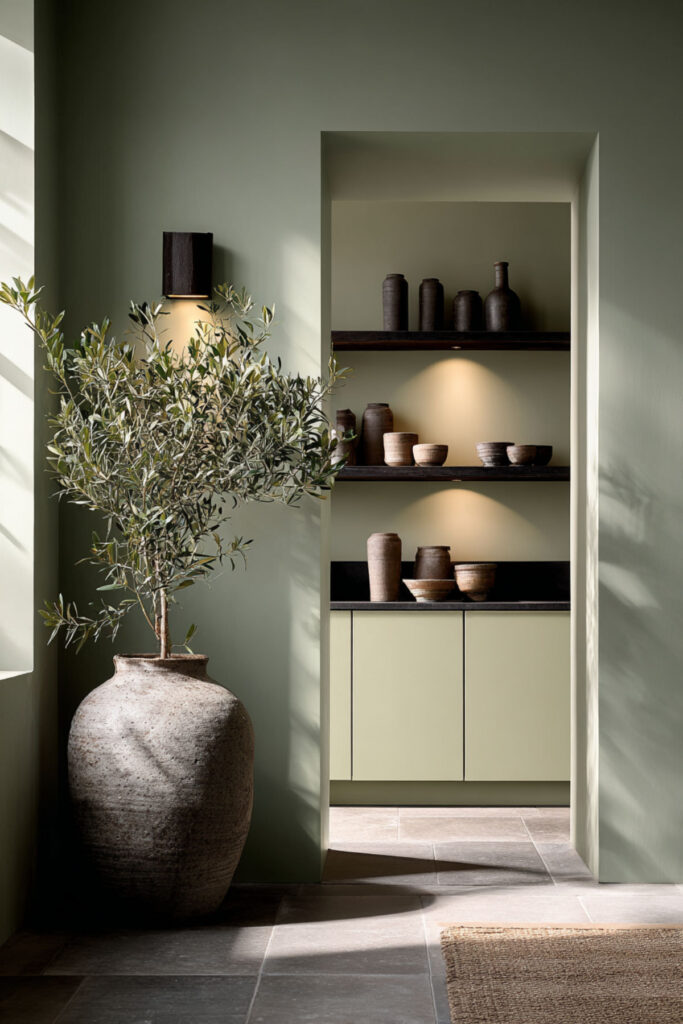
Sage cabinets and cream quartz counters create a palette so harmonious that the eye moves through the room without catching on anything jarring. The cream quartz has this soft, luminous quality that makes the sage below it glow, and the smooth surface is virtually maintenance-free — no sealing, no staining, no worrying when the kids spill juice on it. I recommend a cream quartz with soft warm veining for the countertops. The subtle veining adds visual interest without introducing a competing pattern, and the warm undertone keeps everything feeling cohesive. This sage green kitchen cabinets combination is one of the most family-friendly palettes you can build — beautiful enough for an evening dinner party, durable enough for a Tuesday with toddlers.
Sage Green Kitchen Walls With Cream Cabinets for an Enveloping Calm
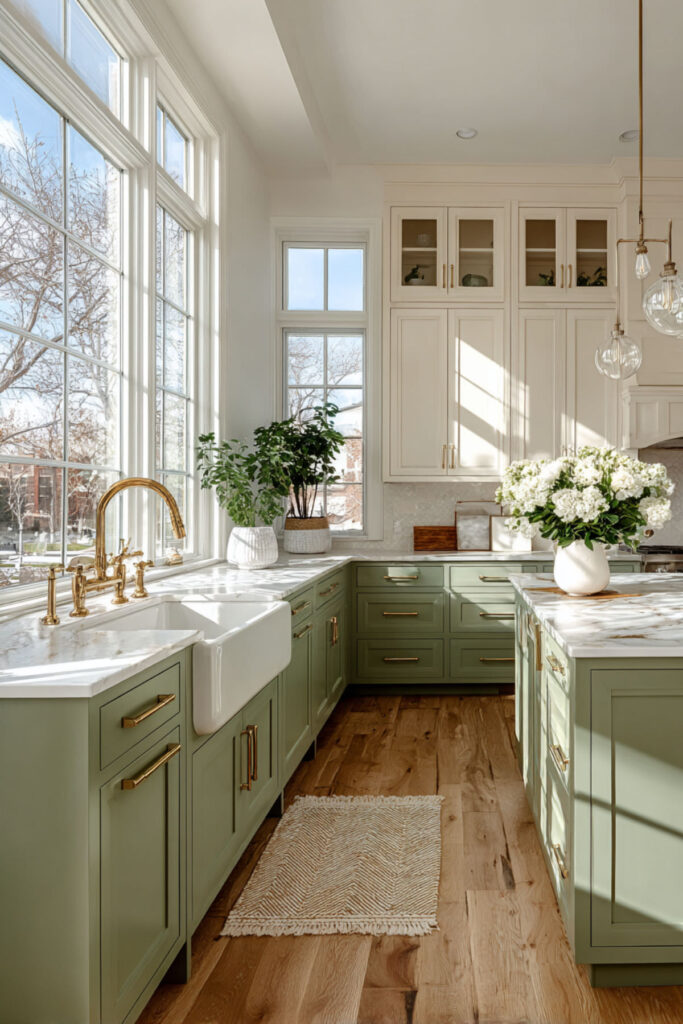
Flipping the formula — sage on the walls, cream on the cabinets — creates a kitchen that feels wrapped in calm. The sage walls provide a rich, warm backdrop while the cream cabinets reflect light and keep the room feeling bright. It’s the lowest-commitment way to introduce sage because painting walls is far simpler than painting cabinetry, and it’s easy to change if your taste evolves. I recommend a satin sage paint on the walls and warm cream shaker cabinets with simple brass knobs. A few framed botanical prints on the sage walls and a linen Roman shade on the window complete the room. This sage green kitchen walls cream cabinets approach envelops the family in warmth without touching a single cabinet door — perfect for renters or women who want flexibility.
Sage Green Shaker Kitchen With Cream Subway Tile Backsplash
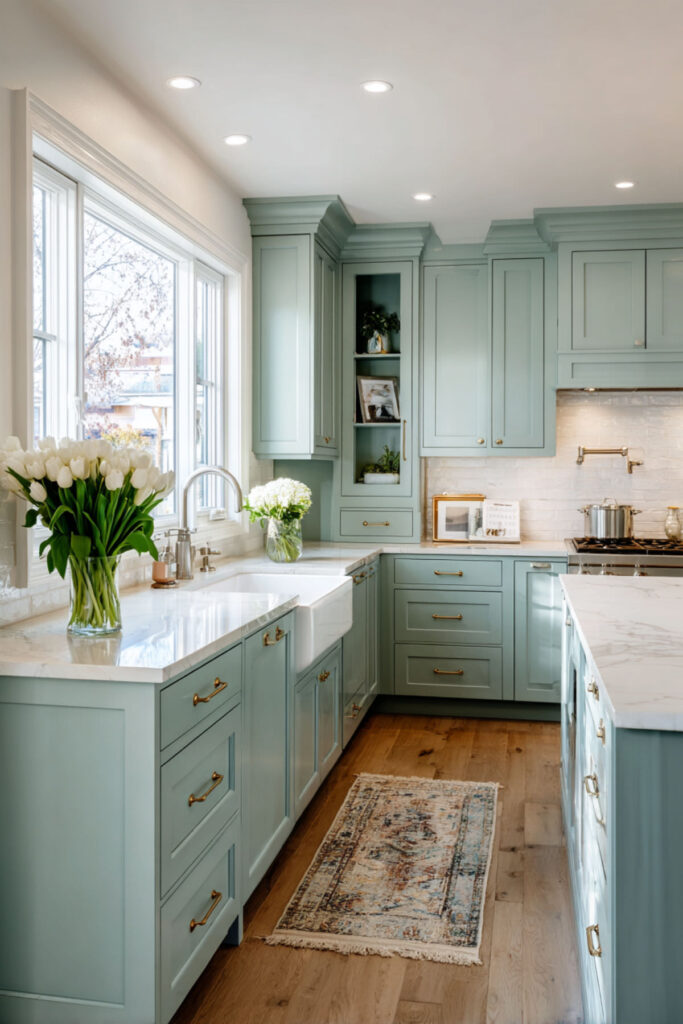
Shaker cabinets in sage green with a cream subway tile backsplash is the combination that defines “timeless modern farmhouse.” The clean lines of the shaker door let the sage color speak without distraction, and the cream subway tile adds texture and structure to the wall behind without introducing a competing palette. Together, they create a kitchen that could have been designed five years ago or five years from now — and look equally current. I recommend a cream-colored subway tile with a warm-toned grout (not bright white grout — the warmer tone keeps things cohesive and hides kitchen splatter better). Aged brass cup pulls on the sage drawers and small brass knobs on the doors complete the look. This sage green shaker kitchen approach is the kind of design that ages gracefully — just like the rituals that happen inside it.
Light Sage Cabinets Kitchen With Natural Oak Accents
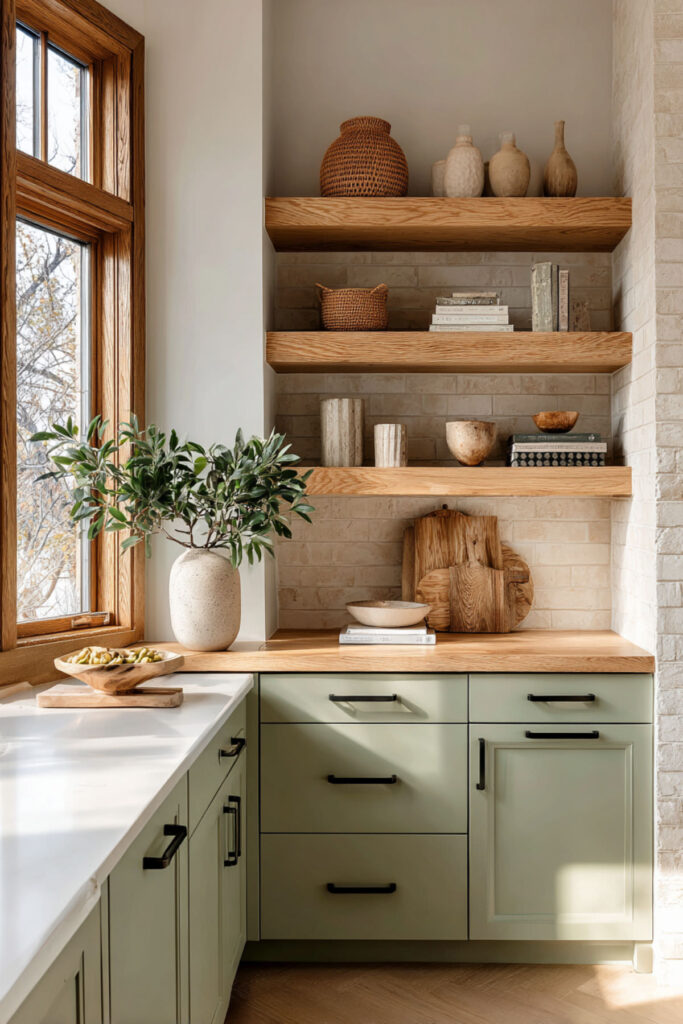
Light sage — softer, more grey-toned, almost whispering its color rather than stating it — paired with natural oak accents creates a palette that feels Scandinavian in its warmth and simplicity. Oak shelving, an oak island, or oak flooring against the light sage introduces a natural warmth that makes the green feel organic rather than painted on. I recommend natural white oak floating shelves against a sage wall, with cream counters below and light sage cabinets flanking the range. The golden tone of the oak against the cool sage creates a temperature contrast that feels like sunlight through leaves. It reminds me of those calm, light-filled kitchens in renovated Craftsman homes in the Pacific Northwest — simple, honest, and deeply welcoming. This light sage cabinets kitchen approach is the most airy, most luminous version of the sage-and-cream story.
Sage Green and Cream Kitchen With Open Shelving
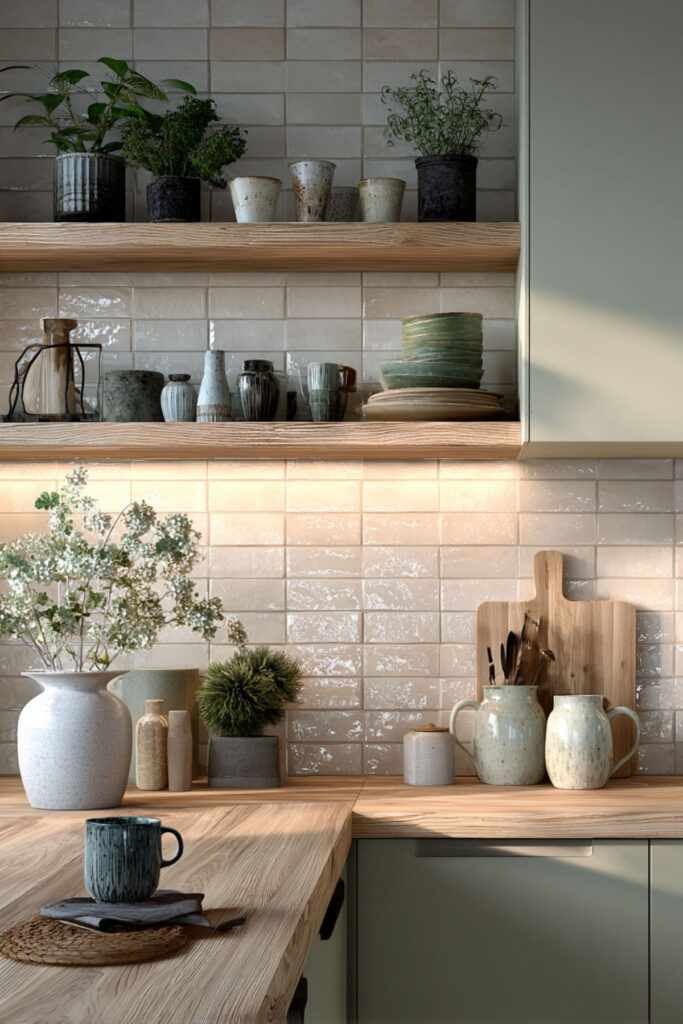
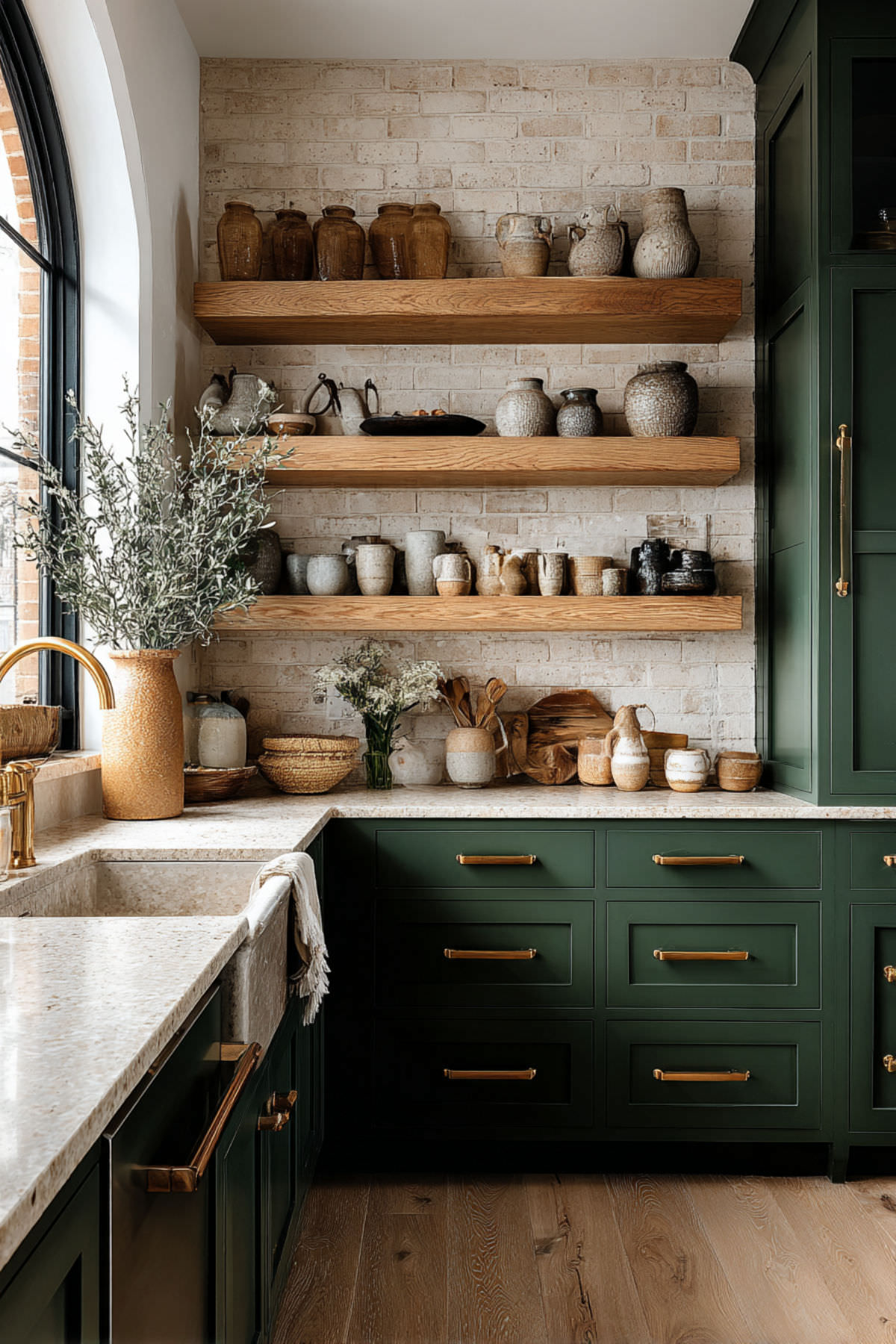
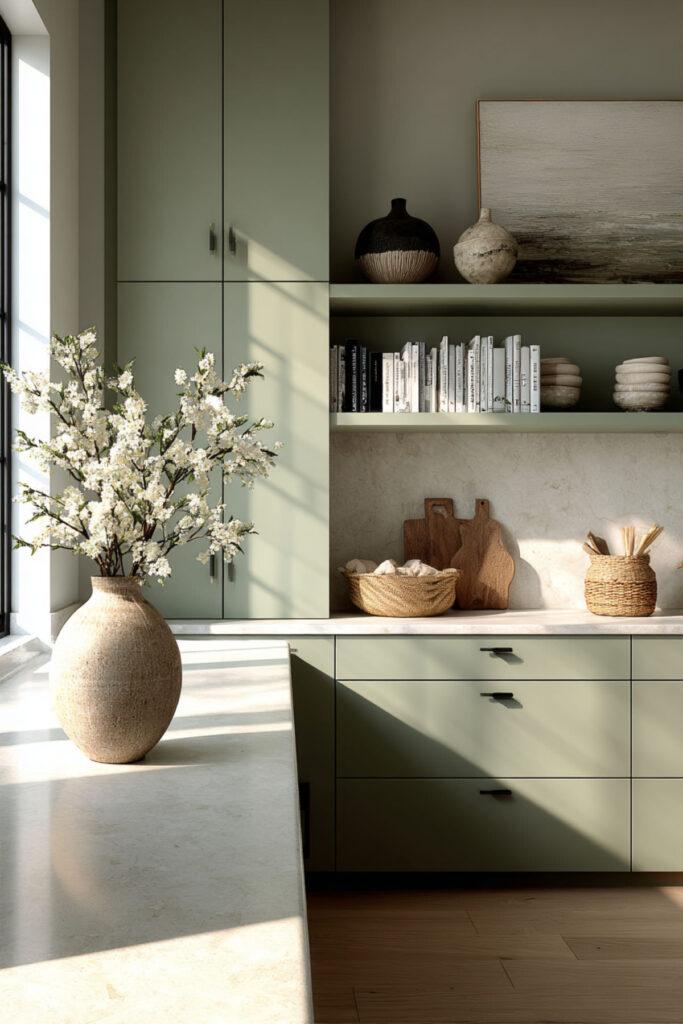
Open shelving in a sage and cream kitchen gives you a place to display the things that make a family kitchen feel alive — stacked bowls, ceramic mugs, a few glass jars of dry goods, a small trailing plant. Against sage walls or beside sage cabinets, the open shelves in natural wood or cream-painted wood become a gallery of daily life. I recommend natural oak floating shelves on one wall, styled simply with cream-toned ceramics and a few warm neutral objects. Odd numbers, varied heights, and breathing room between objects keep the display looking effortless rather than cluttered. This open shelving approach in a sage and cream kitchen turns the most functional shelf into the most beautiful corner of the room — a small display of the things your family uses and loves every day.
Sage Color Kitchen With Cream Farmhouse Sink
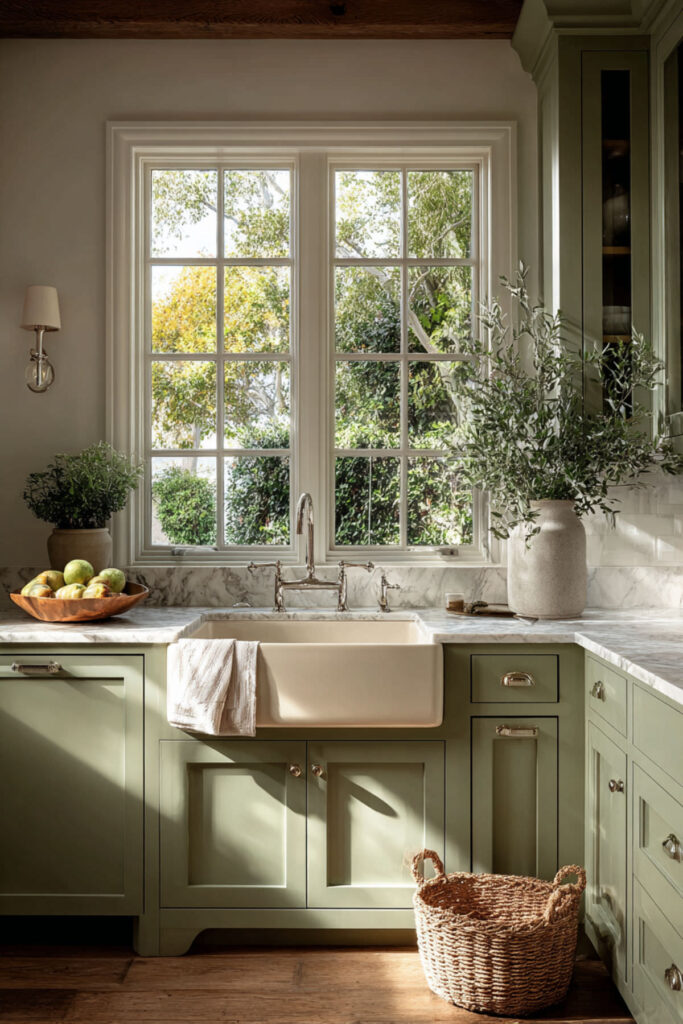
A cream fireclay farmhouse sink in a sage kitchen is one of those pairings that feels meant to be. The deep, warm basin of the farmhouse sink sits beautifully against the earthy green of the cabinets, and the cream tone of the fireclay echoes the cream of the counters and backsplash. It’s functional too — the deep basin handles everything from washing vegetables to bathing tiny hands. I recommend a 33-inch single-basin fireclay farmhouse sink in cream (not white — the cream coordinates with the warm palette). A brass bridge faucet above the sink ties the metals together and adds a heritage detail that feels perfectly at home. This sage color kitchen with farmhouse sink approach is the most nurturing fixture in a kitchen built for nurturing — a sink that’s as beautiful as it is hardworking.
Fern Green Kitchen for a Deeper, More Saturated Sage
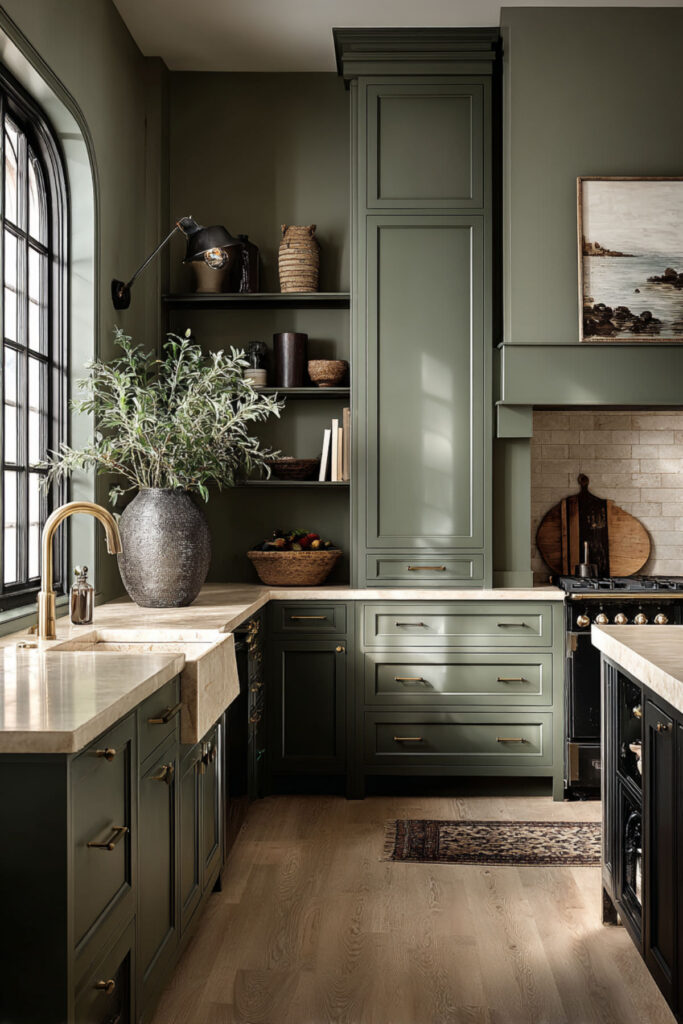
If classic sage feels too pale for your taste, fern green — a slightly deeper, more saturated cousin — brings the same earthy quality with more visual weight. A fern green kitchen paired with cream keeps the warmth intact but adds richness that pale sage sometimes lacks. The deeper green reads more confidently, especially in larger kitchens or rooms with abundant natural light. I recommend fern green on the lower cabinets or island with cream uppers — the deeper tone on the lowers grounds the room, while the cream uppers keep things bright. Brass hardware and a warm marble or quartz counter tie the palette together. This fern green kitchen approach is for women who love sage’s energy but want a version with a little more personality and depth.
Sage Green and Taupe Kitchen for Earthy Layered Warmth
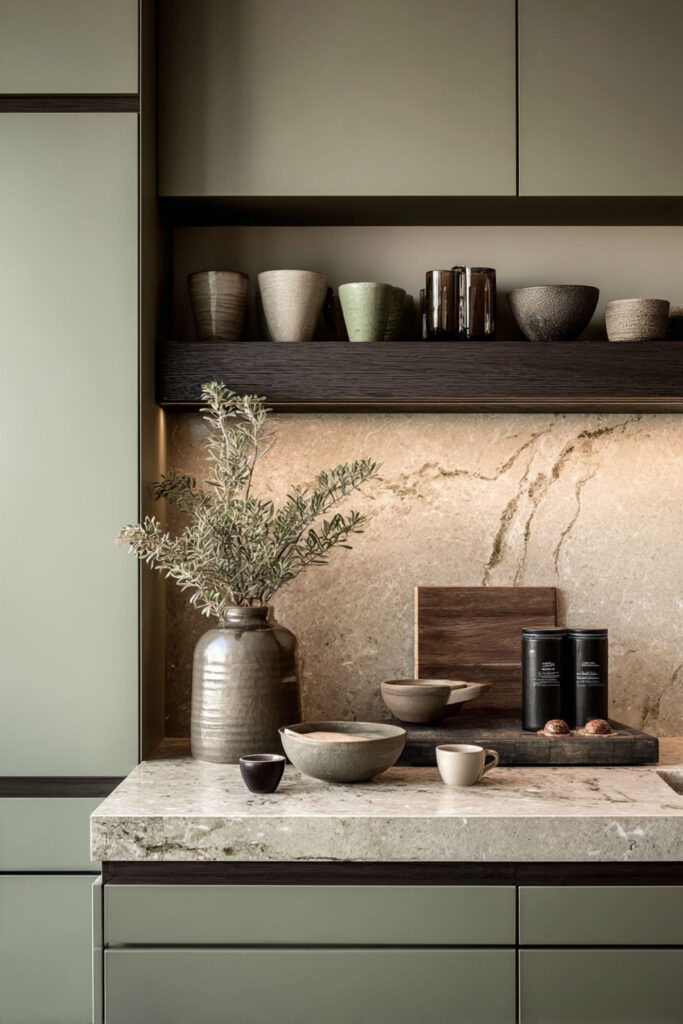
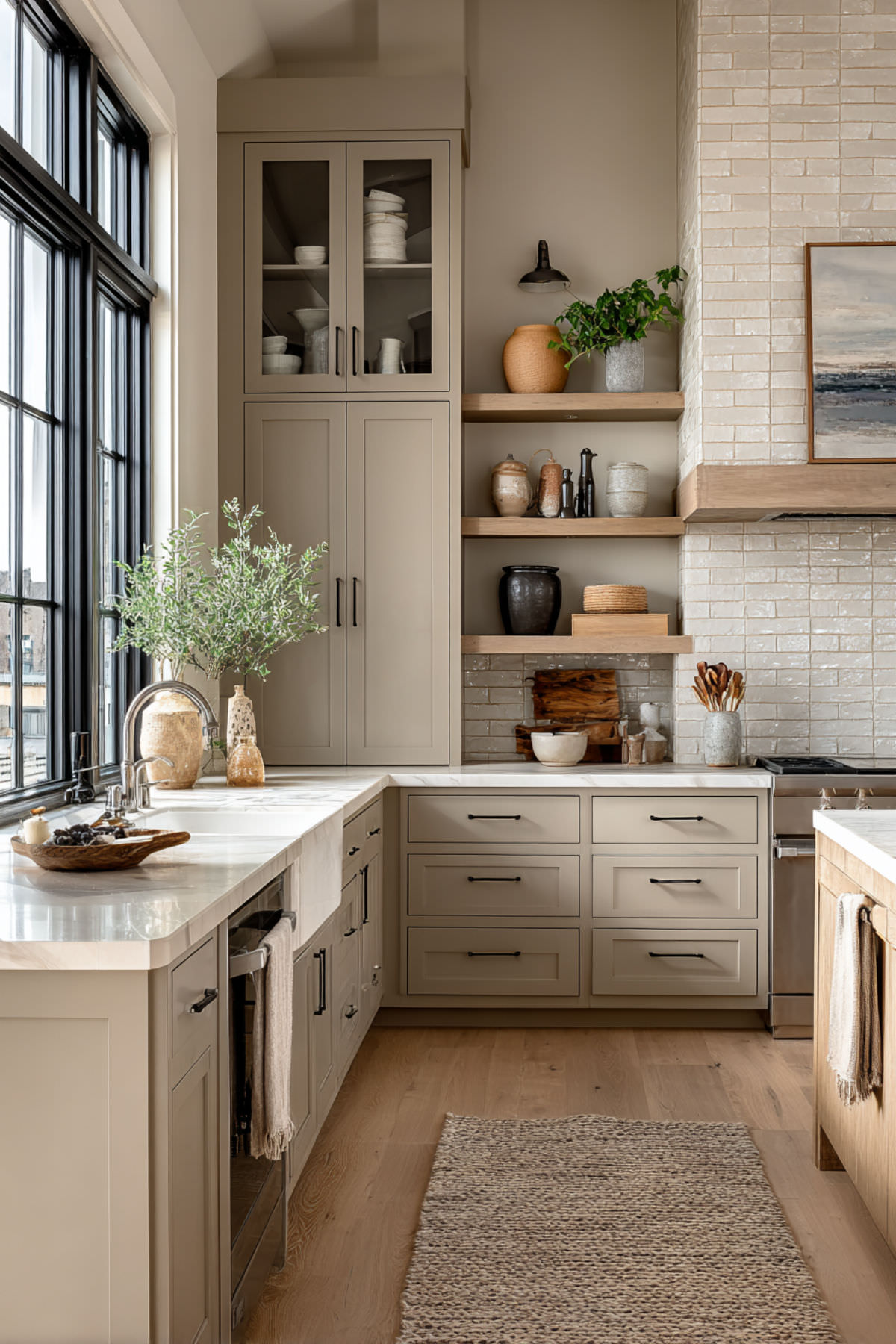
For a warmer, more enveloping take on the sage palette, introducing taupe — that gorgeous grey-brown neutral — alongside cream creates a three-tone kitchen that feels deeply earthy and incredibly sophisticated. Sage on the cabinets, cream on the counters and backsplash, and taupe on the walls or island creates layers of warmth that make the room feel cocoon-like. I recommend taupe on a feature wall or the island base, with sage on the perimeter cabinets and cream on the counters. The three tones are all in the same warm family, which means they layer without clashing. Brushed brass hardware adds the only metallic glow. This sage green and taupe kitchen approach is the most layered, most sophisticated version of a sage-based palette — warmth on warmth on warmth.
Sage Green Kitchen Cabinets With Cream Herringbone Backsplash
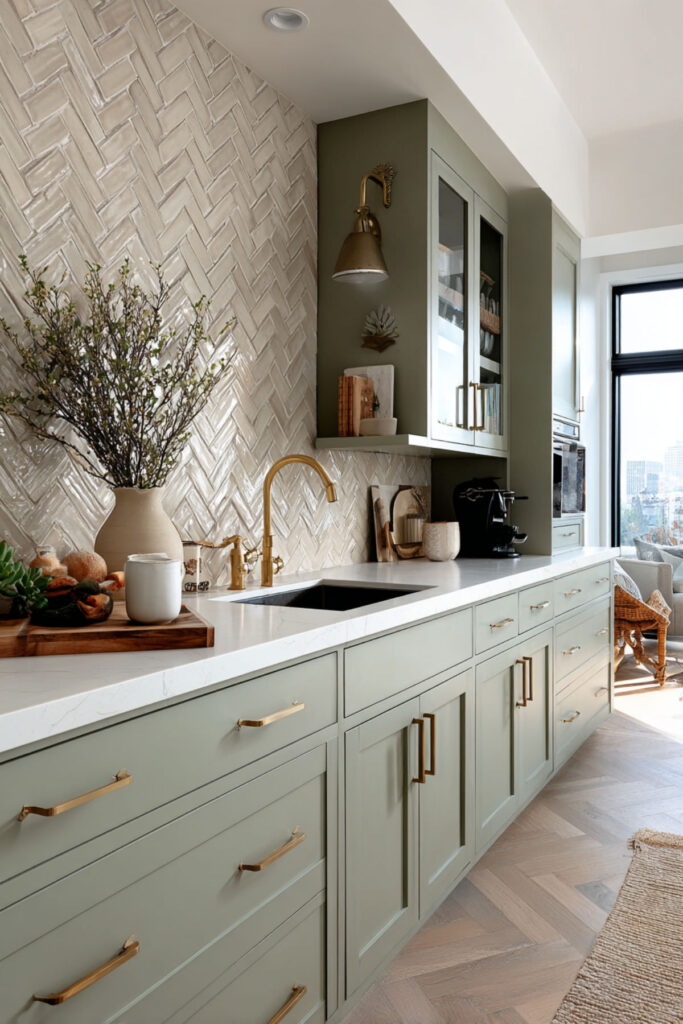
A cream herringbone tile backsplash behind sage cabinets adds pattern and movement without introducing a competing color. The angled lines of the herringbone create visual rhythm that the eye follows naturally — dynamic but controlled — and the cream tone keeps the walls feeling bright and warm against the green. I recommend a slim cream ceramic tile in a herringbone layout. The narrow format makes the pattern feel delicate and refined, and the cream glaze catches light softly throughout the day. Against sage cabinets with brass hardware, the herringbone backsplash becomes the texture that elevates the kitchen from well-painted to well-designed.
Cream and Green Kitchen With a Breakfast Nook
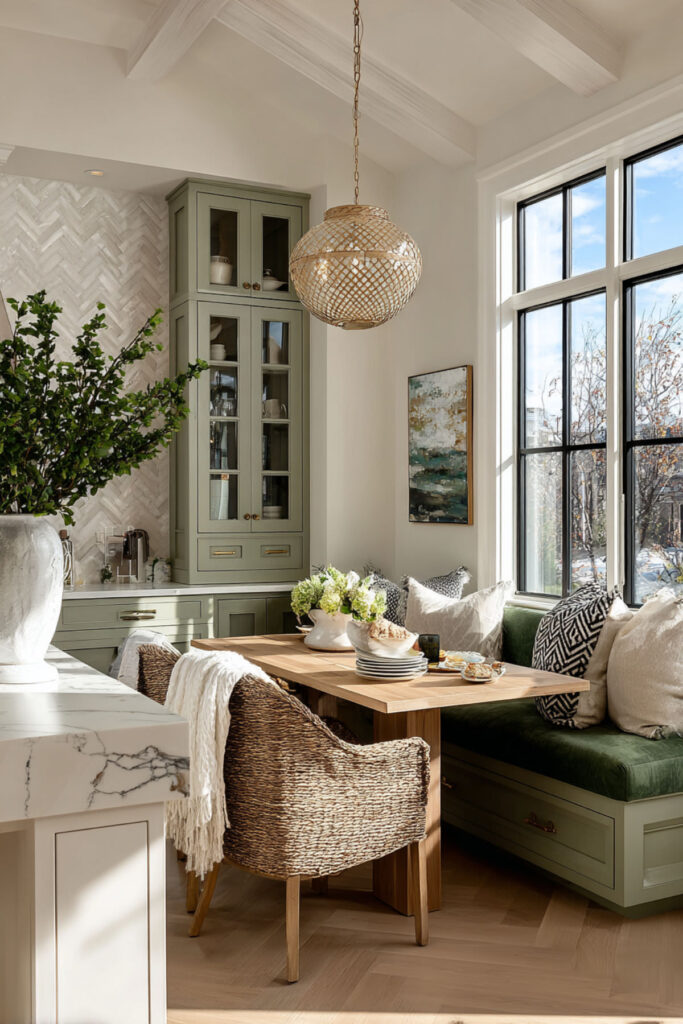
A breakfast nook near the kitchen creates a warm, defined space for the rituals that matter most — the weekday cereal before school, the Saturday pancakes, the slow Sunday coffee with nowhere to be. A small round table, a cream bench with linen cushions, and sage green walls or wainscoting surrounding the nook make the spot feel like a room within a room — intimate, protected, and purposeful. I recommend a round oak table with simple chairs and a built-in bench with a cream linen cushion. A woven pendant light hung low above the table creates intimacy. This cream and green kitchen breakfast nook is the space your family will remember most — not the cabinets, not the counters, but the table where you all sat together.
Sage Green Kitchen Decor: Styling a Cream Counter With Warmth
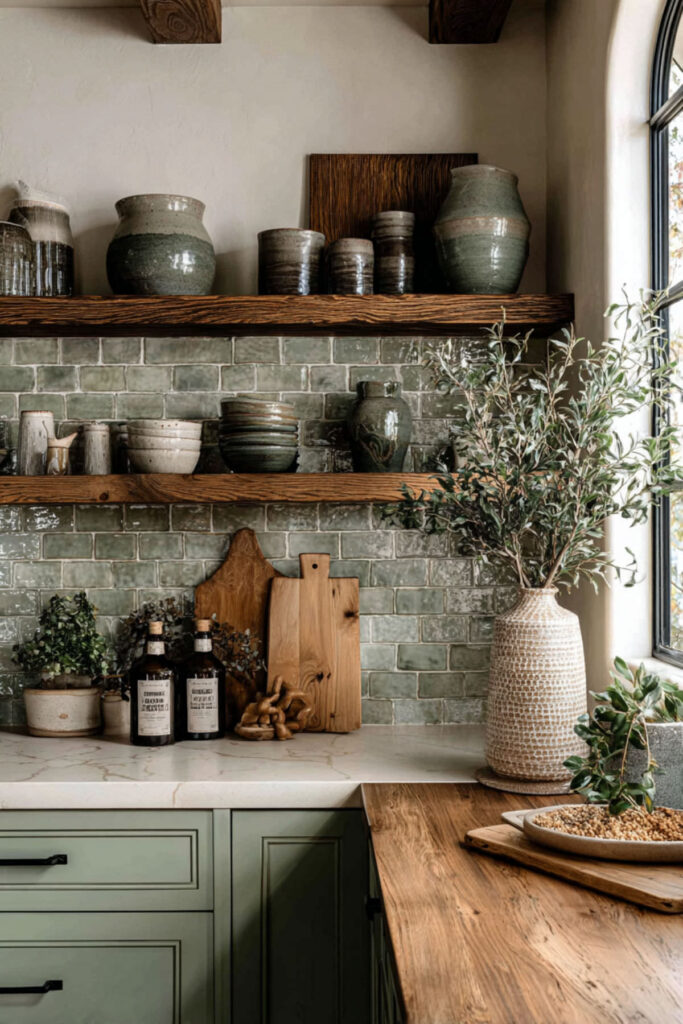
The cream counter in a sage kitchen is a quiet stage — and what you place on it makes the room feel either styled or empty. A wooden cutting board leaned against the backsplash, a ceramic crock of wooden spoons, a small herb garden in terracotta pots, a cream stoneware fruit bowl with whatever’s in season. These small details turn a counter from blank space into a curated display of daily family life. I recommend grouping three to four objects on a warm oak tray. The tray anchors the arrangement, and when you need a clear surface, you move one object. A single stem of greenery in a small ceramic vase adds the only living element. This sage green kitchen decor approach turns countertop styling from an afterthought into an intentional act — the same way this kitchen turns cooking from a chore into a ritual.
Sage Green Kitchen Cabinets Modern With Flat-Panel Doors
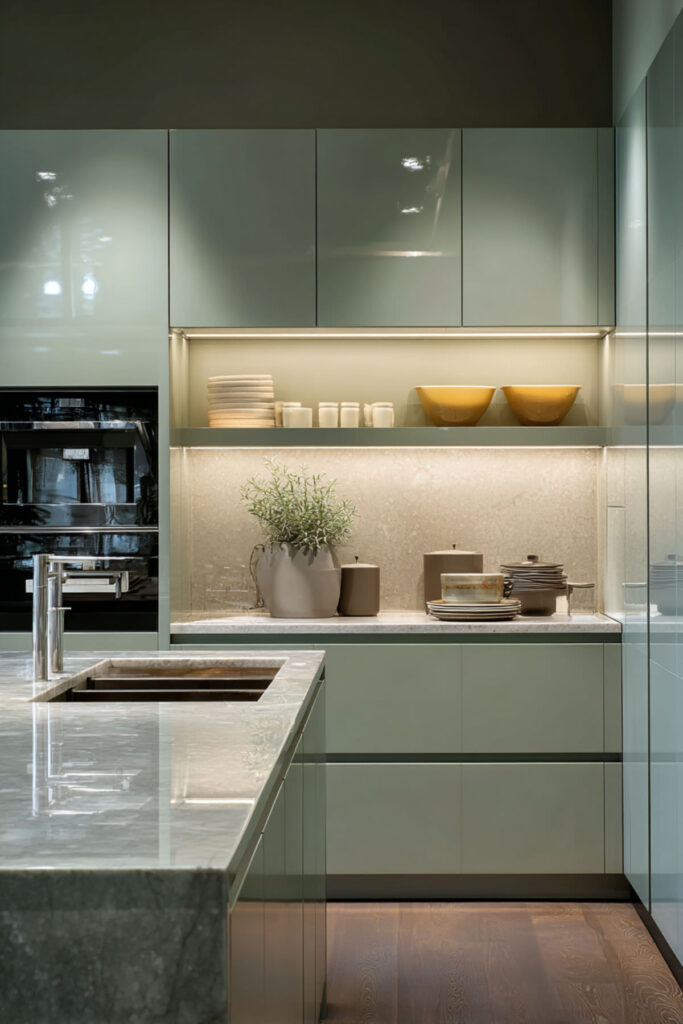
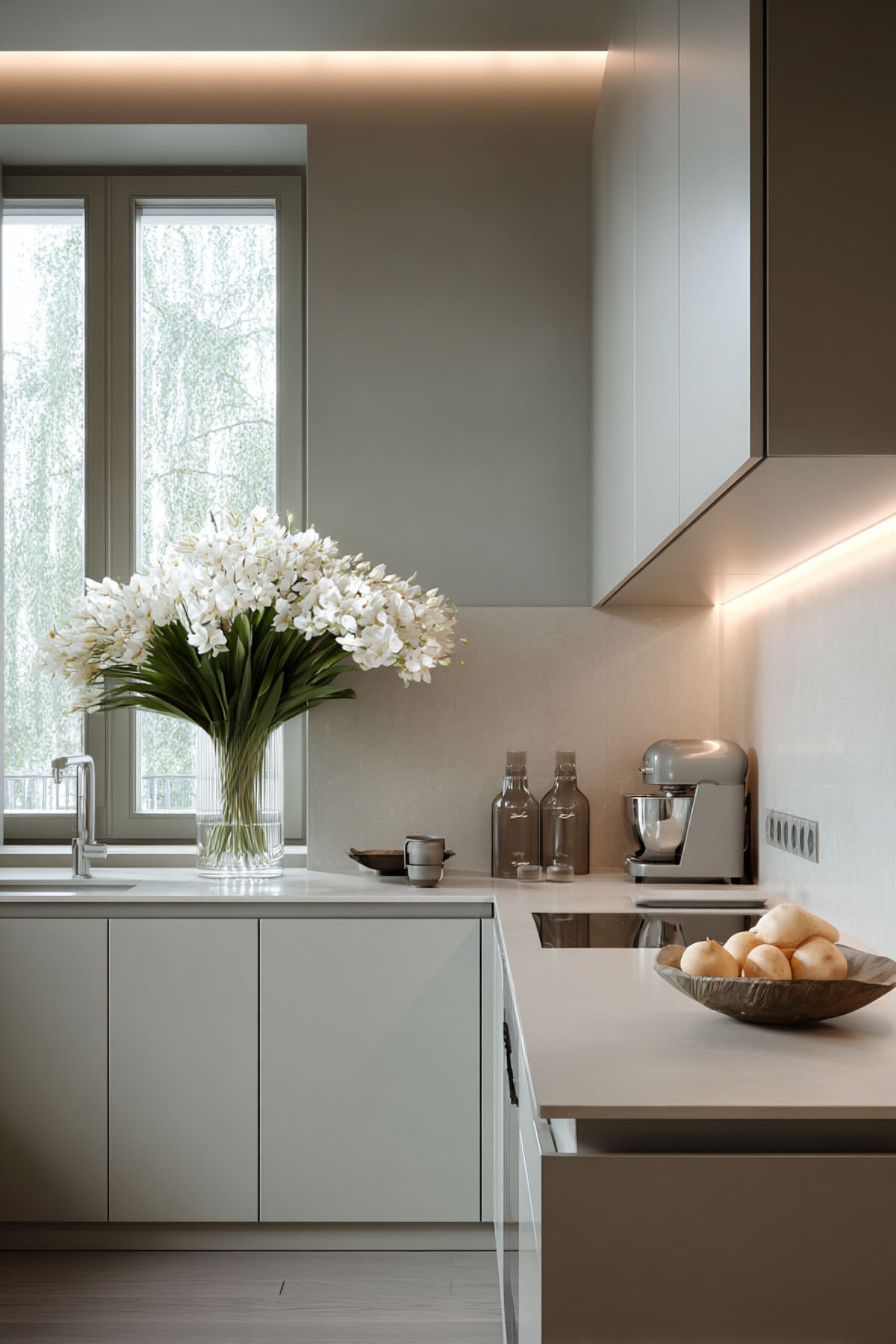
For a contemporary take on sage and cream, flat-panel cabinets in sage with integrated hardware — no visible knobs or pulls — create a clean, streamlined look that feels modern without feeling cold. The sage color does the emotional warming that the clean lines might otherwise lack, and the cream counters keep things bright. I recommend sage flat-panel cabinets with push-to-open mechanisms or slim finger-pull channels. A cream quartz counter and a simple white tile backsplash keep the surroundings minimal. One sculptural pendant light in warm brass above the island provides the only decorative moment. This sage green kitchen cabinets modern approach is for women who prefer their warmth understated and their lines clean — a kitchen where calm comes from simplicity.
Dark Sage Green Kitchen Cabinets With Cream and Brass
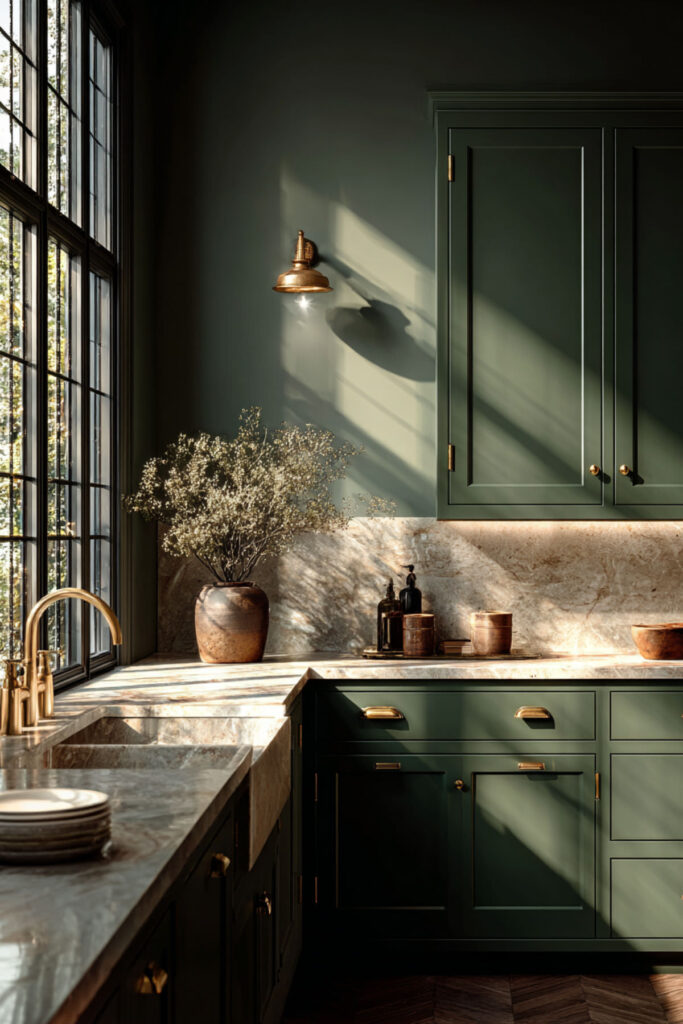
Dark sage — deeper, moodier, with more grey or brown in its undertone — creates a kitchen that feels intimate and enveloping. Paired with cream counters and brass hardware, dark sage cabinets have a heritage quality that lighter sage can’t quite achieve. The deeper tone wraps the room in warmth, and the cream and brass provide the brightness and glow that keep it from ever feeling heavy. I recommend dark sage on all cabinets (lowers and uppers) with cream counters and a cream tile backsplash. The continuous sage creates a moody, cocooning effect, while the cream surfaces and brass hardware catch and reflect light. This dark sage green kitchen cabinets approach is for the woman who wants her kitchen to feel like a sanctuary — a warm, protected space where the family gathers.
Sage and Cream Kitchen With Warm Pendant Lighting
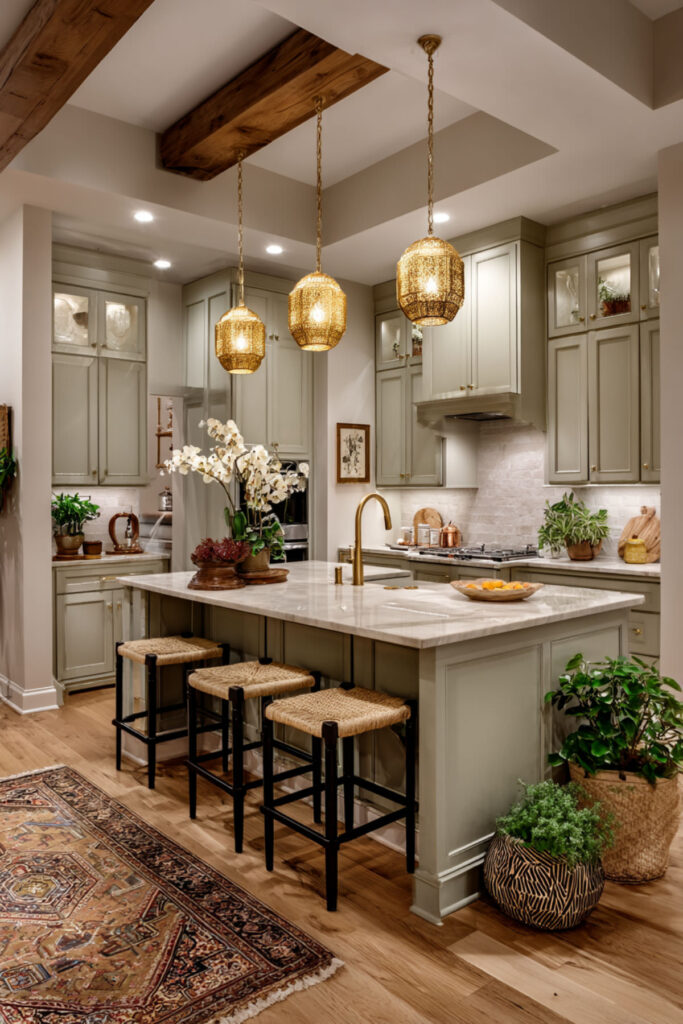
The way a kitchen is lit at dinner time matters as much as how it looks in the morning. Warm pendant lights — woven rattan, linen drum, or brushed brass — hung above the island or table transform a sage and cream kitchen from a bright workspace into a soft, glowing gathering space. The warm light brings out the golden undertones in the cream and the green-gold warmth in the sage. I recommend dimmable pendant lights in a warm tone (2700K) hung about 30 inches above the island surface. In the evenings, dim the pendants, turn on under-cabinet LEDs, and the kitchen glows — warm, intimate, and exactly the kind of space where a family wants to linger after the plates have been cleared.
Sage Green and Cream Kitchen With a Family-Friendly Island
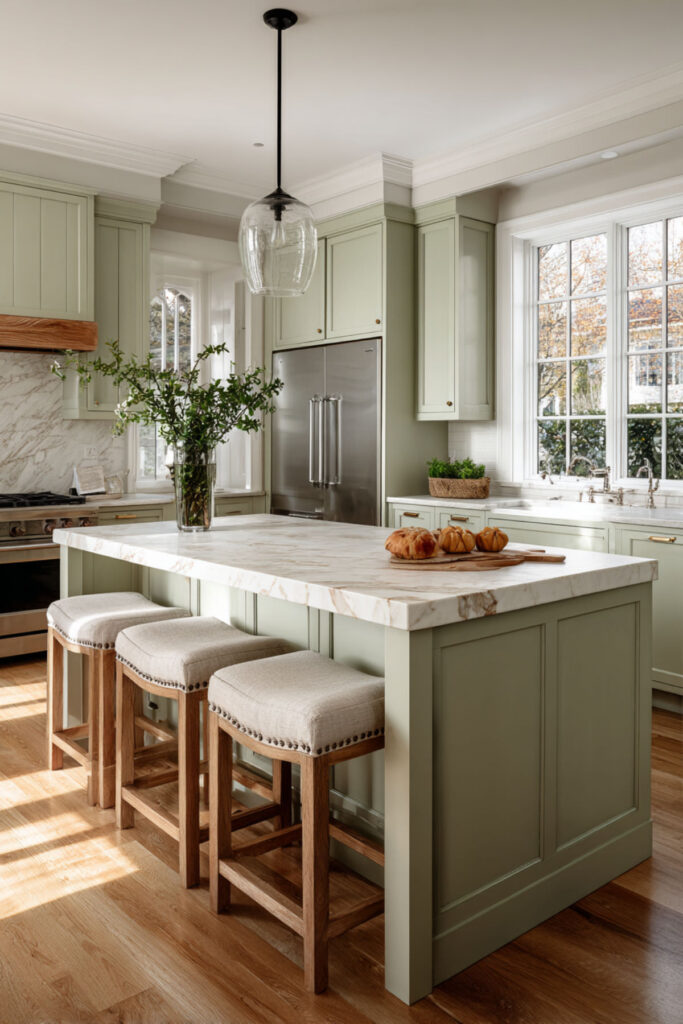
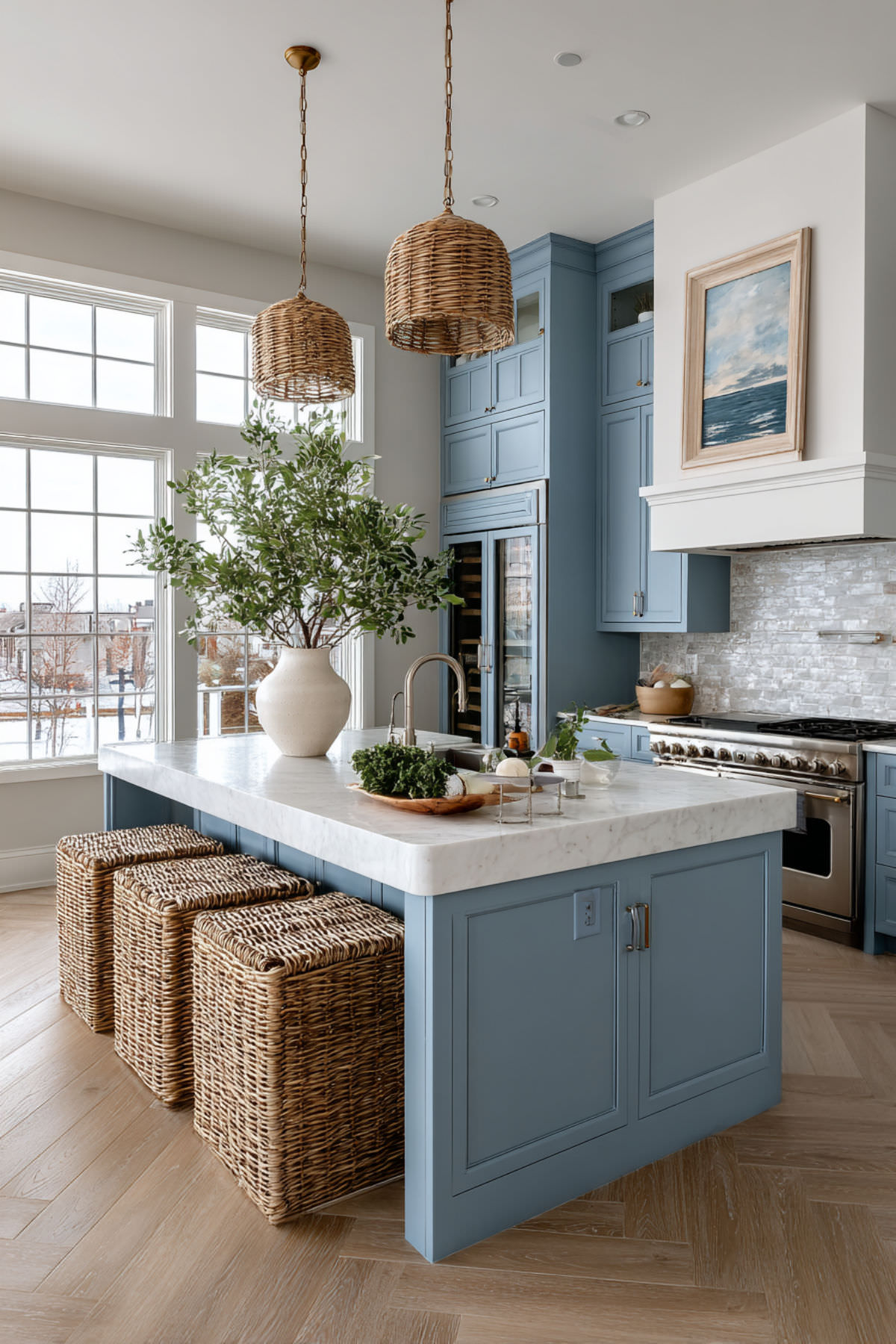
The island in a sage and cream kitchen is the room’s gathering place — where kids do homework while dinner cooks, where someone sits on a stool and tells you about their day, where Sunday brunch is assembled with everyone contributing. A sage island with a cream or marble top and counter-height seating for three or four makes the island functionally and emotionally the center of the home. I recommend woven counter stools in a warm neutral tone — they add texture, they’re forgiving of spills, and they invite sitting. A few brass pendant lights above define the island zone. This family-friendly island is the heart of the sage and cream kitchen — the spot where the rituals you’re building actually happen.
The Full Sage Green and Cream Dream Kitchen
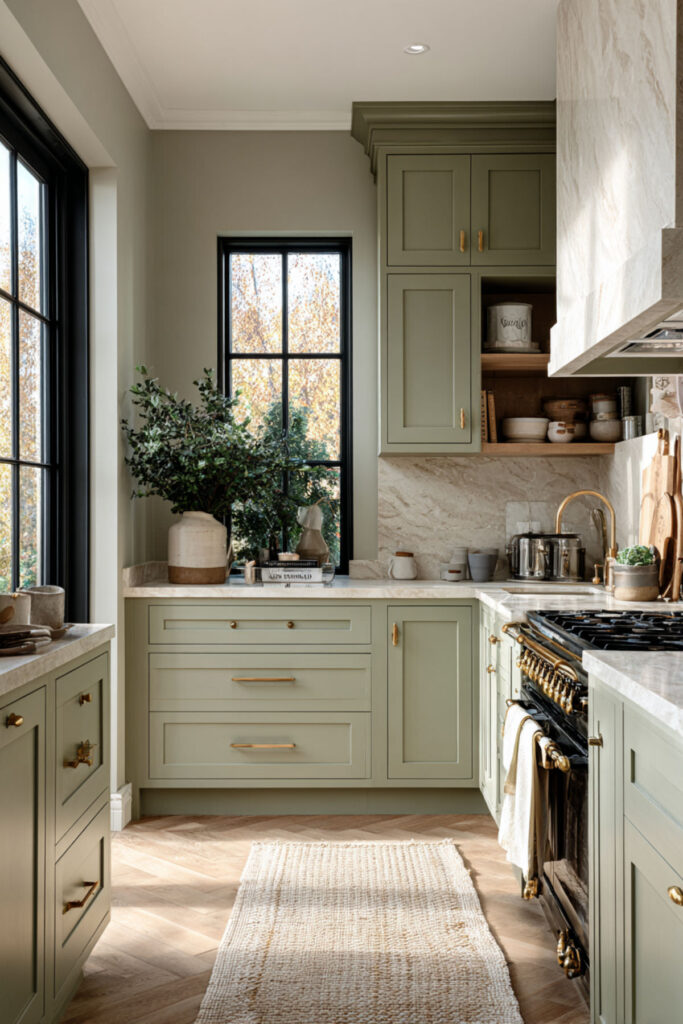
Let’s close with the complete vision. A sage green and cream dream kitchen: sage shaker cabinets with aged brass cup pulls, cream quartz counters with soft warm veining, a cream subway tile backsplash in a herringbone pattern, a cream fireclay farmhouse sink with a brass bridge faucet, natural oak floating shelves styled with white ceramics and a trailing plant, wide-plank oak floors, warm pendant lights on dimmers, a round oak breakfast table pulled close for morning rituals, and woven counter stools at the island where the family gathers. Every surface is warm. Every detail supports togetherness. And the kitchen — that sage-and-cream room — becomes the place where nourishment happens in every sense: the meals that feed bodies and the rituals that feed souls. Would you build this kitchen? I think for women crafting nourishing family rituals, this isn’t just a renovation. It’s a love letter — to the mornings, the evenings, the in-between moments, and the people you share them with.
The Best Kitchens Nourish More Than Appetites
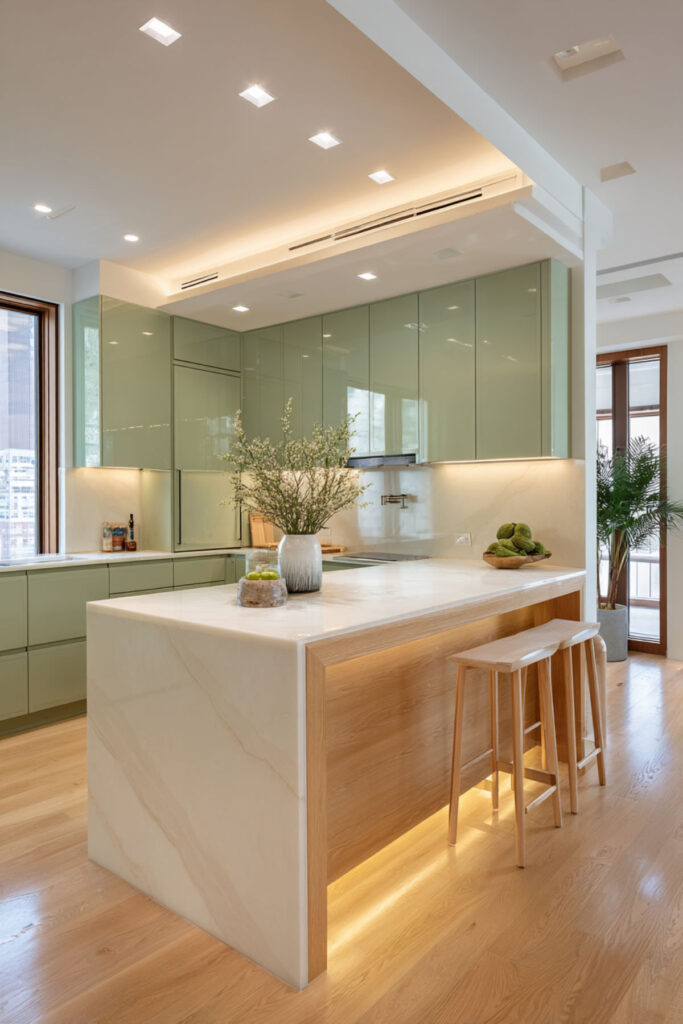
Seventeen ideas, and every one of them built around the same belief: a kitchen that feels warm makes a family that feels closer. Keep this saved so your next update feels aligned.
Sage green and cream isn’t just a color palette — it’s an atmosphere. It calms. It gathers. It makes the ordinary rituals of family life — the meal prep, the homework at the counter, the coffee before everyone wakes up — feel meaningful and beautiful. Discover these French blue and wood kitchen ideas that favor timeless warmth over fleeting trends.
There’s plenty more inspiration across the rest of the site — kitchen palettes, family-centered design ideas, and approaches that make real homes feel extraordinary. Save the pins that made something stir. Share them with the person who’ll be sitting across from you at that breakfast table. And trust this: the kitchen you build doesn’t just hold your family. It shapes the memories they’ll carry. Make it warm. Make it calm. Make it sage and cream.
There’s always another idea to bring your space to life.